Samsa: Central Asia's Tandyr-Baked Meat Pastry
Samsa is named after the triangle. Don't count on it, though: in Osh, in southern Kyrgyzstan, samsa is always round, the Uyghurs fold it into a square, and the one I bought at a bazaar in Bishkek looked more like a plump spindle than anything else. Samsa (Kyrgyz: самса) is a baked pocket of unleavened dough filled with meat, onion and tail fat, a street food staple of Kyrgyz cuisine and of all Central Asia. The region has never agreed on the shape. But it pretty much agrees that the best samsa comes from a tandyr.
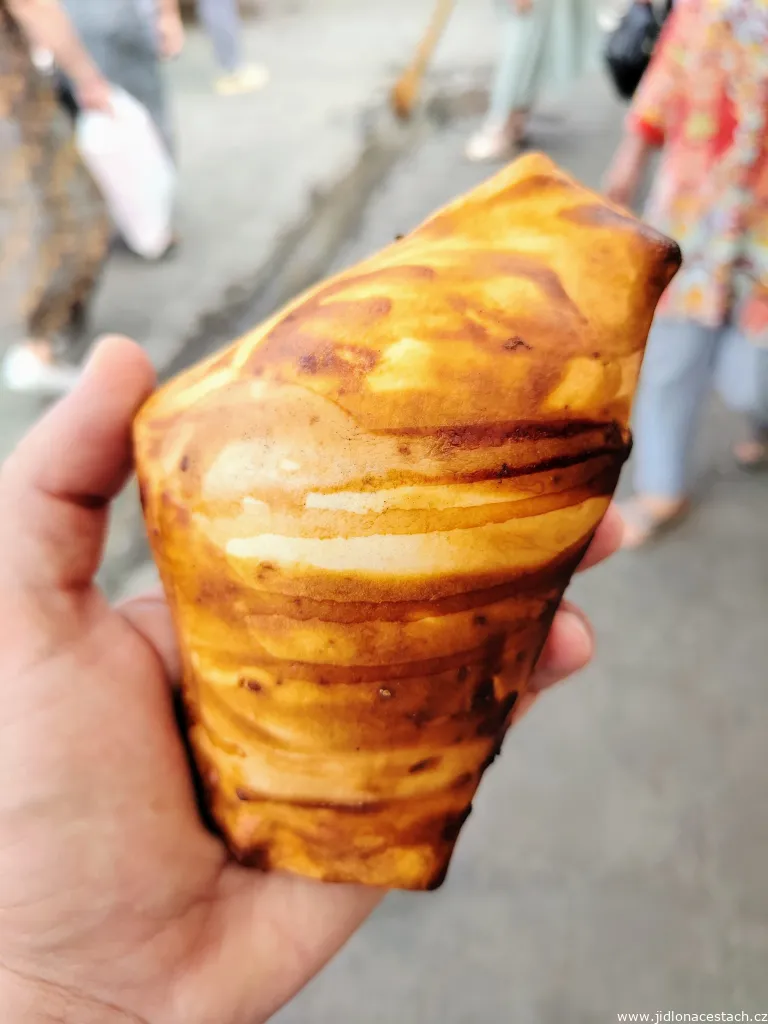
Where Samsa Came From and Who Bakes It
The word came from Persian: Middle Persian sanbosag passed through Arabic cookbooks as sanbusaj, Turkic languages shortened it to samsa, and India turned it into samosa. Encyclopedias and guidebooks alike repeat the gloss "triangular pastry", but none of them cites a source. What is documented is something else: a poet in Baghdad was already singing the praises of samsa's forerunner in the 9th century, and two centuries later the Persian chronicler Bayhaqi describes it being served at court. The sources can't settle exactly where it was born. Central Asia, though, has held on to the original baked form, while most of the family has since jumped into the frying oil.
Samsa belongs to all of Central Asia - it's no Kyrgyz invention: Uzbekistan calls it somsa and bakes a whole range of regional shapes from square to teardrop, while Kazakhstan sticks to the triangle. Relatives beyond the region differ mainly in how they're cooked: Indian samosa and the Iranian sambuse - in Iranian cuisine it's most often stuffed with potatoes - are both fried.
Stuck to the Wall: How Samsa Is Baked and Eaten
A tandyr, a clay oven shaped like a big jug, works on the same principle as a masonry heater, like the old tiled stoves in country cottages back home in Czechia: first it's fired up with wood, then it bakes on the stored heat of around four hundred degrees Celsius. The baker slaps the raw samsas straight onto the inner wall, just like the tandyr nan bread. Nothing gets ground for the filling, though: the meat is diced with a knife, there's almost as much onion as meat, and just before the pastry is pinched shut, in go two or three pieces of kurdyuk, fat from the sheep's tail. It melts in the heat. The juices then partly soak into the dough and partly bake onto the oven wall - which is why tandyr samsa has a crisp bottom that no kitchen oven can give it.
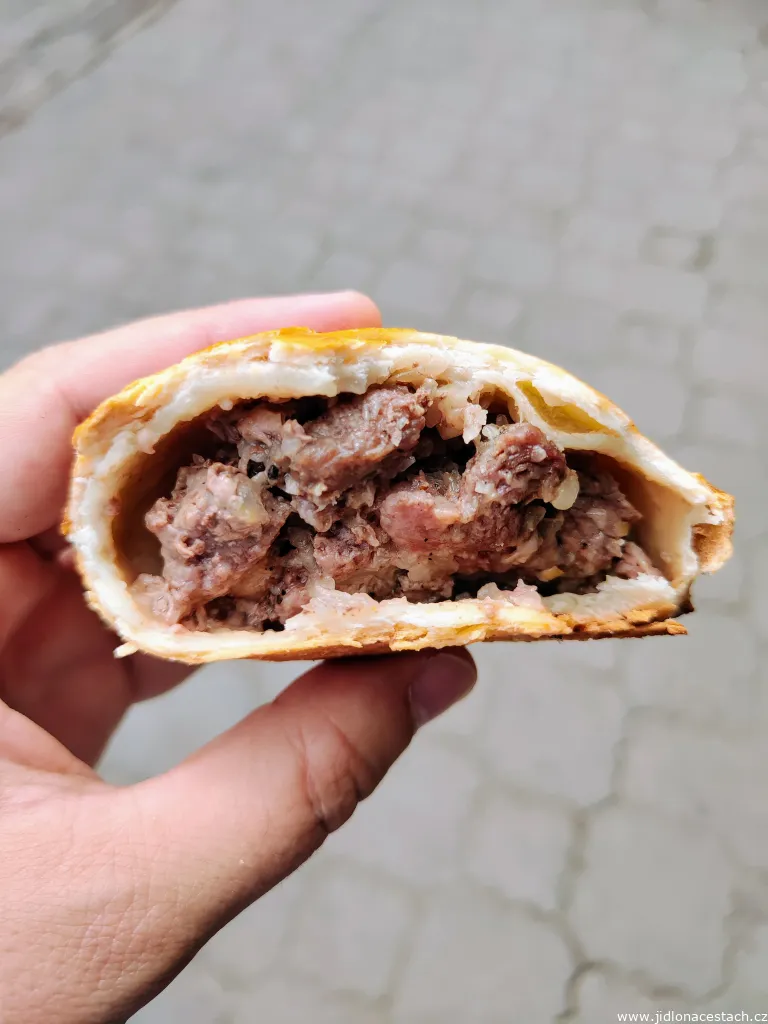
You buy it at bazaars, bakeries and samsa shops, and like any proper street food you eat it out of hand. Osh has taken the ritual furthest: there you order the big round samsa by answering the question "bitter or sweet?" - bitter means with a chili pepper pod inside, and sweet has no sugar in it at all - it's simply missing the pod. On top of that, the biggest ones are eaten upside down: flip it over, cut it open, scoop out the filling with a spoon and mop up the juices with flatbread.
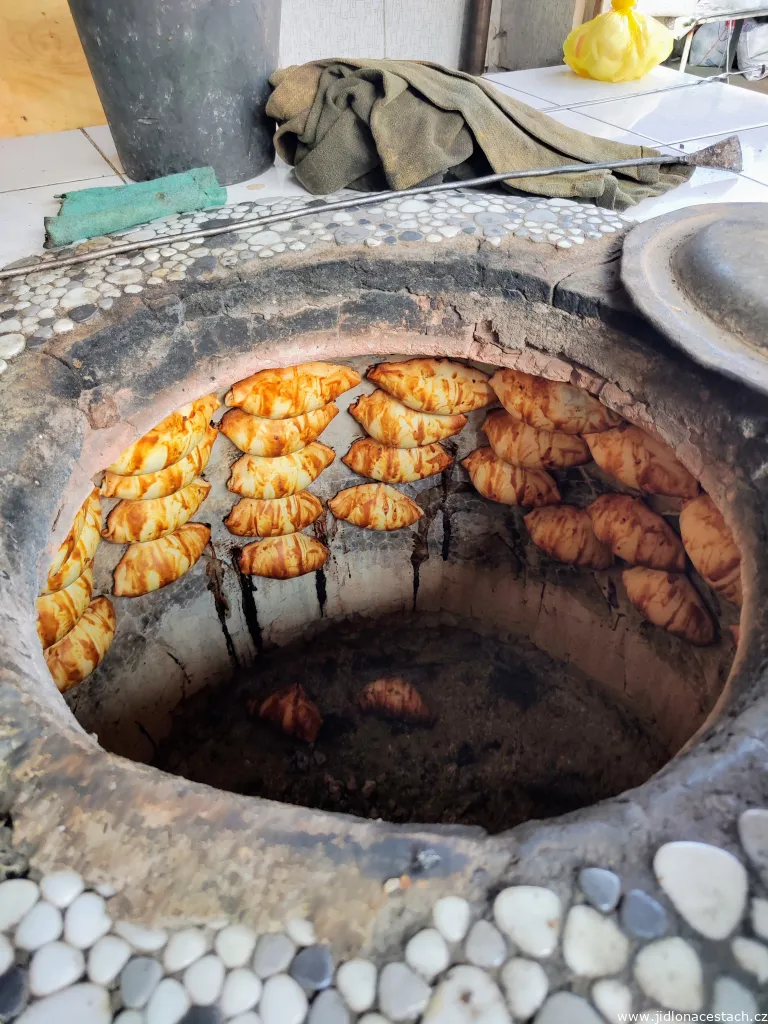
A Few Minutes with a Hot Samsa
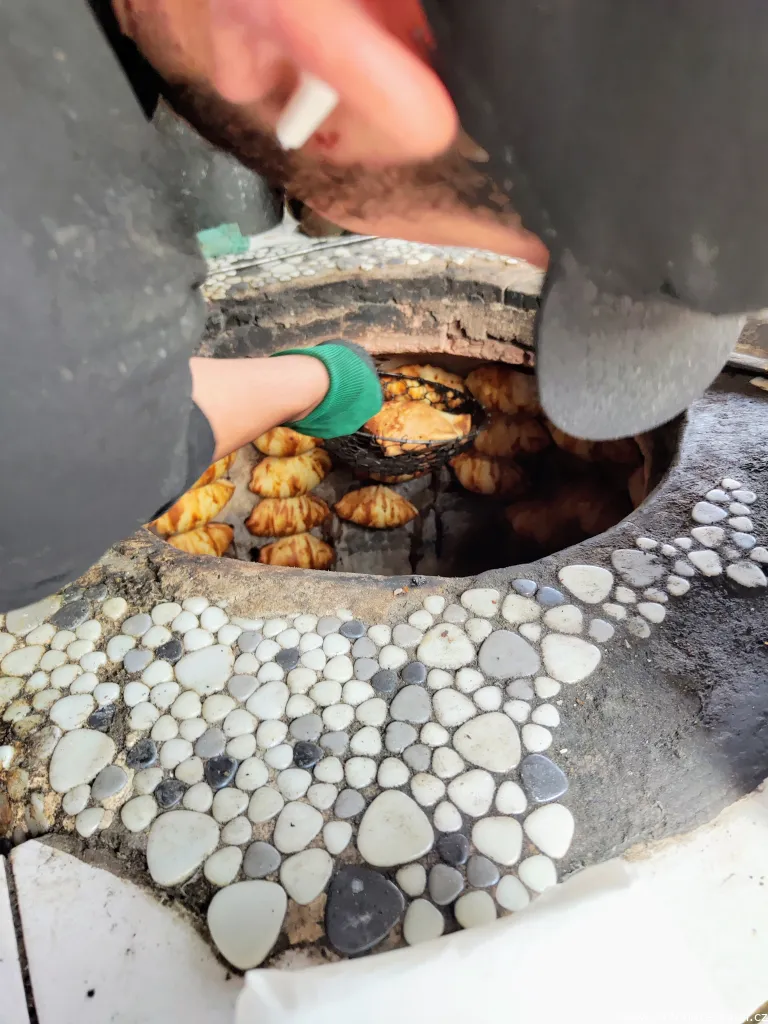
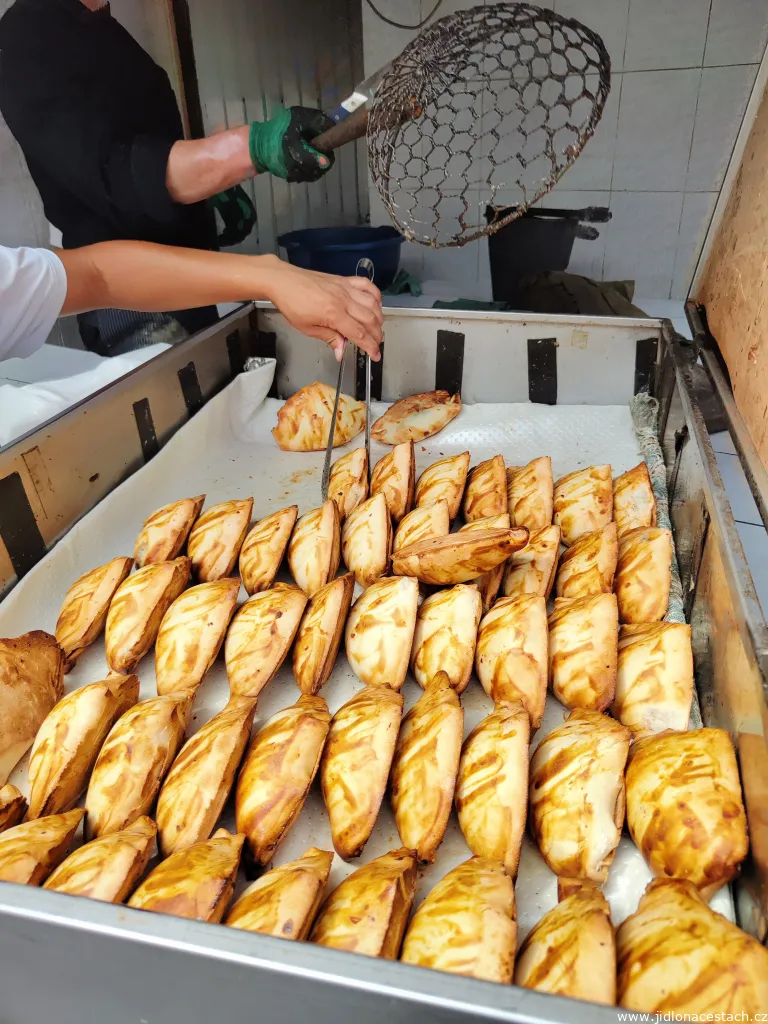
My samsa came from Osh Bazaar in Bishkek. First I spent a while watching the baker at work: he reached into the open oven with a long pole that had a wire basket on the end and collected the finished pieces from the wall before they could fall off and burn - with all the heat pouring out of the open oven, it's grueling work, especially in summer. Then they sold me one, and I discovered that fresh samsa has a built-in safety catch: for the first few minutes it's so hot there's nothing you can do but hold it and look at it. The mutton filling was seasoned so well that I wouldn't change a thing, and it was an enormous portion for a single pastry. The whole show - the oven, the wire basket, the baker's toil and my few minutes of quiet waiting - cost me 85 KGS (0.90 EUR).


