Pizza Rustica: A Savory Pie from Southern Italy
Ask for pizza in a bakery in southern Italy and you may not get anything round. The woman behind the counter slides back the glass of the display case, cuts a square piece off a rectangular tray and puts it on the scale.
Pizza rustica is a savory pie that Italian cooking bakes in the south of the country: two layers of dough with a generous filling between them - most often cheese and ham - and a top crust pricked all over with a skewer. It shares a name with the pizza from a pizzeria, and the heat of the oven, but not much else.

What Rustica Means and Who Bakes It
Rustica means rustic, from the Latin rus, countryside. In Italian food writing the word deserves a second look: un rustico in bars down south is a filled puff pastry in its own right, so "rustico" and "pizza rustica" need not be the same thing at all. And above all: pizza rustica is a family name - every corner of the Italian south reads it its own way. In Naples it stands for an Easter pie of lightly sweetened shortcrust pastry with ricotta and salami, around Bari it is baked from leavened dough with ham and mozzarella, and in Basilicata, home to Matera, it is an officially registered traditional product made with soppressata and pecorino. Salento, down on the heel of the Italian boot, fills it with tomatoes, olives and anchovies - no cheese, no meat. Pizza is simply a broad word in the south: montanara is fried, pizza secca is dried until it snaps and Sicilian sfincione rises tall on the tray.
Looking for a founder of that family is a lost cause. No document dates the first pizza rustica - all the versions agree only that it started out as a peasant way of baking leftover cheese and meat into dough. The idea itself is old: Italian cooking has known savory filled pies since the Middle Ages, when pastry served as a container for whatever the season offered. The version you find in bakery windows today - puff pastry, cheese, ham, a rectangular tray - is probably the youngest member of the family; the countryside survives in it as a name and nothing more.
How Pizza Rustica Is Baked and Sold
Nobody skimps on the inside. Cheese that melts in the oven and glues the ceiling to the floor, and cooked ham to go with it - a combination anyone back home in Czechia knows from a toasted sandwich, except that here it is held together by pastry baked until it crumbles rather than by two slices of bread. Festive versions of the recipe add ricotta, eggs or ground meat; bakeries stick to simplicity. Those closely spaced holes in the top crust have a job to do: they let out the steam that would otherwise lift the lid and tear it open.
Pizza rustica is bakery food, not pizzeria food. The big tray is cut into squares and they are sold by weight, lukewarm or cold, as a snack in the hand or a quick lunch. Ask and they will warm your piece up - and it is worth asking, because warm cheese holds the layers together while cold cheese lets them fall apart. The meat and ricotta versions get baked at home for Easter and Christmas; the one in the window keeps no calendar.
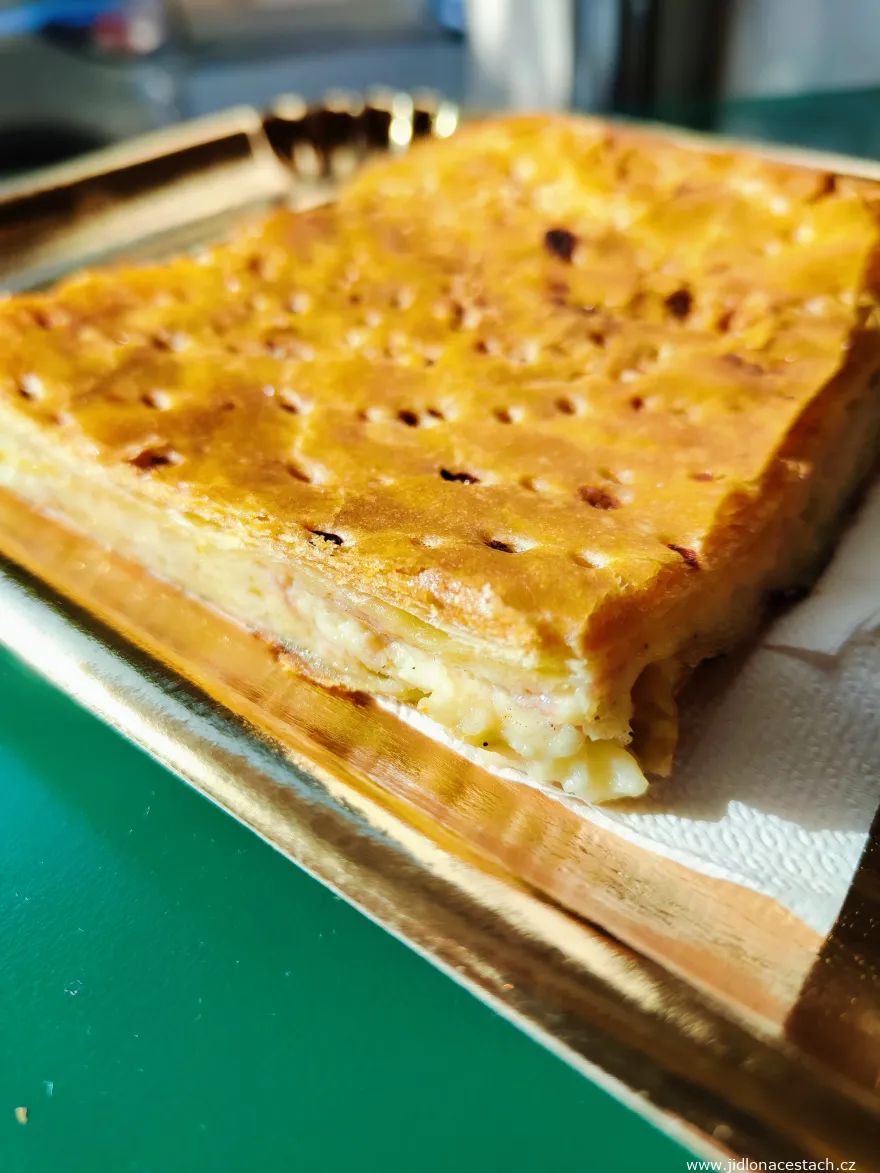
Three Euros from a Bakery in Gravina
I bought my piece at the i Petronella bakery in the small town of Gravina in Puglia, southwest of Bari - it was around Bari and Matera that I ran into pizza rustica most often, and nowhere else in Italy did I come across it. The weighed square came to about 3 EUR. The crust peeled away in crisp flakes and crumbled onto the paper, melted cheese glued the layers inside together and the ham brought a saltiness the pastry alone would never have. In Naples they would have sold me a completely different pie under the same name. But I would happily pick the one from Gravina again.


