Panzerotti: Fried Pockets from Bari
The origin legend of the panzerotto has everything a proper legend needs: Bari, the sixteenth century, a nameless housewife and a scrap of bread dough left over from baking. She supposedly filled it with tomatoes and mozzarella, folded it shut and dropped it into hot oil. The catch: the tomato didn't become an everyday food in southern Italy until two centuries later, so this woman had an ingredient in her kitchen that nobody was eating yet.
Panzerotti are half-moon pockets of fried leavened dough filled with tomato and mozzarella - street food from Bari and today the best-known fried pocket in Italian cooking. The singular is panzerotto, but at the bakery you almost never walk out with just one.
What Panzerotto Means and Where It Gets Fried
The name describes what happens in the oil. The dough puffs up and bulges out, and so the little pocket ended up named after a belly: panza is the dialect form of standard pancia, from the Latin panticem, and the suffix turned it into a little belly. The panzerotto is at home in Bari and the countryside around it, but the same name and the same shape come out of the fryer in neighboring Basilicata too, above all in Matera. Further south in Apulia, down in the Salento, that exact same fried pocket goes by calzone - which in Bari is the word for the baked version from the oven. So if you want a panzerotto in the Salento, you ask for a calzone. Naples has fried dough of its own, pizza fritta and the fried montanara, which isn't folded shut at all - the topping sits on top. And then there's Milan: after the war the Luini family from Apulia took over an old bakery in the center, and since the sixties they've been frying panzerotti to their grandmother's recipe. The most famous Apulian panzerotto in the world is sold a hundred and ninety paces from Milan Cathedral.
When the First Panzerotto Was Fried
So the sixteenth century drops out of the picture, and what is left is humbler and truer. Linguists found the first description of the dish in a Roman cookbook by Francesco Leonardi from 1797, only without a name - the word panzerotto doesn't turn up in print until the nineteenth century. The region of Apulia now lists it among its traditional food products, but nobody knows who came up with it. The one certainty is that whoever did already knew the tomato.
The Dough, the Oil and Matera's Breadcrumbs
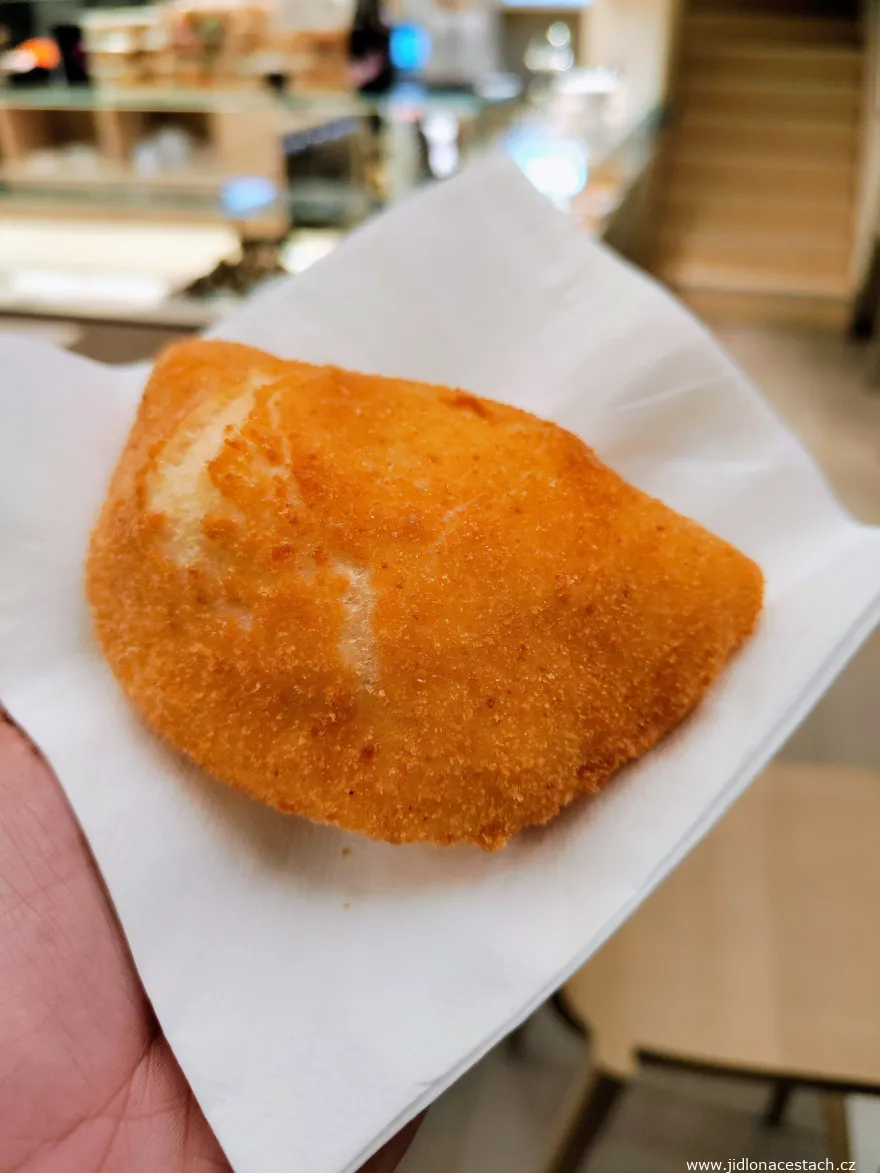
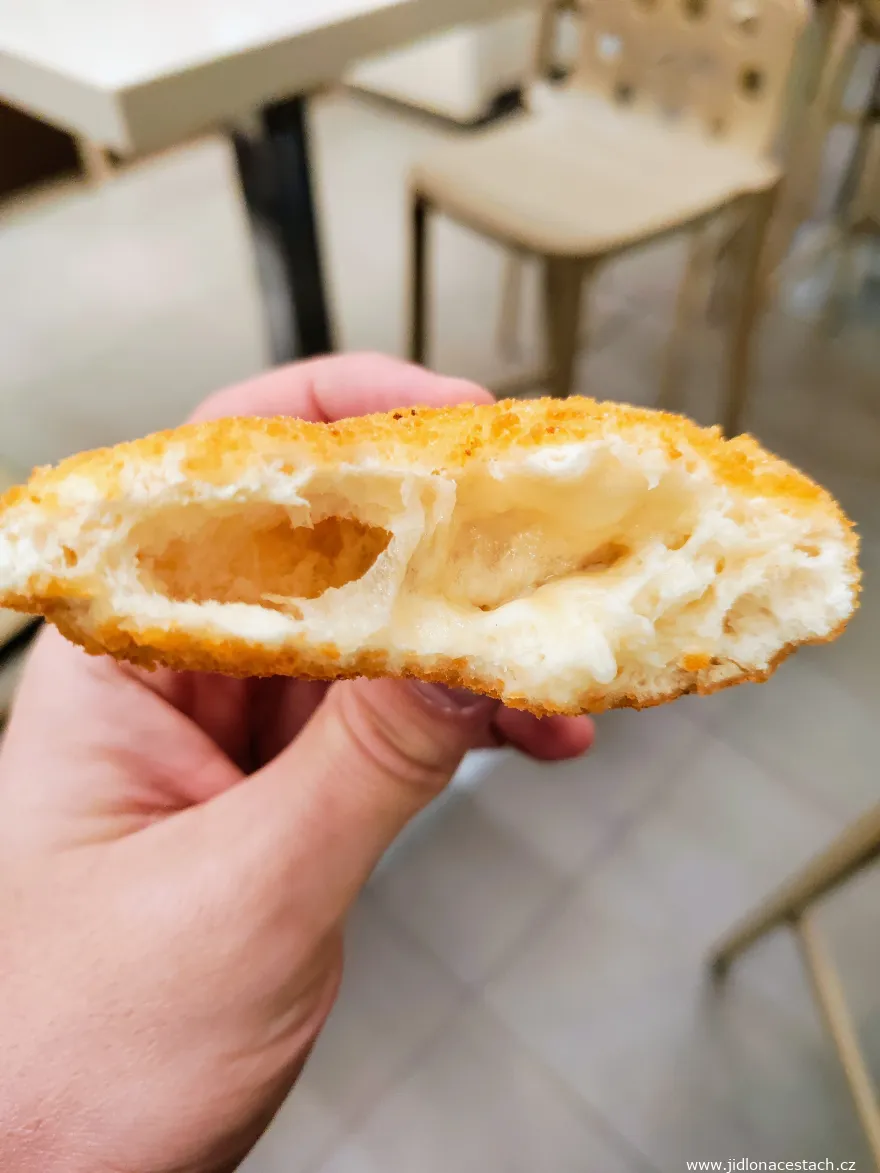
The dough is the same as for pizza - flour, water, oil, yeast, salt and a pinch of sugar to give the yeast something to work on - except a panzerotto takes about half as much of it as a calzone and gets rolled out thinner. Inside go tomatoes and fior di latte, the cow's milk mozzarella that stretches into threads as it melts; in winter Bari swaps it for turnip tops, cime di rapa. Everything hinges on oil at a hundred and seventy to a hundred and eighty degrees: any cooler and the dough soaks it up, any hotter and it burns before the cheese inside has a chance to melt. The pocket gets turned the moment it floats up, so the puffed top doesn't split. And here Matera parts ways with Bari: the Matera panzerotto is dipped in egg and rolled in breadcrumbs before it goes into the oil, so it runs through the same flour-egg-crumb routine as the schnitzel we fry for Sunday lunch back home, and instead of a smooth skin it comes out in a rough golden crust. In Bari that has no place in the classic recipe; in Matera, without it a panzerotto wouldn't be a Matera panzerotto.
A panzerotto is eaten with your hands, out of paper and hot, ideally a few steps from the fryer; one that has gone cold in a display case is only a memory of the real thing. It works at any hour of the day, but around Bari it also has a feast day of its own: on the eve of the Immaculate Conception, December 8, families fry panzerotti to open the Christmas season. That communal fry-up for friends is called a panzerottata, and a sweet offshoot with Nutella has joined it - in Bari more of a carnival indulgence than a tradition. Watch out for that first bite: the tomato filling holds the heat of the oil far longer than you would ever expect from something that small.
Two De Palo Bakeries in Matera
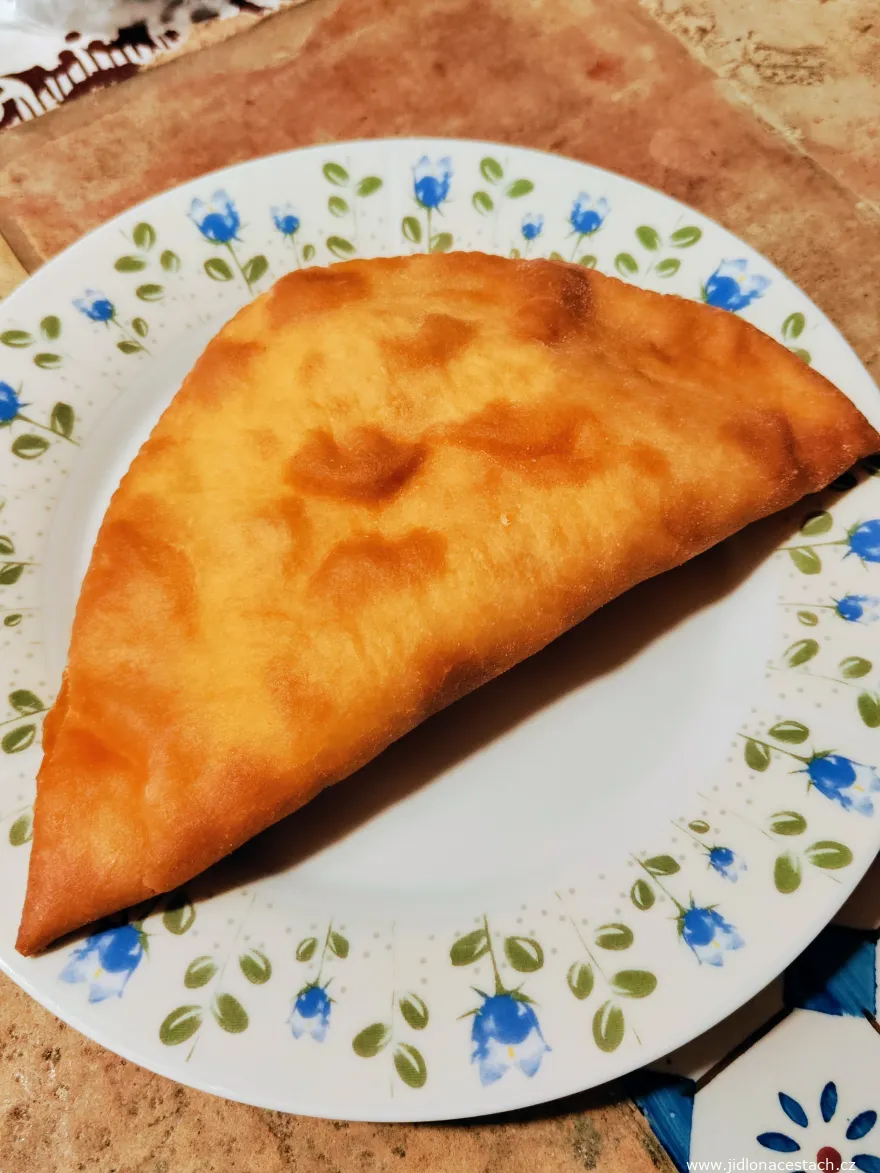
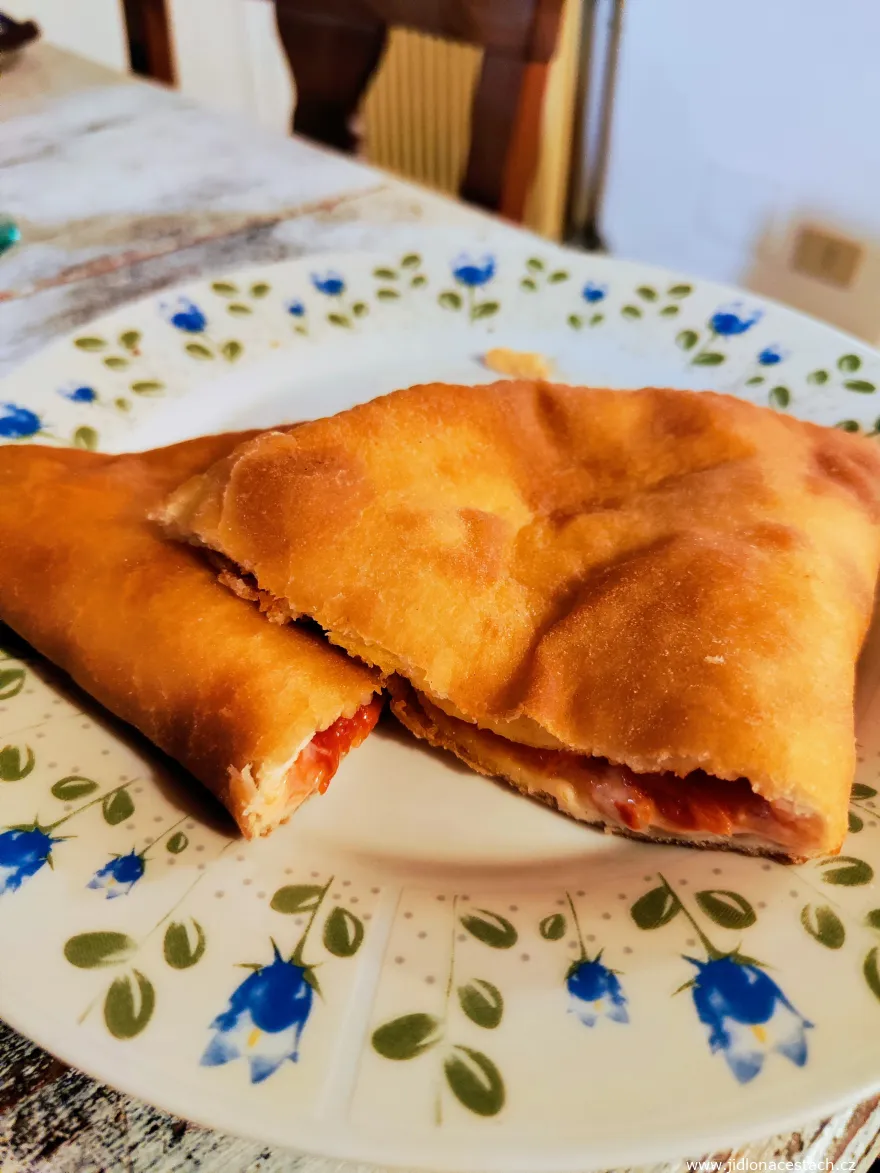
I ate panzerotti in Matera, and in two bakeries that share a surname: the small one in breadcrumbs I get at the Fratelli De Palo bakery, the big one without breadcrumbs at the Pane e Tradizione De Palo bakery (see Where to Eat in Matera). The small one is two or three bites: the breadcrumb crust crunches and crumbles, under it the dough is soft and greasy, and the cheese stretches into threads when you break it open. The big one is a different genre - a smooth skin, scorched almost black in places, and a great deal more tomato inside. The small panzerotto with breadcrumbs costs 1 EUR, the big one with cheese, mozzarella and ham 1.80 EUR. The name promises a belly. After one small and one large, I knew whose.


