What to Eat in Valencia
Valencia (València in Valencian) is Spain's third-largest city and the birthplace of paella. I once turned up in the city by pure chance on September 20 - World Paella Day. I had no idea until I stumbled on the first tasting - and from then on I just ate. Few coincidences on my travels have ever paid off better.
Historical Influences on Valencian Cuisine
Valencian cooking is built on water. The Arabs brought rice to the marshes around the city back in the early Middle Ages, and it's still grown by the Albufera, a freshwater lagoon just south of the center. It was the fields around the Albufera that gave the world paella and the whole family of Valencian rice dishes - originally peasant food, with farmers throwing whatever was at hand into the pan: chicken, rabbit, vegetables. Seafood has no place in a true paella valenciana, whatever the tourist restaurants tell you.
Valencia owes the Arabs one more crop: a tuber called chufa, the tiger nut. It's grown in the villages north of the city, Alboraia chief among them, and since 1995 it has been protected by the Chufa de València designation of origin. Chufa is used to make horchata, a drink that belongs to Valencia every bit as much as paella - except that here the city doesn't have to fight the rest of Spain for the credit.
What to Eat in Valencia
- Paella valenciana. Rice tinted with saffron, chicken, rabbit and big white garrofó beans, all cooked in the pan the dish is named after. It comes from the area around the Albufera, and the authentic recipe has exactly ten ingredients - don't go looking for chorizo or seafood among them.
- Horchata (orxata de xufa). A sweet "milky" drink made from ground chufa tubers, water and sugar. Under its protected designation of origin, chufa may only be grown in a defined set of villages around Valencia - so horchata is local right down to the roots, quite literally.
- Fartons. Long, glazed sweet buns made from yeast dough. They were created in Alboraia in the 1960s for one purpose only: to soak up as much horchata as possible without falling apart.
- Agua de Valencia. A cocktail of fresh orange juice, cava, vodka and gin. Constante Gil first mixed it in 1959 at Café Madrid for guests from Bilbao who wanted something new.
- Fideuà. Paella's sister, with short noodles standing in for the rice. Legend has it that a ship's cook from Gandia reworked arroz a banda so the captain would stop liking it and quit eating the crew's portions - the plan failed, and Spain gained a classic. You'll find it all along the coast from Valencia to Alicante.
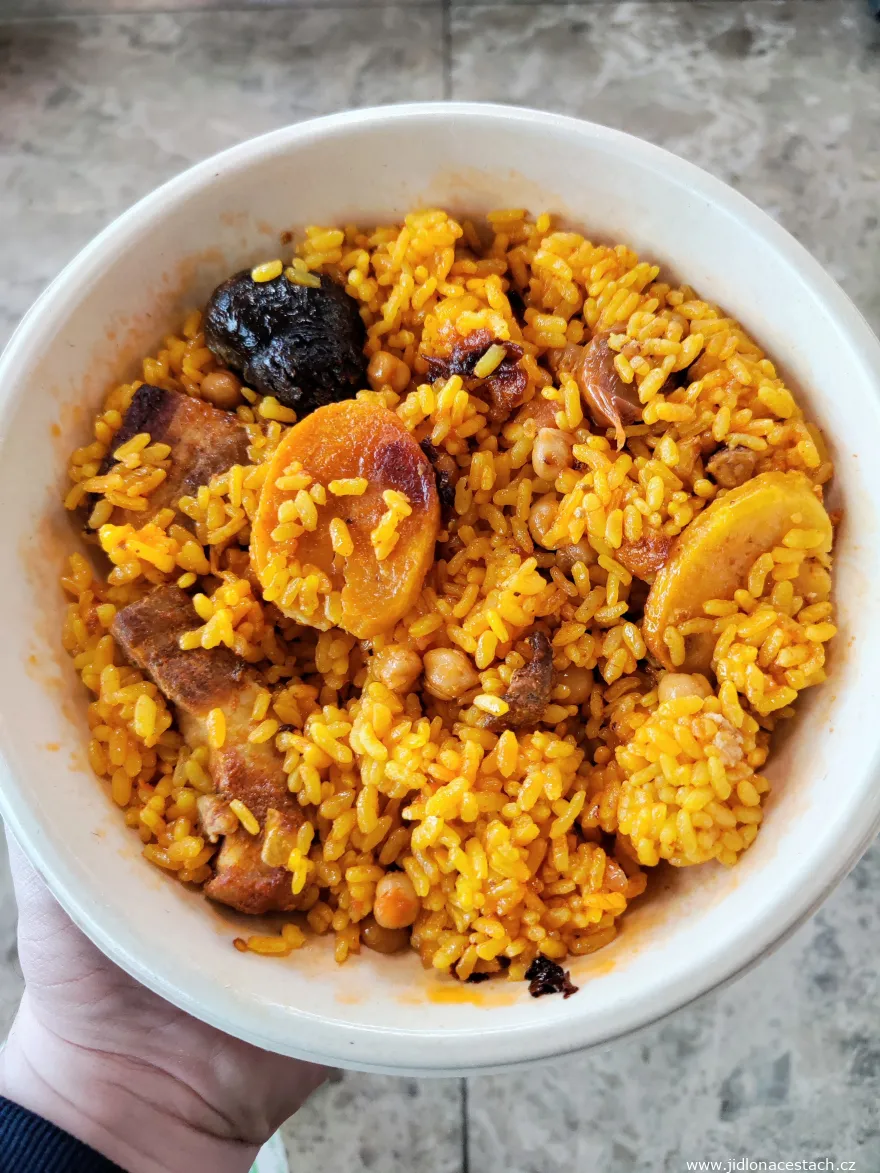
- Arroz al horno. Rice baked in a clay dish with chickpeas, potatoes and morcilla blood sausage - Sunday stew leftovers given a promotion. The recipe comes from inland Valencia, and Xàtiva is considered its cradle.
- All i pebre. Eel stewed in a thick garlic and paprika sauce, a specialty of El Palmar, a fishing village right on the shore of the Albufera. You won't find a more local dish in Valencia - the eels are caught a few hundred meters from the pot.
- Esgarraet. A cold starter of roasted red peppers and salt cod, both torn apart by hand. That's exactly what the Valencian verb esgarrar means, and it's where the dish gets its name.
- Buñuelos de calabaza. Pumpkin fritters fried on every street corner during the Las Fallas festival in March. They're sold in paper cones and dunked in thick hot chocolate.
- Coca. A flatbread with savory or sweet toppings, baked all over the Catalan-speaking Mediterranean. Valencian bakeries sell it by the piece as a quick snack.
- … and, if you like, dozens more Spanish dishes from the list: What to Eat in Spain.

If I had to pick a day to go back to Valencia, it would be September 20 again. I stumbled into the biggest paella celebration right in its hometown by accident - and ever since, I've maintained that the best food plan is no plan at all.
Enjoy eating your way around Valencia!



Paella: A Guide to Spanish Rice Dishes
Jamie Oliver put chorizo in it and Spain has never let him forget it. Paella is the most famous of Spain's rice dishes - and strictly speaking it isn't even Spanish, but Valencian. This tour of the arroces family explains why the dish is named after a pan, what socarrat is and why the best rice comes at lunchtime.

Níspero de Callosa: The Loquat from the Province of Alicante
Níspero de Callosa is the loquat grown on the terraces around the small town of Callosa d'en Sarrià in the province of Alicante, with a protected designation of origin since 1992. The orange fruit, the size of an apricot, is eaten fresh and peeled, and it has juicy sweet flesh and a few big seeds. The tree comes from China, the name from the European medlar, and its season is short - from April to the end of May.

Coca: The Flatbread of Valencia, Catalonia, and the Balearics
Coca is the flatbread of Catalan-speaking Spain: dough with the topping spread over it or tucked between two sheets, savory or sweet, baked on a tray. One word covers Catalan coca de recapte, Balearic coca de trempó, and the Alicante specialties with tuna and streusel. Where the name came from, what to make of the claim that coca is the mother of pizza, and how three bakeries in Alicante measured up.