Cava: The Spanish Sparkling Wine That Can't Be Called Champagne
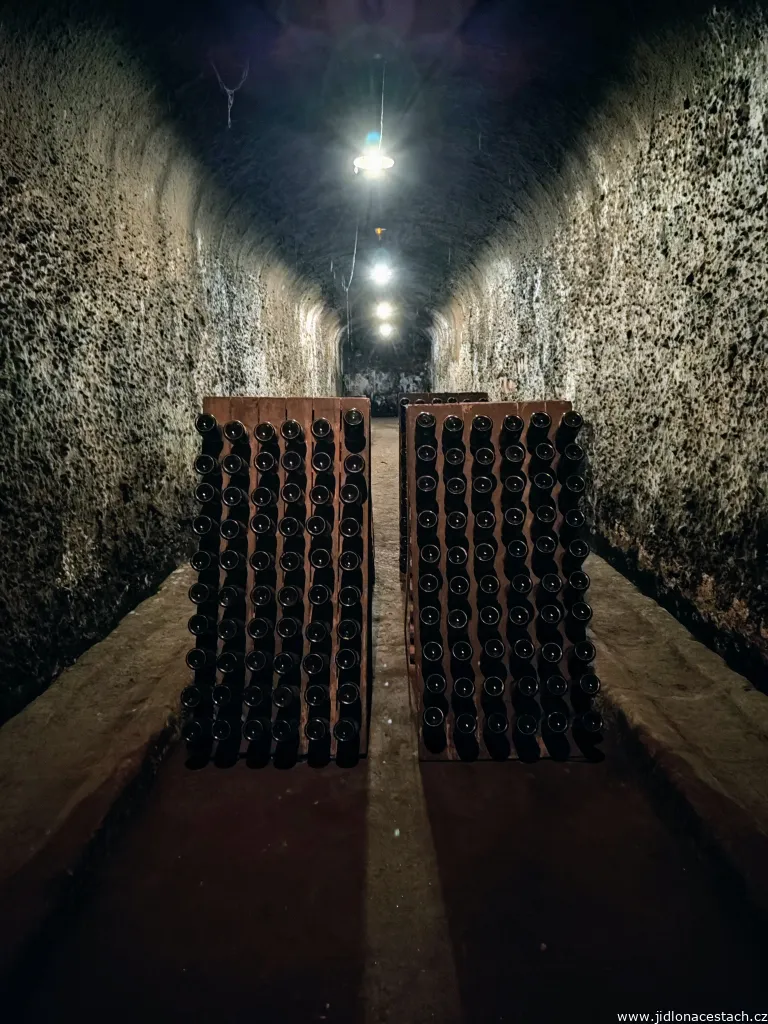
In the Bodegas Bilbaínas cellar in Haro, bare bulbs hang on their wires, and underneath them stand two long racks of bottles, every one of them neck down, as if somebody had forgotten to stand them back up. Nobody forgot. This is how you wait in the dark for the yeast to settle against the cork - nine months is the minimum, years for the better bottles.
Cava is a Spanish sparkling wine that gets its bubbles from a second fermentation in the bottle, the same method as champagne, just from different grapes and under a different name. And that name was fought over.
Why Cava Can't Be Called Champagne
For a hundred years the Catalans called their sparkling wine xampany, because they had brought the method home from Champagne. France saw it differently. The word cava is Catalan for cellar, and it made it onto the labels once it was clear the foreign name was off limits. The changeover happened in stages: the first Spanish regulation with the word cava in it dates from 1959, the Regulatory Board was set up in 1972, and in 1986 the name was reserved for this wine alone. On paper the name changed sooner than it did in the bar: people were still saying xampany in Catalan well into the eighties.
Cava is the only Spanish designation of origin that protects a way of making wine rather than a piece of land: officially it covers the whole of Spain, in practice it is 95 percent Catalan - almost all of it is made in the Penedès region south of Barcelona, and more than three quarters of that in one small town, Sant Sadurní d'Anoia; the rest is scattered from Rioja down to Valencia. Its closest relative is champagne from France: the same method, different grapes, a cooler climate and several times the price. Italian prosecco only looks like a relative, because its bubbles are made in a tank rather than in the bottle; cava's real sister is the French crémant.
Who Invented Cava and Who Owns It Today
The first bottle was filled in 1872 by Josep Raventós of the Codorníu family in Sant Sadurní d'Anoia, after a trip to Champagne. Guidebooks add 1887 as the year of the "first bottle labeled Cava", except that the word did not appear on labels until two generations later - the Mestres family claims to have been the first to use it, some time around 1959; exactly how is a point the sources disagree on. These days the fight is no longer between families but between corporations: the two biggest brands, Freixenet and Codorníu, have belonged since 2018 to the German group Henkell, part of Dr. Oetker, and to the American fund Carlyle. Catalan pride, mostly owned by a pudding company. Which is why a handful of the best small cellars, Gramona, Recaredo and others, walked out of DO Cava in 2019 under a label of their own, Corpinnat. They go on making the same wine by the same method, they just can't call it cava. A drink that once lost the name champagne is losing its best names a second time.
Three Grapes and a Bottle That Gets Opened Once a Year
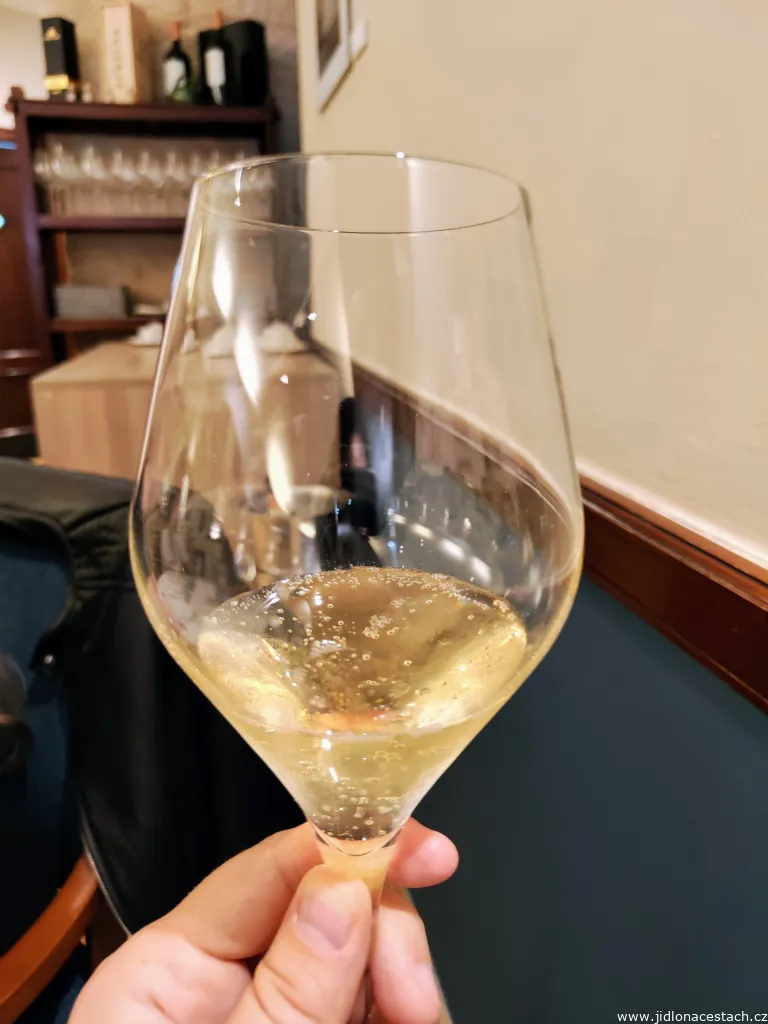
Inside a classic cava the work is shared by three grapes nobody outside Spain has ever heard of: Macabeu gives fruit and freshness, Xarel·lo body and the ability to age, Parellada finesse - and after that there is only yeast and darkness. The sugar added after disgorging determines the category: brut nature gets none, brut up to twelve grams a liter, semiseco can take fifty. The months on the lees set the rest: nine for a basic cava, eighteen for Reserva, more than thirty for Gran Reserva.
In Spain, cava has much the same fate as the carp we eat at Christmas back home in Czechia: more than half the year's consumption is drunk over Christmas and on New Year's Eve, when it goes at midnight with twelve grapes. For the rest of the year cava is an aperitif and a companion to tapas and paella, where its acidity works with fish and with anything fatty. If you want something better than the bottle on the shelf by the checkout, skip the brands and look for two words: Gran Reserva and brut nature. The Mestres family, after all, argued decades ago that cava belongs with a whole lunch, not just with the toast - and they were right, it just took a long time before anyone believed them.
A Bottle of Mestres Visol in Alicante
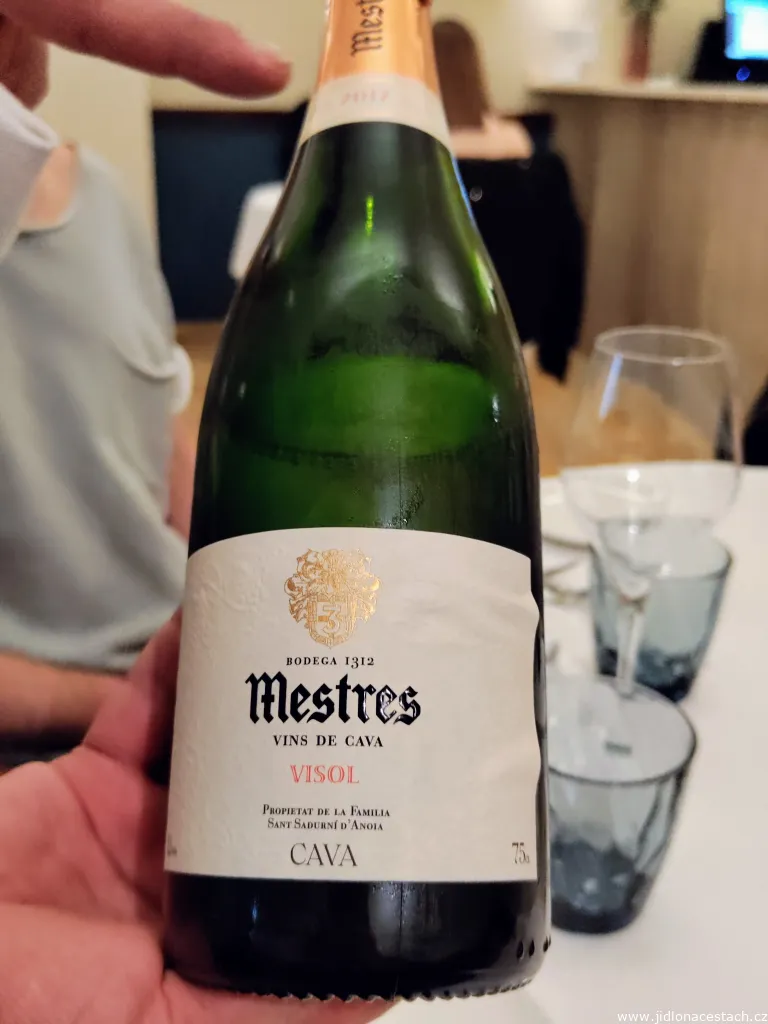
I have drunk cava in plenty of places in Spain and this bottle is just one I picked out, not my only experience: Mestres Visol Gran Reserva at Tabula Rasa in Alicante (see Where to Eat in Alicante), a restaurant in the Michelin guide with a single tasting menu. The label carries the year 1312, when the Mestres family is first recorded in Sant Sadurní as owners of vineyards, and the word Visol, Catalan vi sol, just wine - a cava without a single gram of added sugar, which the family has been making this way since the forties. The blend is the old trio and the bottle lay on the lees for more than four years before somebody turned it by hand and opened it. The bubbles were fine and slow, the nose more bready than fruity, the taste dry, with bitter almond at the end - and no sugar to cover anything up. The bottle cost 39 EUR. Four years neck down in the dark, half an hour on a table in Alicante.


