Achard: Mauritian Pickled Vegetables and Fruit
The French had the word achard in their dictionary as early as 1609. The first of them didn't reach Mauritius until a hundred years later - and the turmeric-steeped vegetables weren't theirs either, but came with the Indians, who arrived another hundred and twenty years after that. The word and the dish took different routes to the island, and only met in the jar.
Achard is chopped vegetables or fruit steeped in oil with turmeric, mustard seed, garlic, and chili - a pungent, sour side dish that no proper curry in Mauritian cuisine is served without. Cabbage, carrot, green beans, but also green mango, lemon, or garlic.
Where Achard Comes From and Who Else Pickles It
The word's birth certificate is Persian: āčār already meant pickled vegetables in Iranian cuisine, from there it traveled to India and to Malaysia, where Portuguese sailors picked it up, and the French turned their achar into achard, with a silent d at the end. One word, four continents. Achard is no Mauritian invention but a side dish shared by the whole Indian Ocean - Réunion makes it mostly from lemon and briefly fries the spices in hot oil, Madagascar even puts it in cans, and the South African cousin from Durban goes by atchar, because the British brought Indian laborers there by a different route. The ancestor of them all, Indian achaar, differs from the rest in that it swims in mustard oil and keeps for a year in the pantry. The Mauritian achard is its lighter version: less oil, the vegetables only blanched, a fresh flavor, and a homemade jar that lasts a few days.
What Turmeric, Mustard, and Fenugreek Do in Achard
Achard sat in the French dictionary for two hundred years as a curiosity from the East Indies. It became a Mauritian side dish only after 1834, when ships carrying indentured laborers from India began arriving at the island after slavery was abolished - and with them mustard seed and fenugreek, the two spices that set the Mauritian achard apart from the Réunion one. Nobody wrote down when the first achard was pickled on the island; the yellow color and the basic cast, turmeric, garlic, and chili, are shared by the whole region, and only the mustard accent is Indian. Turmeric gives the color, mustard hits the nose, and fenugreek brings that sweet caramel note Europeans know from curry powder and can never quite name. The closest thing back home would be the sweet-and-sour mixed pickles we put up for the winter, only as if someone had swapped the vinegar for turmeric and the sugar for chili. There should be just enough oil to bind the vegetables, not to drown them.
Achard never stands alone on the table. It comes cold next to something hot - with briani, with dholl puri, with farata - cutting the fat, its sourness waking up your appetite for the next bite. Tomato rougail and satini (the Mauritian chutney) are a different thing altogether, even though all three meet on the same plate; mix them up and you get sour where you expected sweet, and the other way round. If you've never had achard, try it in a restaurant first, or buy the smallest jar the shop has - the flavor is unusual and a big jar is not easy to finish. And green mango or lemon aren't a Mauritian eccentricity - they're the most common fruit versions from Madagascar to the Comoros.
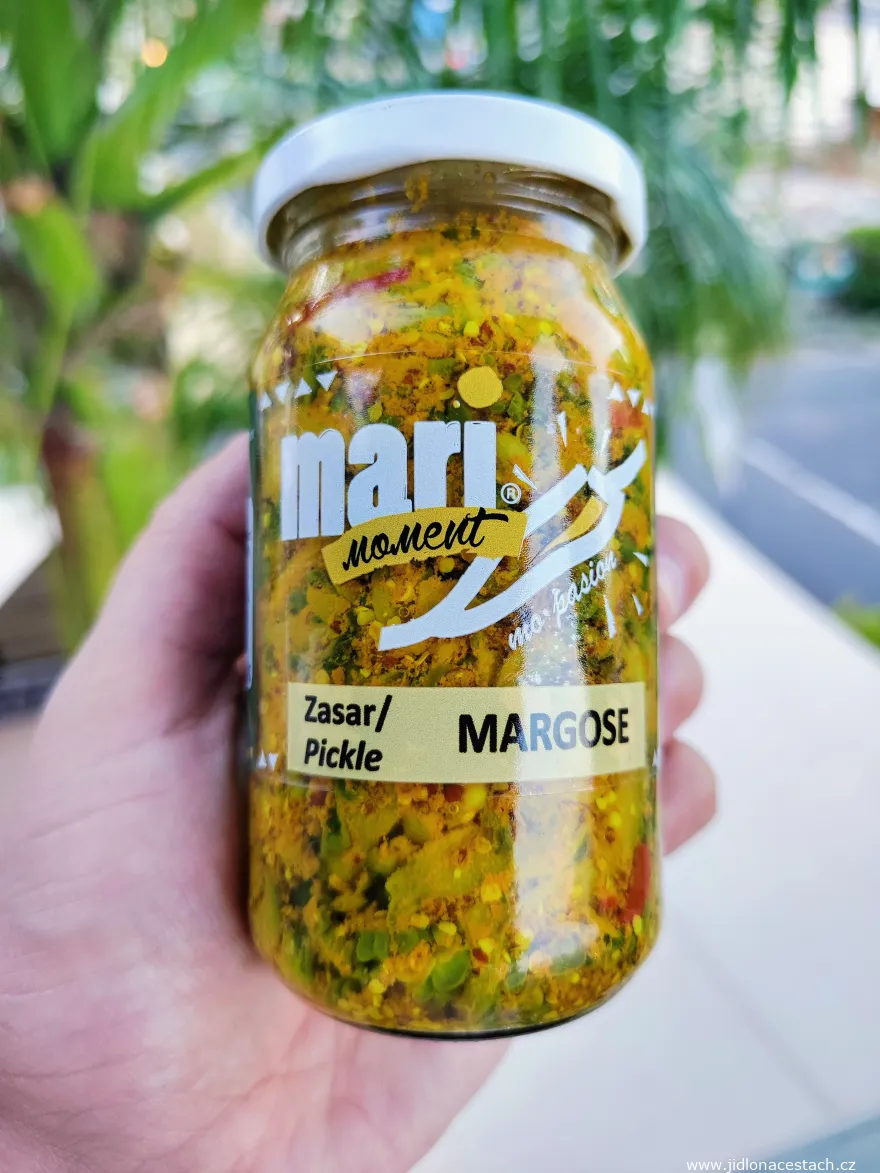
Five Jars from Mauritius
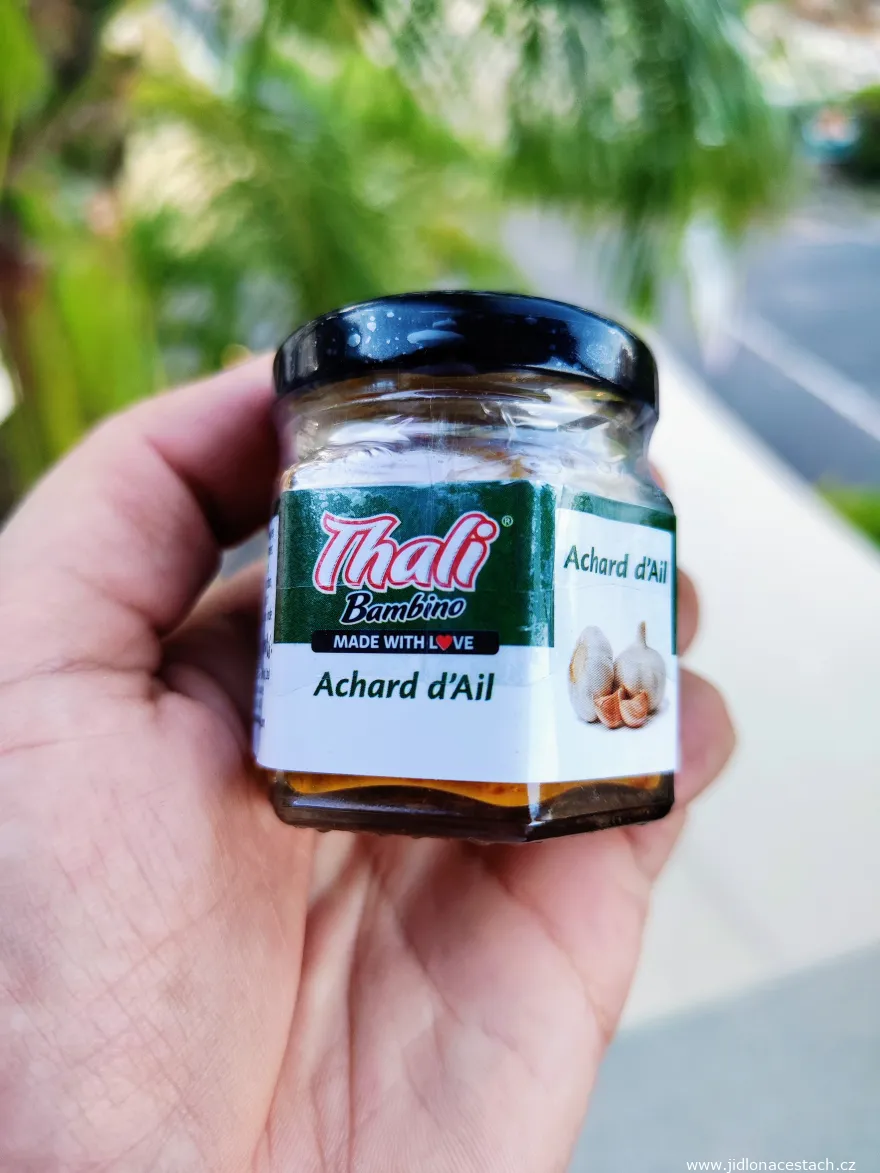
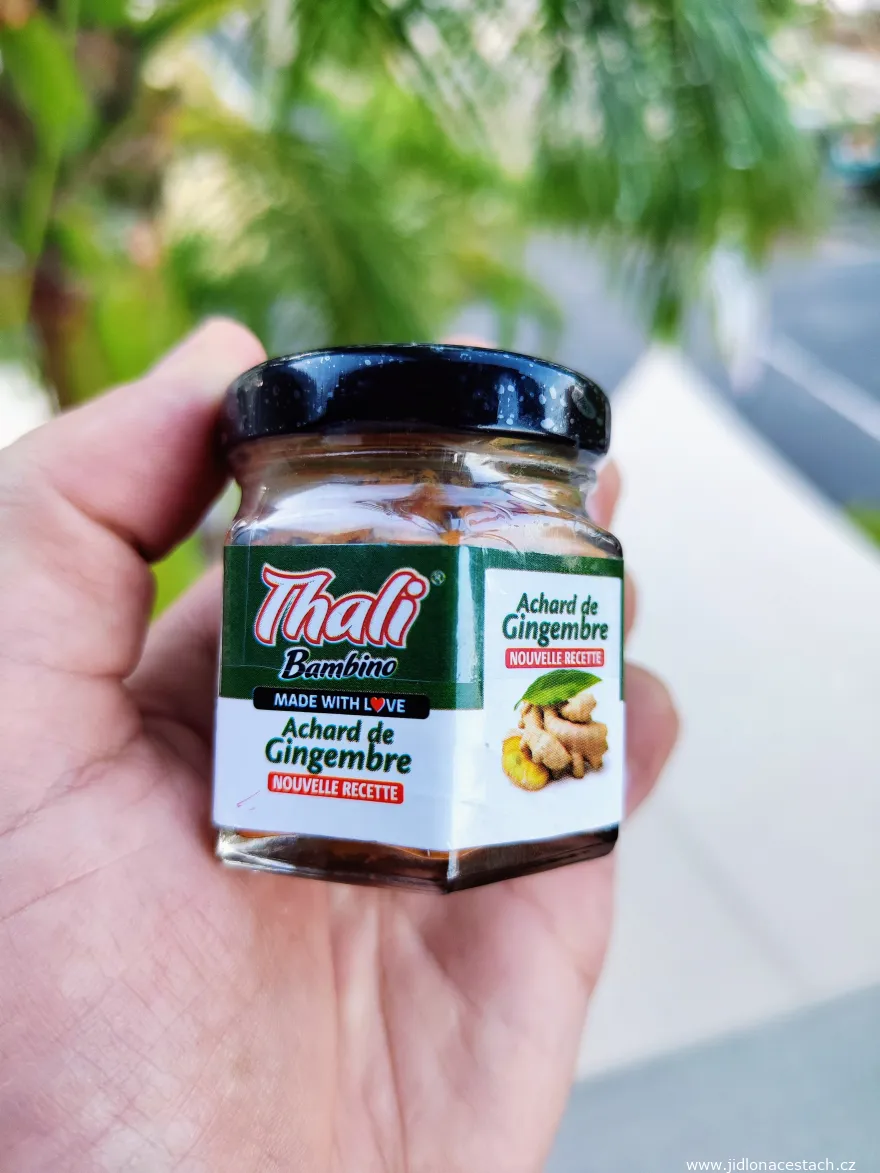
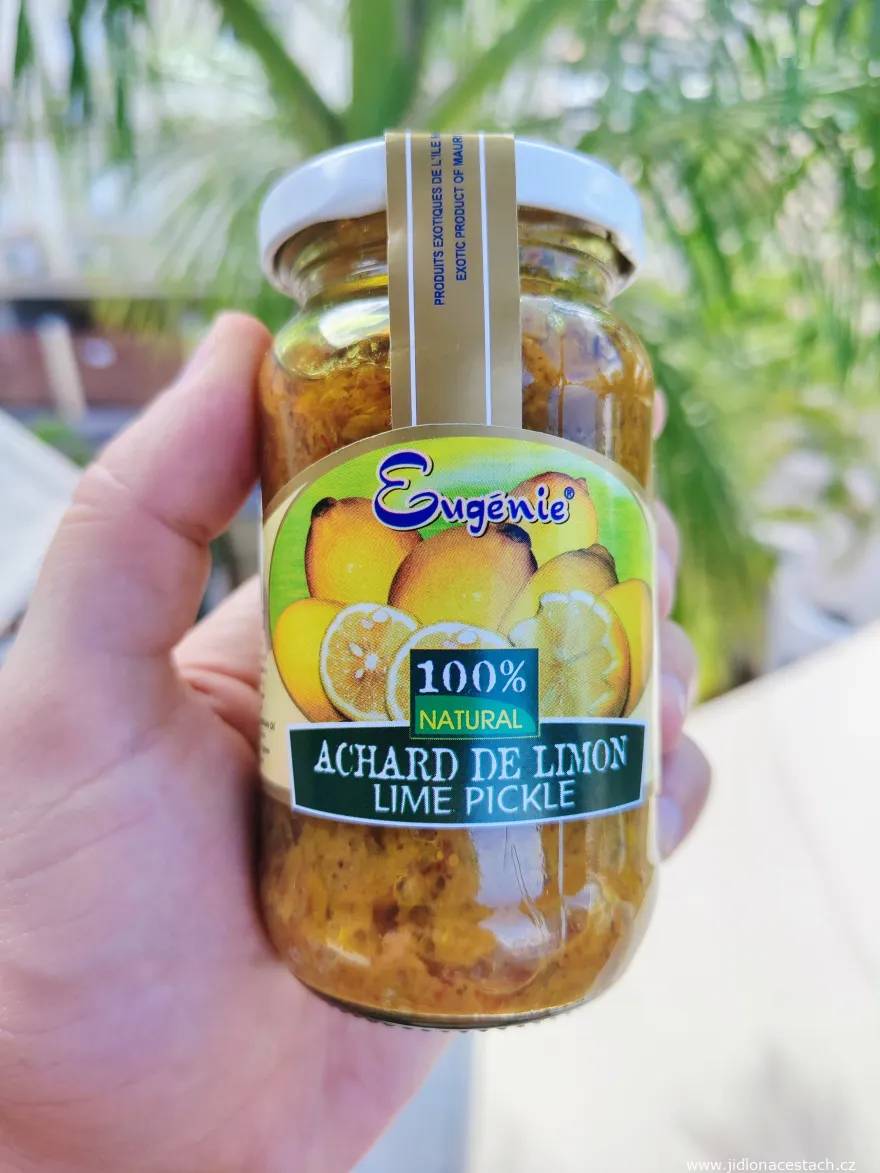
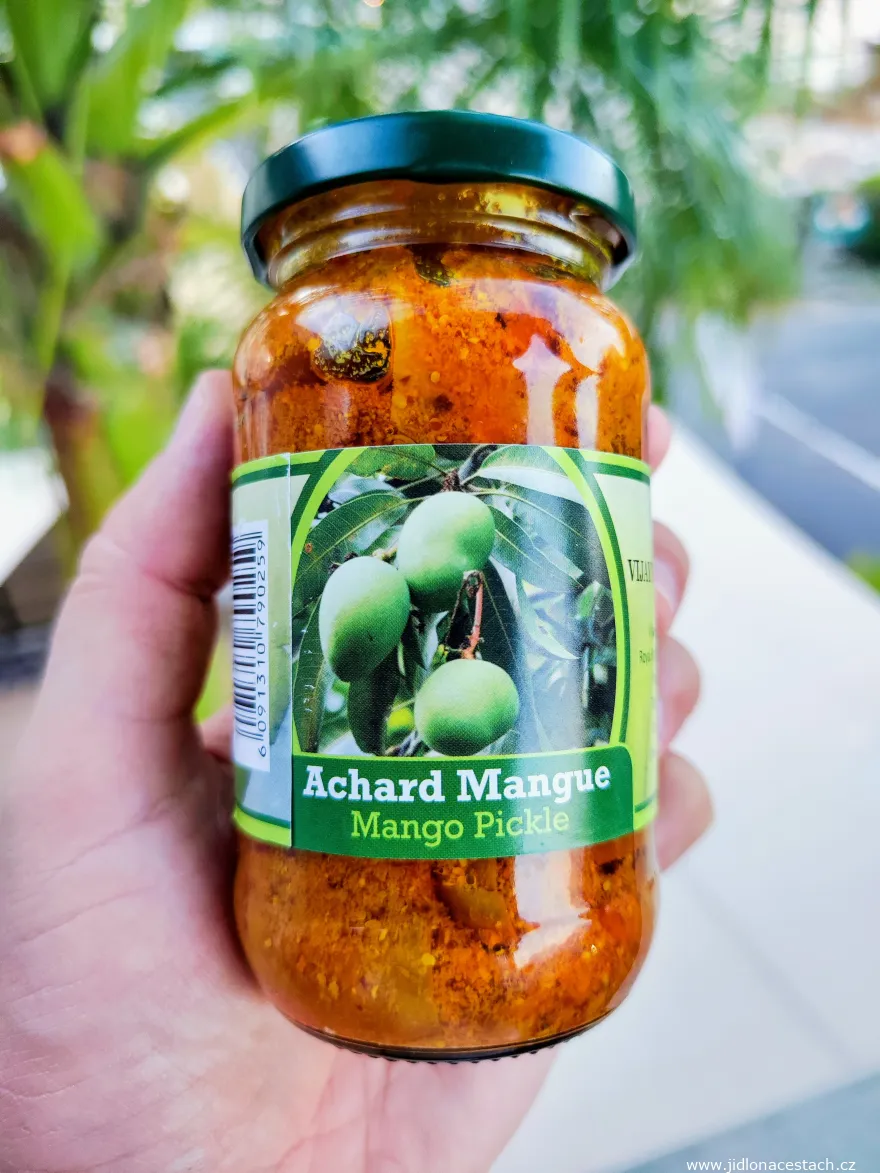
I brought achard home in jars, five versions at once. The lemon one cost 135 MUR (2.80 EUR) and it's the best one to start with: lemon is so loud that it covers even the cottonseed oil the jars I bought were filled with, which has a strange, heavy taste you don't expect from an oil. Green mango at 100 MUR (2 EUR) was sour and firm, as if it hadn't yet decided whether it was a fruit or a vegetable. The bitter gourd, momordica, at 170 MUR (3.40 EUR) was bitter for real, no compromises. There are small packs to try, too: pickled garlic cost 40 MUR (0.80 EUR), and ginger in chunks, not grated, the same. If you like tasting your way through things, eighty cents buys you a laboratory here. If you don't, at least there's the lemon.