Sagoo au Lait: A Mauritian Milk Dessert of Tapioca Pearls
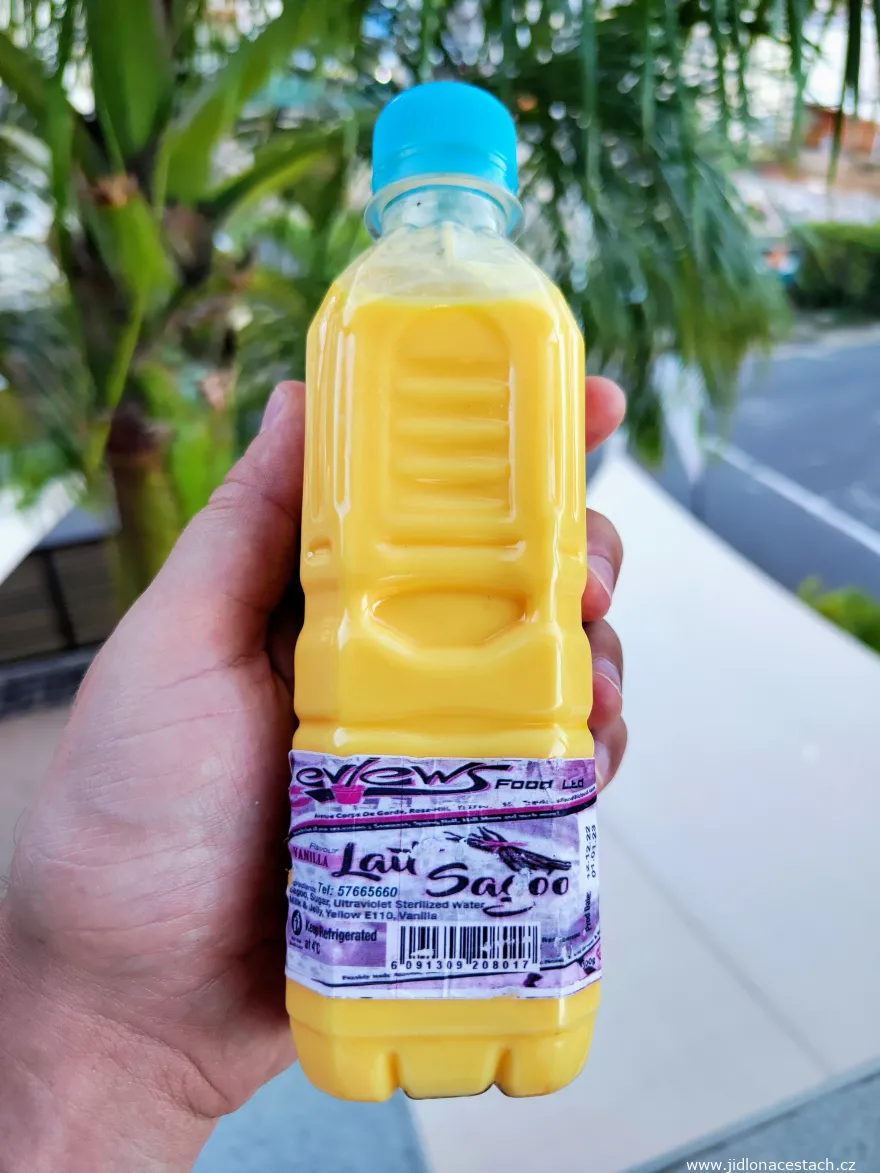
The label on the little yellow bottle promises Lait Sagoo, milk with sago. The ingredient list underneath reads like a detective story: sagoo comes first, sugar second, sterilized water third, and milk only shows up in fourth place, just ahead of jelly and the coloring E110, which gives that yellow a shade vanilla could never manage on its own. The industrial version makes no secret of it. It just says so in small print.
In Mauritian cuisine, sagoo au lait is a sweet dessert made from tiny starch pearls simmered in milk or coconut milk with sugar and vanilla until they turn clear and everything around them thickens into a loose pudding - at home you eat it with a spoon out of a bowl, in the supermarket you drink it from a bottle.
Why Sagoo Is Named After a Palm and Made from Cassava
The word reached the island by the same route as the spices: the Portuguese picked it up from Malay sagu, the French took it from them as sagou, and Mauritian shops and recipes now spell it their own way, sagoo. The catch is that sago is the starch from the pith of the sago palm, a Southeast Asian tree, and what sells in Mauritius under that name is almost always cassava pearls - tapioca. So sagoo au lait is a dessert named after an ingredient it usually doesn't contain - and it isn't alone: the French perles du Japon are the same tapioca and have nothing to do with Japan, and Indian sabudana is made from cassava too. Three continents, one shared mix-up.
Three Routes That Brought the Pearls to One Island
Nobody has ever pinned down who brought sagoo to Mauritius. What you can trace are all the places it might have come from. Tamil families know javvarisi payasam from India, the same pearls in milk but with ghee, cardamom, saffron and cashews, and in Mauritius sagoo is still served after Tamil weddings, supposedly with papadums as well. The Chinese community has Cantonese sai mai lo, sago in sweetened coconut milk with taro or pumpkin, and in the island's Chinese restaurants sagoo is a common way to end dinner. And French cooking has been simmering tapioca in milk with vanilla since the nineteenth century. The three lines met on the island, and the Mauritian version kept the simplest part of each: pearls, milk, sugar and a single vanilla pod - no ghee, no taro and none of the eggs that British cooking bakes into its tapioca pudding. A local blog sums it up by saying that sagoo is to Mauritians what rice pudding is to the French. A dessert you don't go out for. You just eat it at home.
How Sagoo Is Cooked and When It's Eaten
In Mauritius the pearls go straight into the milk, not into water first the way they do in Southeast Asia, and they're done the moment the white beads turn clear and the milk around them thickens with the starch they've released. Cook them too briefly and you're chewing chalk; cook them too long and you get glue. Coconut milk makes for a richer, sweeter version, cow's milk for a lighter one; vanilla and cinnamon are a given, cardamom and raisins the festive extra. It's the sweet rice pudding with cinnamon our grandmothers make back home, only with beads instead of grains and the spoonful of cinnamon sugar has given way to vanilla. It's eaten warm or cold, after the main course or as a snack, and for a special occasion it comes to the table chilled, with a scoop of vanilla or pistachio ice cream and a crisp cookie. If you want the homemade version rather than the one off the shelf, order sagoo at the end of dinner in a Chinese restaurant, where it's one of those desserts nobody has to look for on the menu.
Sagoo from the Chiller Cabinet
Sagoo came my way without a wedding and without a Chinese restaurant: in the chiller cabinet of a supermarket, where little vanilla-flavored bottles from a producer in Rose-Hill stood in a row. One cost 30 MUR (0.60 EUR) and it rode home in my bag along with achards and moringa tea. It tasted like very sweet vanilla milk, with a thicker body that slid across the tongue. The pearls had settled at the bottom, so the first mouthful was just milk; only after a good shake did the beads turn up, and between my teeth they squished rather than crunched. None of it was bad. It just tasted exactly in the order the label had listed.


