Dholl Puri: Mauritian Flatbread Filled with Yellow Split Peas
Two men and a cart with a blue tarp on a sidewalk in Port Louis. The one in the gray T-shirt stands at the window taking orders and money, nothing else. The one in yellow doesn't even look up at the customer: he grabs two flatbreads from the pile, ladles curry, rougaille and pickled vegetables over them, folds them, wraps them in paper and hands them over. Before I'd sorted out my change, the order was done. I clocked about twenty seconds a portion.
Dholl puri is a thin wheat flatbread filled with a paste of cooked yellow split peas, the most common street food of Mauritian cuisine and, by the islanders' own reckoning, the national dish. That speed isn't a trick: the flatbreads are baked ahead of time, and at the cart the food only gets assembled.
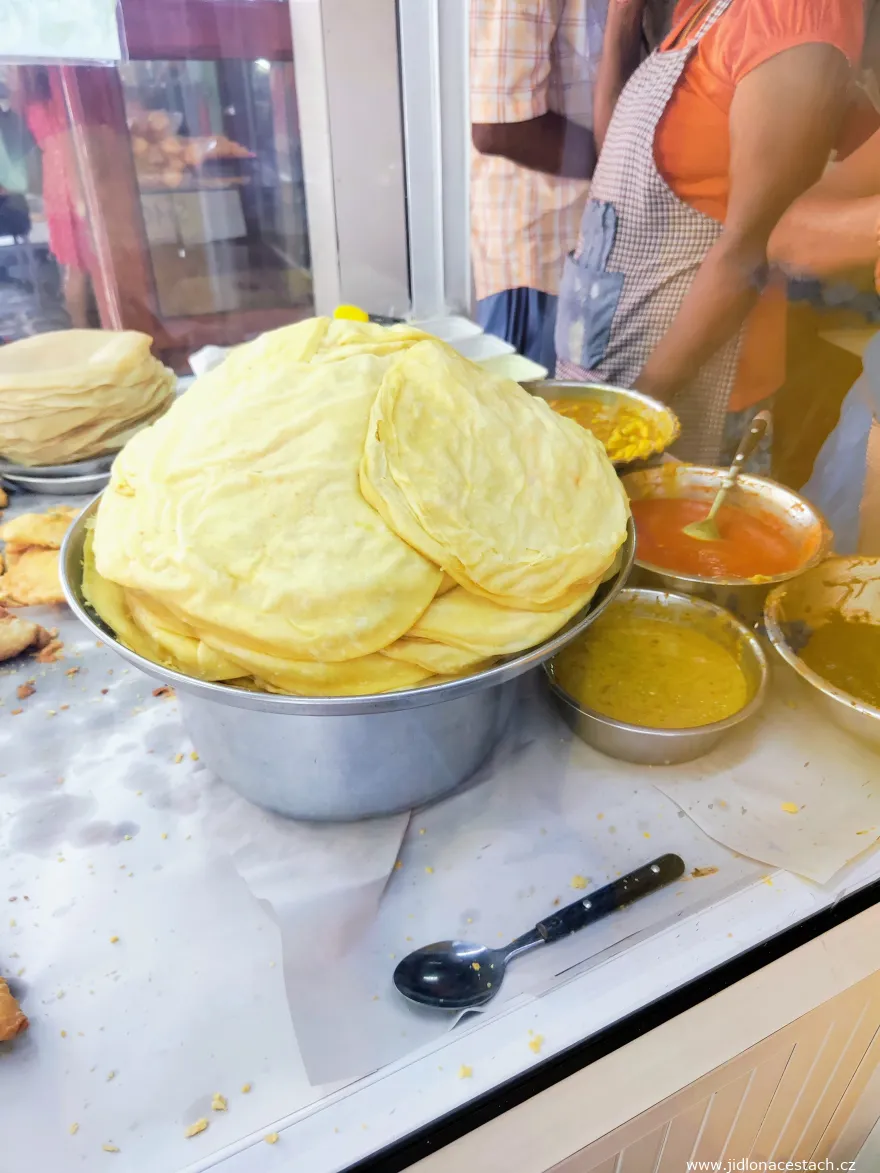
Puri That No One Fries
The name gives away where the flatbread came from, and at the same time lies about how it's made. Dholl is the Mauritian spelling of the Indian dal, a pulse - here yellow split peas; the doubled l is purely a local spelling quirk, and in the Caribbean the same word is written dhal. Puri means, in northern India, a flatbread meant for hot oil, one that puffs up like a balloon. Mauritian dholl puri, though, isn't fried at all - it's cooked dry on a griddle called a tawa: the flatbread brought its name along but left the technique at home. It has a sibling on the other side of the globe, too: in Trinidad and Guyana, the same split peas go into dhalpuri, just bigger and thicker, so a whole curry can be wrapped inside. Both branches grew out of the same migration and the same part of India, without knowing about each other. Back on the island, dholl puri has two cousins it's often confused with: the plain round roti and the square farata.
Who Brought the Peas to Port Louis
The history of dholl puri starts on a dock. After the abolition of slavery, planters began hiring indentured laborers from northern India from 1834 onward, mainly from Bihar and eastern Uttar Pradesh, and ships unloaded them at the Aapravasi Ghat immigration depot in Port Louis, a UNESCO World Heritage Site today. By 1920, more than 450,000 people had passed through it, and with them came a home flatbread filled with pulses, which the island slimmed down, colored with turmeric and taught to bake without oil. Nobody has ever dated who first baked a yellow flatbread on a tawa, or when. The island tells itself a legend that the laborers saved water and kneaded their dough with the water the dal had cooked in - a nice story with no source behind it. What is documented, at least, are the businesses: the oldest sellers still baking today got their start in the 1960s, and one of them used to deliver flatbreads by bicycle.
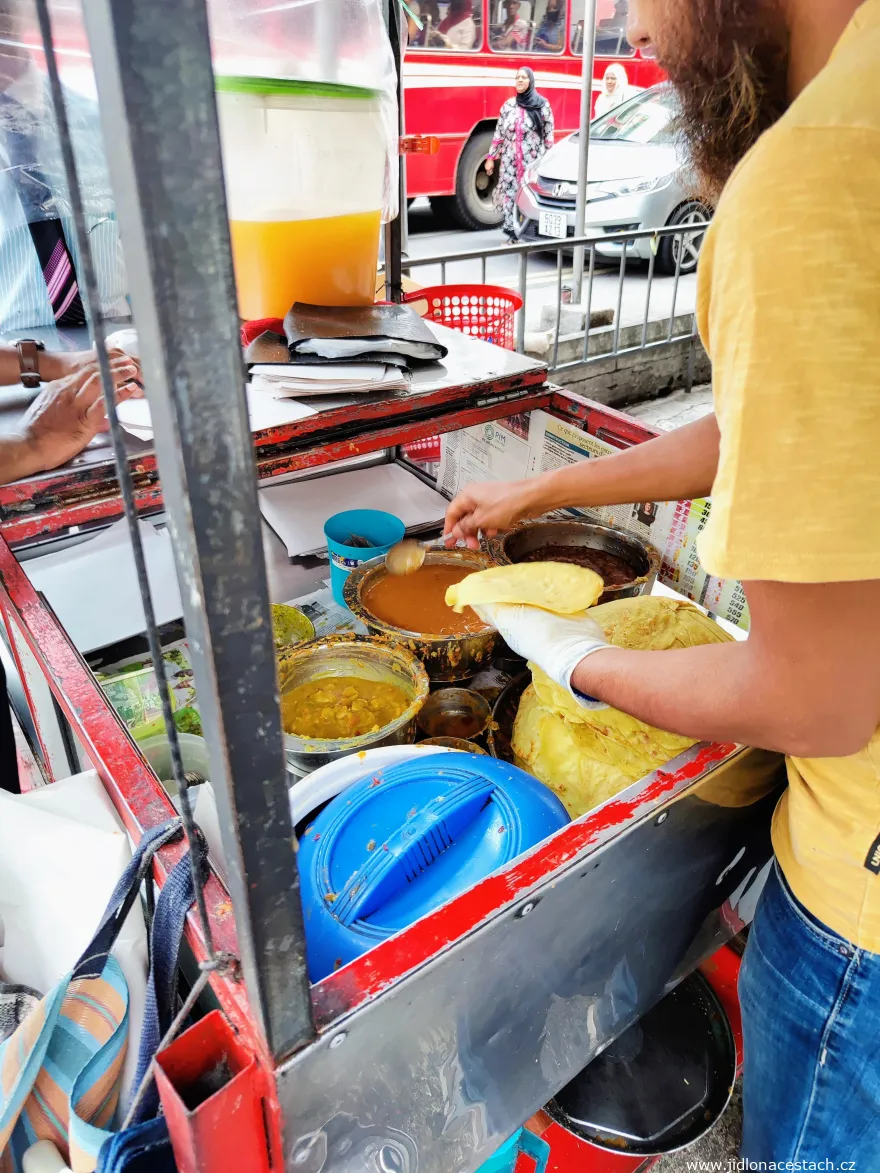
Peas Inside, Curry on Top
The main character is the split peas, and you can't see them at all. They're boiled until soft, ground into a paste, seasoned with turmeric and cumin, and tucked inside a ball of dough - which is then rolled out so thin the yellow filling shows through. It's the same principle as a jam-filled donut, just rolled out to paper thickness and without the sugar. If the baker presses the rolling pin too hard, the paste leaks out; too little, and it stays bunched in the middle - which is why the flatbreads are baked ahead of time, at leisure, and on the street only the assembly is left to do. They're sold by the piece, as many as you like, each spread with curry made from large gros pois beans, tomato-based rougaille, pickled vegetables called achard, sometimes coconut chutney, and chili paste on request. The same split peas turn up on the island in gâteaux piment and chana puri too - deep-fried bites where oil, not the dry griddle, gets the last word.
Dholl puri is eaten out of hand, off paper, standing up or perched on a curb, for breakfast or on the way home from work; you don't sit down to it at a table. You order by the piece - three or five, if you like. If you're afraid of heat, say so at the window before the spoon moves - once the flatbread is assembled, there's no scraping the paste back out. The bean curry has no meat in it, which makes this one of the few street foods a vegetarian can order without negotiating anything.
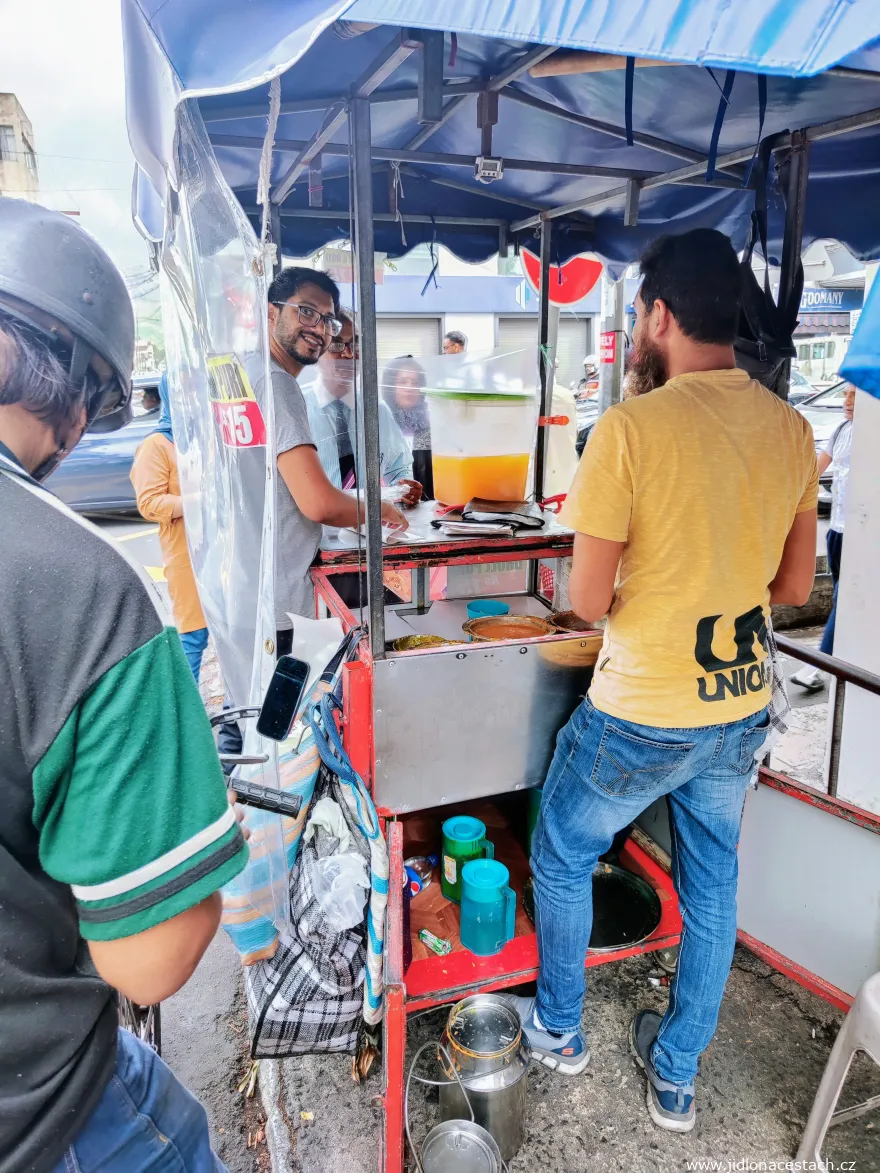
Twenty Seconds at a Cart in Port Louis
I ate dholl puri in Port Louis, at a street cart on the sidewalk; at the central market just about everyone sells it, while over in Flic en Flac on the west coast I didn't spot a single vendor. The flatbread was soft and pliable, the split peas inside barely recognizable, more of a faintly sweet mass that gave the dough its color and give; the flavor came from the bean curry and the tart pickled vegetables, and the chili paste showed up only with a delay. The vegetarian-filled flatbread cost 15 MUR (0.30 EUR) - I don't think I ate more cheaply anywhere else in Mauritius. The two men at the cart, meanwhile, kept working through a line that seemed to have no end, and not once did they swap roles. Twenty seconds of work per portion. Nearly two hundred years of preparation.


