Briani: Mauritian Biryani with Chicken and Potato
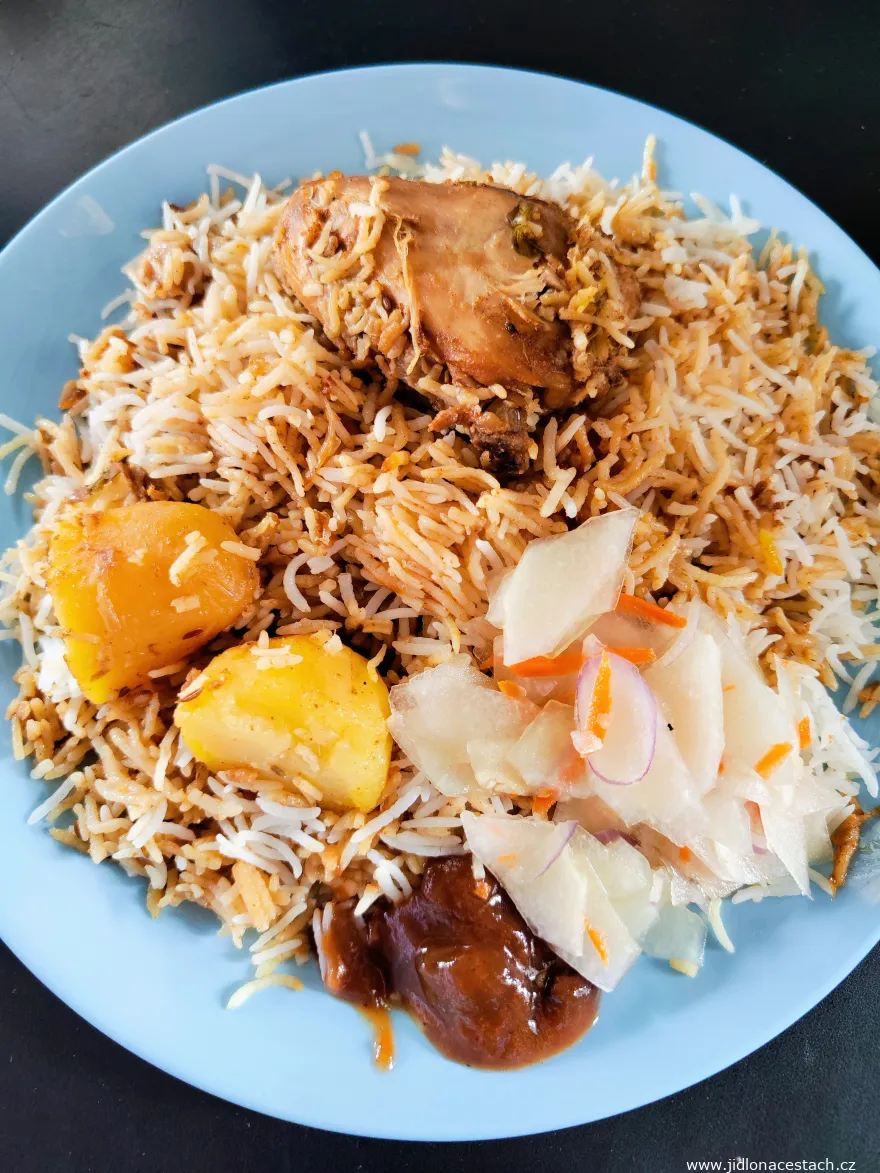
I ate my first biryani not in India or Pakistan, but on an island in the middle of the Indian Ocean, where they don't even call it biryani. The menu said briani; the plate held a chicken leg on brown rice and, beside it, a potato that most of India leaves out of biryani.
Briani is the Mauritian take on biryani: basmati rice scented with spices, layered with yogurt-marinated chicken and potato, steamed in a sealed pot - a dish Mauritian cuisine brought over from India, and one the island's Muslims made most fully their own.
Four Spellings Around the Indian Ocean
The word is Persian - most often traced to biryan, to fry - and it reached India with the Mughal court, where the Persian pilaf met Indian spices. Then, on its way around the Indian Ocean, every port spelled it its own way: Mauritius and Réunion spell it briani, South Africa breyani, Malaysia nasi briyani, while India and Pakistan stuck with biryani. So the map is a simple one: all of South Asia, plus every port that laborers and traders sailed to from there - and Mauritius is just one dot on it. The cousins differ more than four spellings would suggest. Pakistani cuisine cooks its biryani hot, with tomatoes and prunes, South African breyani adds lentils, and Malaysian briyani serves the meat in a curry sauce instead of a yogurt marinade.
An Empress in the Legend, Laborers on the Plantations
The popular history of biryani has a leading lady: Mumtaz Mahal, the wife of Shah Jahan - the one with the Taj Mahal. Visiting an army camp, she is said to have seen half-starved soldiers and told the cooks to make something filling out of rice and meat. It's a legend, one of several that contradict each other, and Tamil literature knows spiced rice with meat independently of any court. Briani didn't reach Mauritius with an empress, but with the indentured laborers who came from India to the sugar plantations after slavery was abolished in 1834. There were Hindus and Muslims among them, and it was the Muslim community that took briani furthest: it's still the dish of their weddings and of Eid, cooked by a bandari, a cook trained by his own father whose entire trade is this one dish, made in pots big enough for a whole wedding. Kolkata, where most of the ships carrying laborers set out from, puts potato in its biryani too; whether the island's potato came from there or Mauritius added it on its own, nobody has ever pinned down.
Yogurt Overnight, Potato Between the Layers
The chicken goes into a yogurt marinade the day before, with garlic, ginger and a spice mix in which the island is generous with cinnamon, cloves and cardamom; the rice is cooked only halfway. Then comes the layering: rice, meat with its marinade, potatoes, fried onions and rice again, part of it colored with saffron. The pot is sealed and left to cook in its own steam - the technique is called dum, and it's the one step you can't make up for later: whatever doesn't happen under the lid won't be there on the plate. If you've ever baked potatoes with meat at home, you know the principle: the bottom layer soaks up the juices, the top stays loose, and the best serving is the one where the two meet. The potato is the island's contribution; in the pot it soaks up the marinade better than the rice does, and on a bistro plate it gets its own place beside the meat, not underneath it.
Briani is cooked at two scales. The festive kind goes into pots for hundreds of people, and no Muslim wedding or Eid in Mauritius happens without it; the everyday kind stands behind a bistro counter at noon and at the market, next to dholl puri and fried mine frit noodles, where every community on the island buys it. Either way it comes with its sides: satini, the Creole name for chutney, pickled vegetables called achard, and a cucumber and carrot salad. You simply order "briani poulet" and you don't skip the sides: it's the satini and the achard that turn rice and meat into lunch the way the island eats it.
My First Biryani, and It Wasn't Called Biryani
Snack du Coin in Pamplemousses is a bistro with three items on the menu - briani, haleem and roti - and I had the briani right after a bowl of haleem. On a pale blue plate sat a chicken leg on rice, two pieces of potato, a little pile of achard and a spoonful of dark tamarind chutney. The chicken was tender, the rice fluffy and the flavors nicely melded; the achard and the homemade sweet-and-sour tamarind chutney rounded it all off. I still have India to compare it with. The bar was set by an island where biryani isn't even called biryani - for 150 MUR (3 EUR).


