Tigelada: A Portuguese Dessert from the Oven
When the Portuguese infanta Maria married the Duke of Parma in 1565, her dowry chests carried a handwritten cookbook to Italy - the oldest surviving cookbook in Portuguese. Among its 61 recipes is one for "the tigeladas of Dona Maria de Vilhena". A good few centuries later, I bought the same dessert from a supermarket chiller on the edge of Porto.
Tigelada is a dessert of Portuguese cuisine made from eggs, milk and sugar, baked in a ceramic bowl that you then eat straight out of with a spoon. And between the princess's dowry chest and the supermarket yogurt shelf, surprisingly little about the recipe has changed.
The Bowl That Gave the Dessert Its Name
The Portuguese word tigela means bowl and the ending -ada stands for what fills it: tigelada is literally "as much as fits in a bowl". It takes its name from the dish it is baked in and is pronounced tee-zheh-LAH-dah. Tigelada isn't at home in all of Portugal, but in its central interior, on the border of the Ribatejo and Beira Baixa regions - Abrantes and Proença-a-Nova both claim the recipe and other towns nearby bake their own versions. Its counterpart in Spanish cuisine is quesada pasiega, made from curdled milk, and in French cooking it is the dense far breton, which throws in prunes as well.
A Recipe from a Princess's Dowry
The oldest written record of it points to the Livro de Cozinha da Infanta D. Maria, a manuscript cookbook from the turn of the 15th and 16th centuries - the very one from the princess's dowry. Alongside the milk tigelada it also includes a partridge tigelada: back then the word didn't mean one particular dessert, but anything baked in a bowl. The sweet version comes with a legend of its own: the Dominican nuns of the Graça convent in Abrantes supposedly let the recipe out into the world by entrusting it to their washerwoman, who then spread it around the area. None of it can be proven. The only certain thing is that the convent has been in ruins for over a century - the recipe hasn't gone the same way.
What Goes into a Tigelada and Why It Needs Fierce Heat
Everyone has the ingredients at home: eggs, milk, flour, sugar, lemon and a pinch of salt. The real star here is the heat. The batter is poured into a bowl heated in the oven - traditionally a wood-fired one, still hot from baking bread - so it sets against the sides at once, takes on a caramel crust up top and a honeycomb of holes underneath, which is how those in the know can tell it was done properly. The technique comes closest to the apple bread pudding from my grandma's oven back home - milk, eggs and heat as well, just without the bread rolls and apples. The official register of traditional products lists two tigeladas as two equally valid truths: the Abrantes one with cow's milk and sugar, and the honey one from Proença-a-Nova, which calls for goat's milk and honey from hives opened at the start of summer.
It's eaten warm straight from the oven and chilled from the fridge, as a dessert after lunch and as a snack for the road. Every August, Proença-a-Nova throws its Festival da Tigelada: some twenty local restaurants bake it and the town hands out clay bowls to visitors - promotional merchandise you can eat out of right away.
Tigelada from the Chiller Cabinet
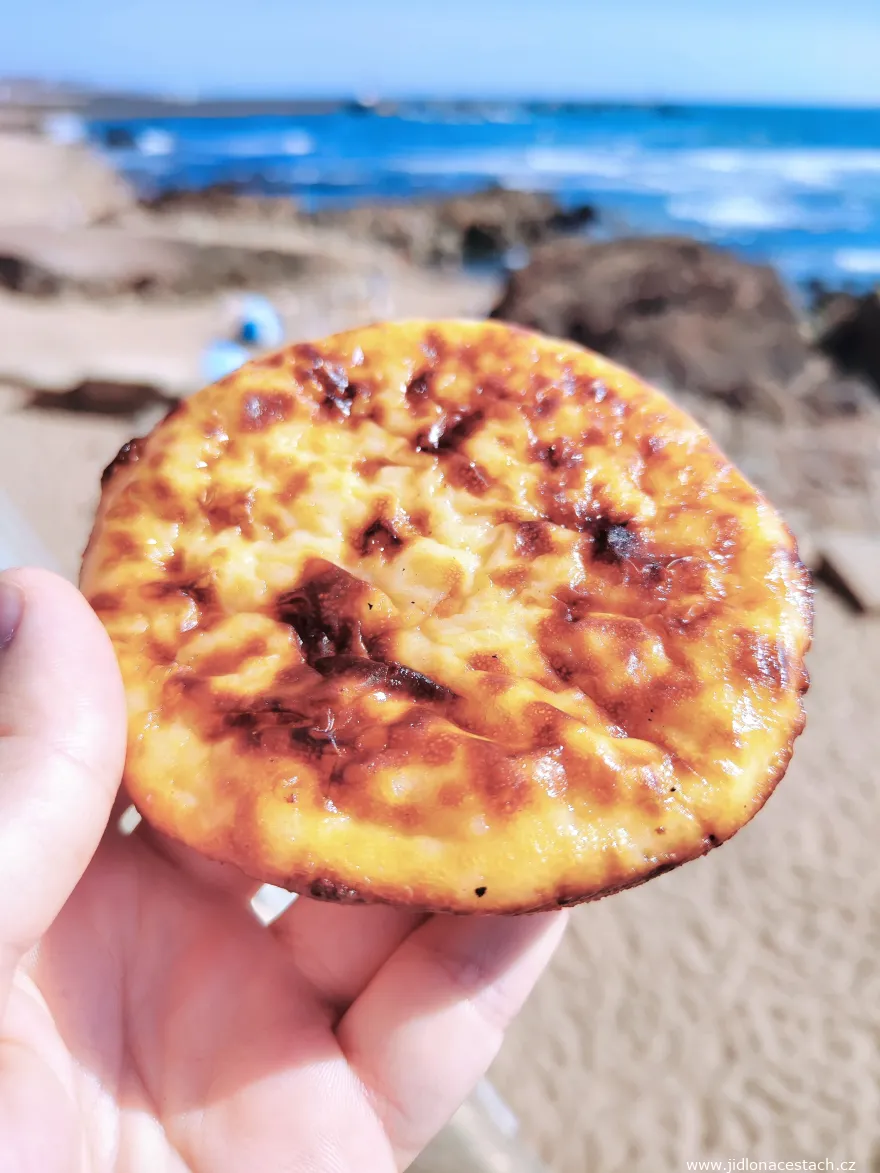
Mine was nothing artisanal. I bought it in a supermarket in Foz do Douro, the district where Porto ends at the Atlantic, and ate it walking along the shore. It tasted pleasantly sweet, it was light and fluffy and you could tell there were eggs in it from the first spoonful; the dark baked top added a slightly bitter, caramel finish. So I still owe something to the one from a clay bowl and a wood-fired oven. The one from the chiller cabinet cost 1.10 EUR.


