Jufka Me Pulë: Albanian Noodles Baked with Chicken
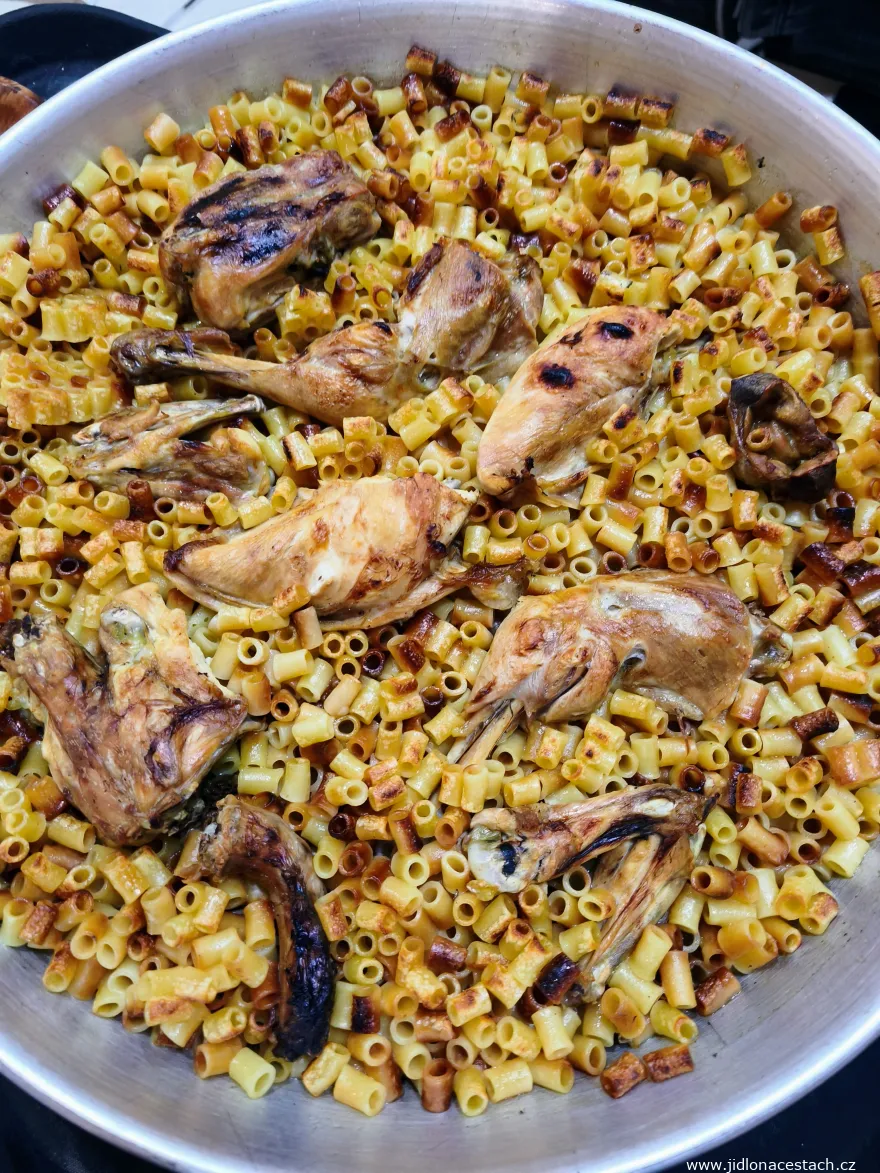
On a road trip to the south of Albania, we stopped in the village of Toç, at Te Xhaferi, a taverna I'd picked out for the trip in advance. But before I'd even looked at the menu, my eye was caught by a baking dish on the next table: golden noodles baked to a crunch, with chunks of chicken in browned skin tucked in among them. It looked so good that I got over my shyness and went over to ask what the dish was called. Jufka me pulë is a one-pan dish of Albanian cuisine: homemade jufka pasta is toasted in butter, covered with chicken broth and finished in the oven beneath portions of chicken.

Jufka: A Word the Balkans Can't Agree On
The word jufka was carried across the Balkans by Ottoman Turkish, and at heart it simply means "thin". The neighboring languages agree on that much - but not on what it actually refers to. In Turkey yufka is a thin sheet of dough, in Serbia and Bosnia it's the pastry sheet that pita is wrapped in, in Bulgaria and North Macedonia it can be either flatbread or noodles - and in Albania it's simply pasta. So the same order can land you a sheet of dough one time and a whole tray of noodles the next - it all depends on which country you say it in. Albanian jufka, a homemade dried pasta, comes both as long flat noodles and as tiny short pieces.
Chicken with jufka is at home in the Dibër region in the northeast of the country: the national tourism agency ranks it among the region's most famous dishes, and recipes claim it as part of the "Dibra tradition". It has long since spread all over Albania, though - you'll find it on menus in Tirana and in the south, too, where I came across it myself. Its relatives reach across the borders: in Greek cuisine there's rooster with homemade hilopites noodles, only cooked in wine and tomatoes, and in Turkey they make tavuklu erişte, with the chicken shredded straight into the noodles. The Dibra way is more frugal, and that's exactly what sets it apart: no sauce, just butter and chicken broth. And jufka me pulë's closest cousin lives right next door - pulë me pilaf does something very similar with chicken in a baking dish, only with rice taking the place of the noodles.
No Birth Date, but Plenty of Kilos
Nobody really knows how long jufka has been rolled out and dried in Dibra: English-language travel sites offer the sixteenth century or simply centuries of tradition, but without a single piece of evidence, and Albanian sources wisely steer clear of arguing over dates. The present, on the other hand, can be weighed. An agritourism farmstead near Peshkopi that trades as Jufka Inn turns out around 200 kilos of noodles a day, according to the tourism agency, and at the region's autumn festival jufka is put on display alongside apples, nuts and chestnuts. Jufka is also made on a large scale in Debar, across the border in North Macedonia - the border cut the historical region of Dibra right down the middle. The noodles clearly don't let that bother them: Debar's biggest jufka factory got its quality certification through a European cross-border project.
Hen into Broth, Broth into Noodles
The Dibra classic starts with a village hen simmered with rosemary, bay leaves and thyme - the broth it makes is half the dish. Meanwhile the jufka is toasted with onion in butter in a baking dish, and then comes the step where the recipe keeps a close eye on the level: the broth goes in no higher than the noodles, because they're meant to drink every last drop of it by the time they're done baking. The portions of meat are laid on top, each with a pat of butter, and the whole thing goes back in the oven to finish. No cheese goes on; the noodles are meant to stay buttery and full of the flavor of the broth.
A newer, city version uses store-bought jufka and adds mustard spiced with hot pepper, and in restaurants it's commonly ordered as a single portion. But the village baking dish with a whole hen is food for a shared table - and it only really pays off once at least three people sit down to it.
Chicken from the Next Table
I ended up eating jufka me pulë at Te Xhaferi in Toç (see Where to Eat in Albania) without ever ordering it. The moment I'd got my polite question out, the locals had me sit down with them for a while and insisted I try it. The noodles were buttery and soaked with broth, soft underneath and crunchy around the edges of the dish, and the chicken was falling off the bone on its own - it was every bit as good as it had looked from the next table. I can't give you a price - nobody paid for this one; it was a gift from our neighbors. I went back to my own table, my grilled lamb, kulaç bread and fli pie - with a resolution: next time I'm in Toç, I'll order a baking dish of my own. And bring reinforcements.


