Limoncello: The Lemon Liqueur from Sorrento and Amalfi
On the label, limoncello looks like something handed down by great-grandmothers: gold lettering, lemons, a date of some sort. The documented history is more sober than that. The first trademark for a lemon liqueur was registered by a businessman from Capri in 1988, and the first company to make it on any scale was founded in Sorrento in 1991. On that coast, a liqueur that looks three hundred years old is younger than I am.
Limoncello is a sweet lemon liqueur of Italian cuisine from the Campanian coast: the yellow peel of lemons steeps in alcohol, gets sweetened with syrup, and the result, at around thirty percent, is drunk ice cold, in a small glass, after a meal.

What the Word Limoncello Meant Before It Became a Liqueur
The name is a plain diminutive of limone, lemon, and as a word it is a good deal older than the drink: dictionaries record it from the fourteenth century, only back then it meant a small lemon, and at the end of the seventeenth century the Accademia della Crusca dictionary explains it as lemon water used as a remedy. Limoncello is at home on the Sorrento peninsula, on Capri and along the Amalfi Coast, all one stretch of Campania; the rest of Italy drinks it today as the national digestif and at 9.5 million liters sold a year it is the country's best-selling sweet liqueur. It is made from Liguria down to Sicily: in the Cinque Terre the steep terraces give a fresher limoncino, and anyone who asks for limoncello there gets a correction along with it, while in Sicily they make it from their own lemons from Syracuse. Its closest relatives are the orange arancello and the Calabrian liquore al cedro from the thick-skinned citron - same method, different fruit.
Three Legends and One Date
Capri tells of Signora Maria Antonietta Farace, who at the start of the twentieth century poured the guests of her boarding house a liqueur made from lemons from her own garden; the Massa family in Sorrento keeps a house recipe from 1890; Amalfi and Sorrento add monks in a monastery and fishermen who warmed themselves with it at dawn. Three neighboring places on one coast, three versions, each the one true one, and not a scrap of paper to back up any of them - nobody can put a date on the first bottle of limoncello. The one firm date is 1988, when Signora Farace's descendant Massimo Canale registered the Limoncello di Capri trademark and started bottling for bars and shops. The protection, though, covers something other than what the label suggests. The IGP mark, which is on the bottle in my photo too, does not belong to the liqueur but to the lemon: both the Sorrento and the Amalfi lemon have carried it since the turn of the millennium. The liqueur itself has had a protected geographical indication since 2016, under the dry official name Liquore di Limone di Sorrento, and must be at least 30 percent alcohol; the Amalfi one gets by with 25. One coast, two degrees of official strictness.
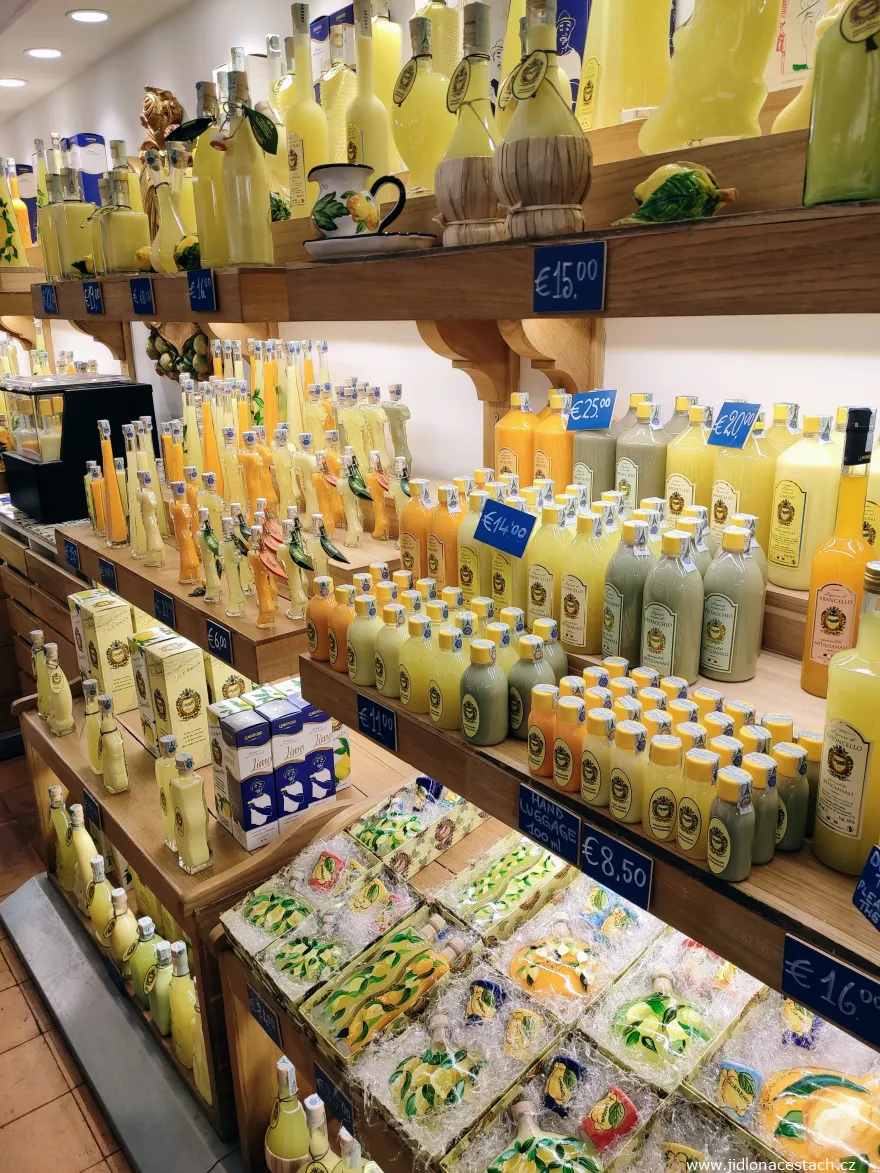
Peel, Alcohol and Nothing White
The lead role goes to the peel, and only to its yellow layer. The white pith underneath turns bitter, which is why Sorrento lemons are peeled thinner than an apple, and anyone who has ever grated lemon into cake batter and gone too deep knows that bitter mistake. The yellow peel is left in pure alcohol for a week to a month, until it gives up its oil and its color, and only then comes the syrup of water and sugar, which brings the strength down to that thirty percent. The lemons grow under straw mats called pagliarelle: they shade the fruit, slow the ripening and turn the peel into the most valuable thing on it. Sorrento has the oval ovale di Sorrento, Amalfi the elongated sfusato amalfitano, and what went into the steeping shows in the bottle - cheap souvenir limoncello makes up for color with dye and for aroma with flavoring, while the protected versions are allowed neither.
It is drunk from the freezer, where the alcohol keeps it from freezing and it only thickens, in a small chilled glass, a sip or two after a meal; that it helps digestion is beyond question on that coast, it is just that no doctor has signed off on it yet. Recent years have turned it into the limoncello spritz with prosecco and ice, younger than the liqueur itself and drunk in the afternoon on terraces. In the shop, read the label: if you want lemon and not dye, look for Liquore di Limone di Sorrento or its Amalfi counterpart, and the ceramic bottle from Vietri with painted lemons is pretty, except that you pay more for the clay than for what is inside.

A Bottle from the Square in Amalfi
I bought my bottle in Amalfi, on the square below the cathedral steps, a few paces from the pastry shop where I had eaten a delizia al limone earlier. At home, straight from the freezer, it was thick, almost syrupy: sugar first, clean peel right behind it, the way you know it from a freshly peeled lemon, and the alcohol only announced itself in the throat, a moment later. The spritz in the third photo I drank in Sorrento, in a small bar on a terrace above the sea, and it was a different drink altogether: light, bittersweet and with a pleasant sourness.


