Makalo: A Macedonian Dip of Garlic or Peppers
Read up on makalo beforehand, and you'll expect a smooth white dip from Lake Ohrid that fills the whole table with the smell of garlic. Then you order it at a grill place in Skopje and get a warm, orange potato paste studded with bits of roasted pepper. Nobody got it wrong - not the cook, not the guidebook - one name here just carries two completely different dishes.
Makalo (Macedonian: макало) is a dip that Macedonian cuisine uses for dipping bread: either a thick emulsion of crushed garlic with oil and vinegar, or a coarser mix of roasted peppers with garlic, oil and vinegar. The two share only a purpose and a name - and that name is more precise than you'd expect for two such different bowls.

The Dip: What Makalo's Name Gives Away
Most dishes are named after an ingredient, a place, or whoever invented them. Makalo is named after a movement of the hand. The Macedonian verb мака means to dip a piece of bread into food, and макало is simply the thing you dip into it - roughly "dip" or "dipper" in a literal translation. A dish named after the gesture you eat it with doesn't need to worry about its ingredients - which is why it can be white or orange and still keep the same name.
Geographically, the word makalo seems to have never crossed North Macedonia's borders - I found no dish by that name in Albania, Bulgaria, or Serbia. Inside the country, though, the family branches out: the best-known version is the garlic one from Ohrid and Bitola, served there with trout from the lake; in Skopje and other grill places, the warm pepper version comes with skara, the local word for grilled meat; the countryside has its own everyday version with potatoes, and Veles has a variant of its own. You can spot the relatives across the border by how they're made: in the part of Greece that's also called Macedonia, they pound skordalia from just garlic and vinegar, no potatoes - almost the same as Ohrid - and the pepper version isn't far from Bulgarian lutenica or ajvar, except both are canned in jars for winter, and lutenica is also built on tomatoes. Makalo never goes into a jar. You make it, you eat it, and you make it again.
Fishwives of Trpejca and a Brand Without a Stamp
The history of makalo is mostly told by whoever's selling it. According to one Ohrid producer, it began in the fishing village of Trpejca on the lakeshore, where women mixed garlic, oil, vinegar and salt for their men as both food and medicine before they went out on the water. It's a legend, and nobody dates it, which is no surprise for a dip made of four ingredients - a dish like that isn't invented, it just starts being sold one day. The same producer calls Ohrid makalo a Macedonian brand, and in the same breath complains that it has no legal protection, even though it deserves it just as much as ajvar. Right now, then, it's a brand in the same sense that a grandmother's recipe is a brand: everyone knows it, nobody owns it.
How Makalo Is Made and What It's Eaten With
The Ohrid version is a labor of patience. The garlic gets pounded, then oil is poured in drop by drop while you keep stirring, until the mixture thickens and turns white - it's exactly the technique for homemade mayonnaise, just without the eggs, and just like mayonnaise, it either comes together or splits, depending on how fast you pour. Vinegar and salt go in last; some people add soaked stale bread to save on oil, some add walnuts. The pepper version goes the other way: roasted peppers, a bit of garlic, oil, vinegar, sometimes walnuts or cumin, mashed just enough to leave some texture in the bowl. What they share is the amount of garlic - nobody in Macedonia is shy about it - and the absence of anything that might tone it down.
Ohrid makalo goes with fish and rakija, the pepper version goes with the grill, and both go with bread, the only proper utensil - the spoon by the bowl is just there so you can scoop some onto a piece of lepinja. At a grill place, expect the warm pepper version; the garlic one shows up in Skopje more as a side to something else, like fried zucchini, and shops sell it in jars. And there's one thing worth being prepared for: after the Ohrid version, you won't be having any close conversations for the rest of the evening. The safest defense is if everyone at the table eats it.
Pepper Version at Nadžak, Garlic Version at Dukat
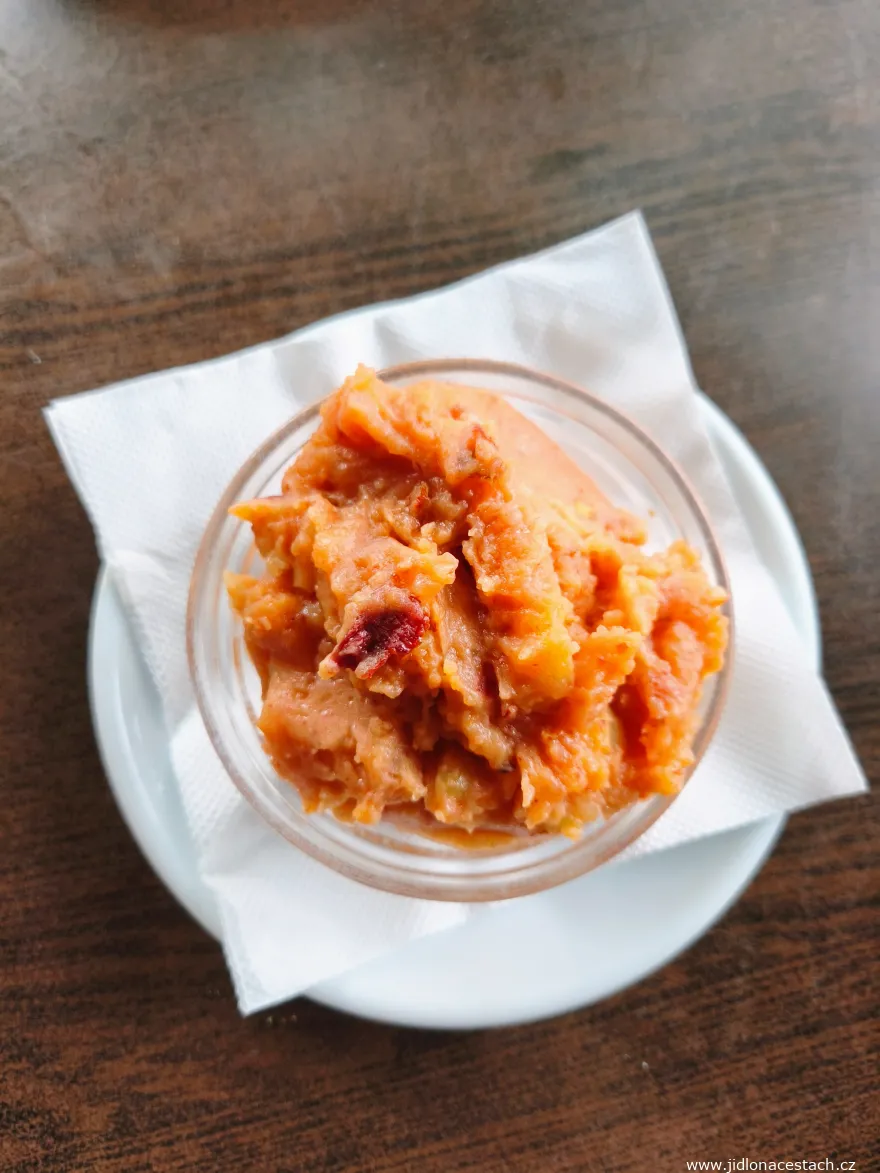
I had makalo in Skopje at restaurant Gostilnica Nadžak (see Where to Eat in Skopje), with grilled meat, in a small glass bowl and served warm - so the pepper version, not the Ohrid one. It was so thick you couldn't actually dip bread into it - you spooned it onto lepinja instead - and among the bits of roasted pepper, I'd have bet money there was potato too; the countryside version of makalo really does use it, so maybe I wasn't wrong. The bowl cost 120 MKD (2 EUR).
The white garlic version arrived at my table at Gostilnica Dukat (see Where to Eat in Skopje), as a side to the fried zucchini, prženi tikvički.
So when it comes to what makalo actually is, I have two answers, both from Skopje and neither from the lake. For the Ohrid version, the one meant for trout, I'll still have to make the trip.


