Lepinja: A Balkan Yeast Bread for Kebapi
On the counter of a kebapčilnica in Skopje sits a stack of round flatbreads, piled one on top of another, with dark scorch marks from the heat. Nobody orders them. They don't need to be ordered: they turn up with every portion of meat and vanish from the table faster than the meat does. This is lepinja.
Lepinja (Macedonian: лепиња) is a round flatbread made from yeasted dough - flour, water, salt, yeast, and nothing else - that Macedonian cuisine serves warm alongside grilled meat, chiefly kebapi. It often doesn't get its own line on the menu, and none on the bill either. Yet it arrived with my kebapi and with my tavče gravče alike, every time, without my ever asking for it.

Why You'd Ask for It Differently in Sarajevo
A few hundred kilometers to the northwest, the same bread goes by a different name: somun. So the Balkans have two names for one round yeast bread, and both are immigrants, just from opposite directions. Somun arrived with the Ottomans and traces back to a Greek word for a bite of bread; lepinja came from the north, from the Hungarian lepény, meaning a flatcake. A dish from the south, a name from the north - the Balkans let every passing cuisine leave its mark, and kept something from each one. It's pronounced with a soft n, roughly "leh-PEE-nya" - and even if you say it wrong, you'll still get your bread.
Anyone who thinks of lepinja as Macedonian is only half right: the name is used in Macedonia and Serbia, but the bread itself belongs to the whole Balkans. In Serbia it's split open horizontally and filled with kaymak, in Bosnia Sarajevo's somun gets a dusting of black cumin during Ramadan, and Turkish cuisine's closest relative is the festive ramazan pidesi.
Ancient
Round yeast breads reached the Balkans with the Ottomans, but the bread type itself is far older: the oldest documented bread in the world, charred flatbread remains found in Jordan, is roughly 14,500 years old and shares both the shape and the basic method with today's lepinja. No source says exactly when lepinja became the automatic side dish for kebapi. The only lepinja with papers is Serbian: a family that fills it with lard, kaymak, and egg reportedly had the recipe registered with the intellectual property office back in 2005.
What Lepinja Is Made Of and How It's Handled
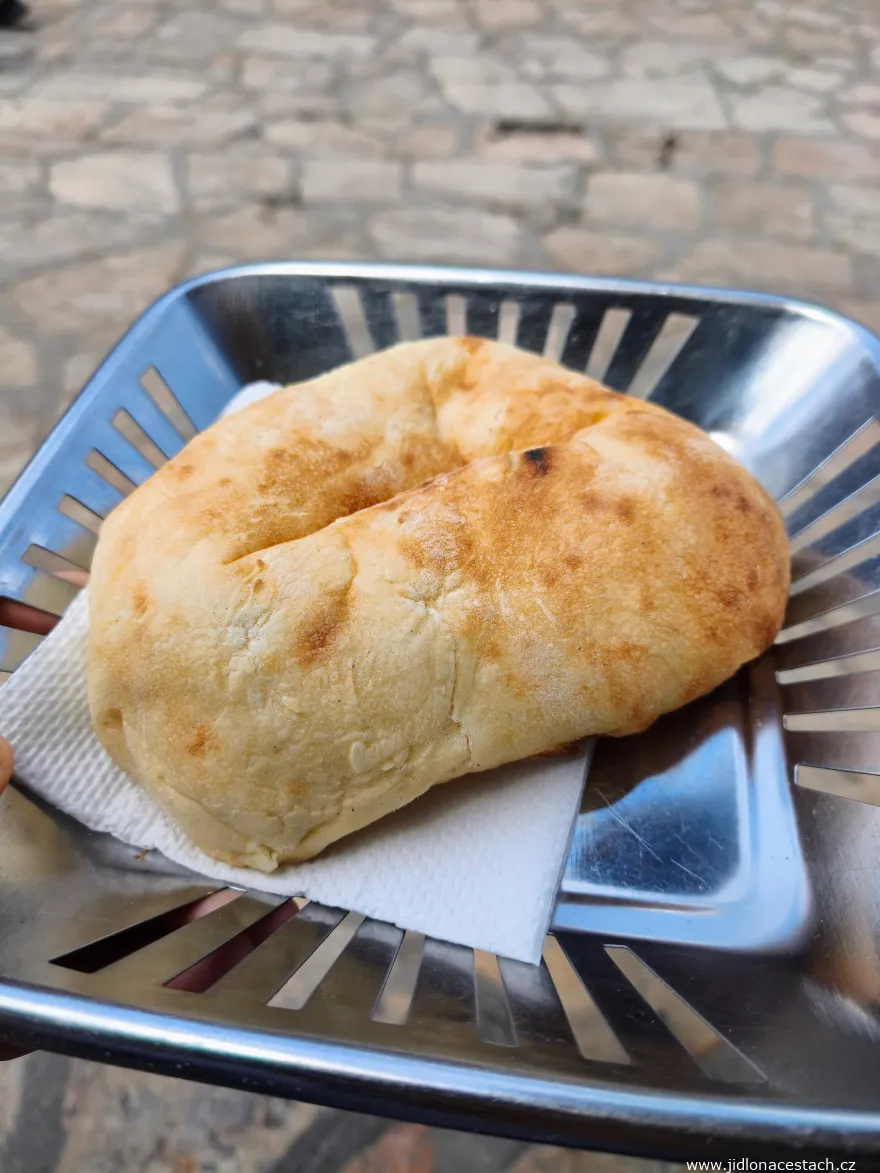
Lepinja lives and dies by proofing and heat: the dough has to be airy and the oven fierce, so the bread puffs up quickly, gets a thin mottled crust, and stays soft and moist inside.
Back home, the closest parallel is the bread roll a hot dog comes in: nobody ever praises it, but the whole thing feels wrong without it. Except nobody ever grills your bun for you - at one restaurant my lepinja came back over the grill a second time, with dark char lines and chopped herbs on top; that's not the norm, and it's a shame.
It's eaten two ways. Either it's split open and filled, or it sits beside the plate and gets torn by hand: a bite of meat, a piece of onion, a chunk of bread. The classic Skopje order is a desetka so kromid, ten kebapi with onion, plus lepinja and beer. A line from the Macedonian film Samouništuvanje makes a promise: I'll buy you a ten-piece with onions so you can feel like a Chinese empress - and the bread isn't mentioned in that promise, because it goes without saying.

The Side Dish I Never Ordered
I tasted lepinja in Skopje, at several ordinary restaurants and kebapčilnicas, and every time it played out the same way: I never ordered it, and yet it showed up anyway - with kebapi and with tavče gravče, where it suits the beans even better than it suits meat, since it's exactly what you need to wipe the bowl clean. It was warm, soft, airy and slightly moist inside, the crust thin and only charred here and there; the grilled version added smoke and herbs on top. I liked it more than a side dish has any right to. I only ever paid for it separately once: the grilled one with herbs cost 50 MKD (0.80 EUR) at a restaurant; everywhere else it came included in the price of whatever it was served with.


