Ostri: A Spicy Georgian Beef Stew
Ostri sounds like a word nobody needs translated: the Slavic "sharp", as in hot. But order it expecting Caucasian hellfire and you'll leave the table warmed rather than burned.
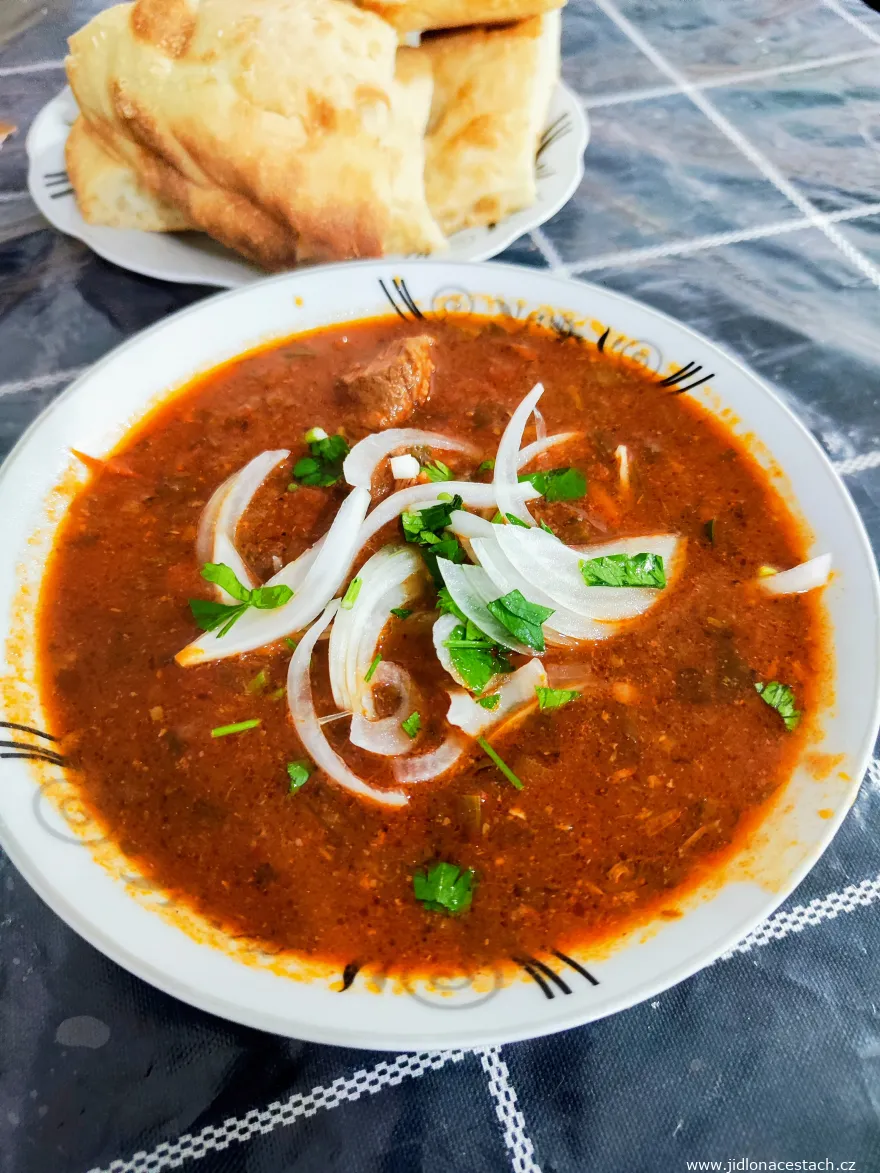
Ostri (Georgian: ოსტრი) is a beef stew of Georgian cuisine: cubes of meat braised until tender in a thick tomato sauce with onion, garlic, cilantro and hot pepper. The name promises fire, the plate delivers seasoning. And on top of that, nobody is sure who the name belongs to.
Who Does the Word Ostri Belong To
Georgian dictionaries dutifully file ოსტრი under food, but they keep quiet about where the word came from, which leaves two theories. The first has Georgian borrowing the Russian ostry - spicy; the sounds Georgian doesn't have dropped away along the way, leaving ostri. The second follows the trade routes much deeper into the past, to the Persian osh, a soup. Russians, or Persians? The only certain thing is that in Georgian cooking ostri means less "fiery" than "properly seasoned". So the name of the dish misleads twice over: nobody knows where it came from, and it isn't literally true.
The stew itself, though, is Georgian beyond argument. It is cooked all over the country and no neighbor lays claim to it - in the Caucasus, where every second soup starts a quarrel, a dish nobody fights over is a small rarity. It does have relatives at the table, though: Armenian khashlama layers meat with vegetables and almost no liquid and steers well clear of heat, while the homegrown chashushuli comes so close to ostri that foreign food sites often declare the two the same dish.
What Ostri Is Made Of and When It Is Eaten
Travel sites like to claim that ostri has been cooked "for centuries". None of them offers any proof, and one ingredient argues against them: the tomato the whole sauce rests on didn't reach the Caucasus until the 19th century - so today's version, at the very least, is younger than the legend. Otherwise the recipe is freer than almost any other: beef cut into cubes, plenty of onion, garlic, cilantro, dried chili and two or three hours over a low flame. Ostri is closer to Czech goulash than you would expect this far into the Caucasus, only tomatoes take over the job of ground paprika and cilantro calls the shots instead of marjoram. And since the point is the method rather than the shopping list, the Georgian internet will happily serve you an ostri made with sausage.
It's never going to be the centerpiece of a celebration. Ostri is everyday food, cooked at home from whatever the house has on hand - which doesn't mean it can't show up at a supra feast, only that it won't be the star there. Hot shoti bread from the clay oven and pickled vegetables belong on the plate with it; the sauce is half the point of the dish - the spoon does the rough work, a piece of bread the fine work.
A Stew Beside Someone Else's Feast
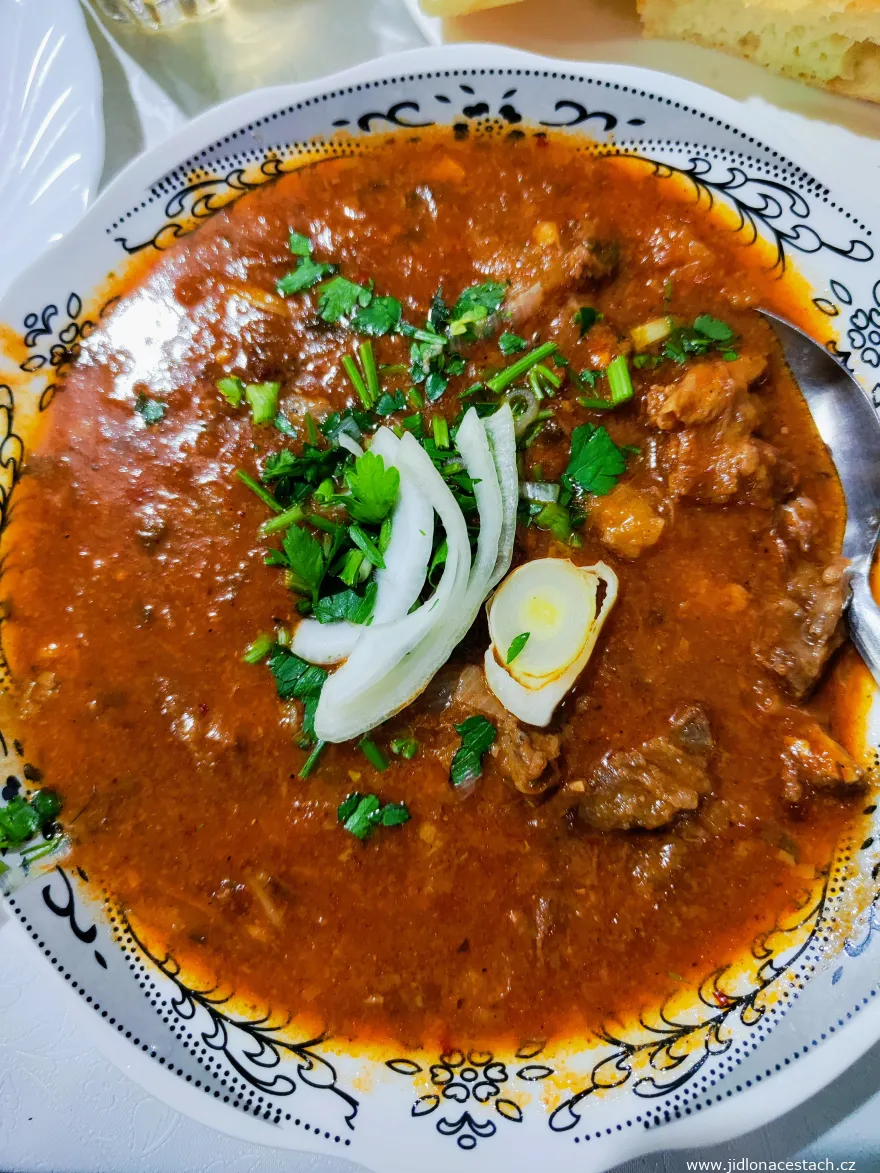
I remember ostri best from a beer hall in Kutaisi, where a supra happened to be under way - and the stew everyone writes about as everyday food was being served at that feast without the slightest hesitation. My portion, big pieces of lean meat that fell apart on the tongue, cost 12 GEL (4 EUR). A different school of thought is on display at Mapshalia Restaurant in Tbilisi: there they make ostri from cheaper cuts and trimmings, the portion came to 7 GEL (2.40 EUR), and the seasoning reminded me - Georgians will forgive me - faintly of the tripe soup we make back home: a thick sauce with the sweetness of long-braised onion, and pepper that warms more than it burns. In Kutaisi they served lean meat; in Tbilisi, trimmings. Either way it was ostri.


