Pardulas: Sardinian Ricotta Pastries
It was never the parish calendar that decided when pardulas got baked in Sardinia - it was the sheep. Lambs are born in winter, are weaned in spring, and the ewes give the most milk - its whey becomes fresh sheep's milk ricotta, and suddenly there is so much of it that something has to be baked. Easter just happened to supply a convenient date.
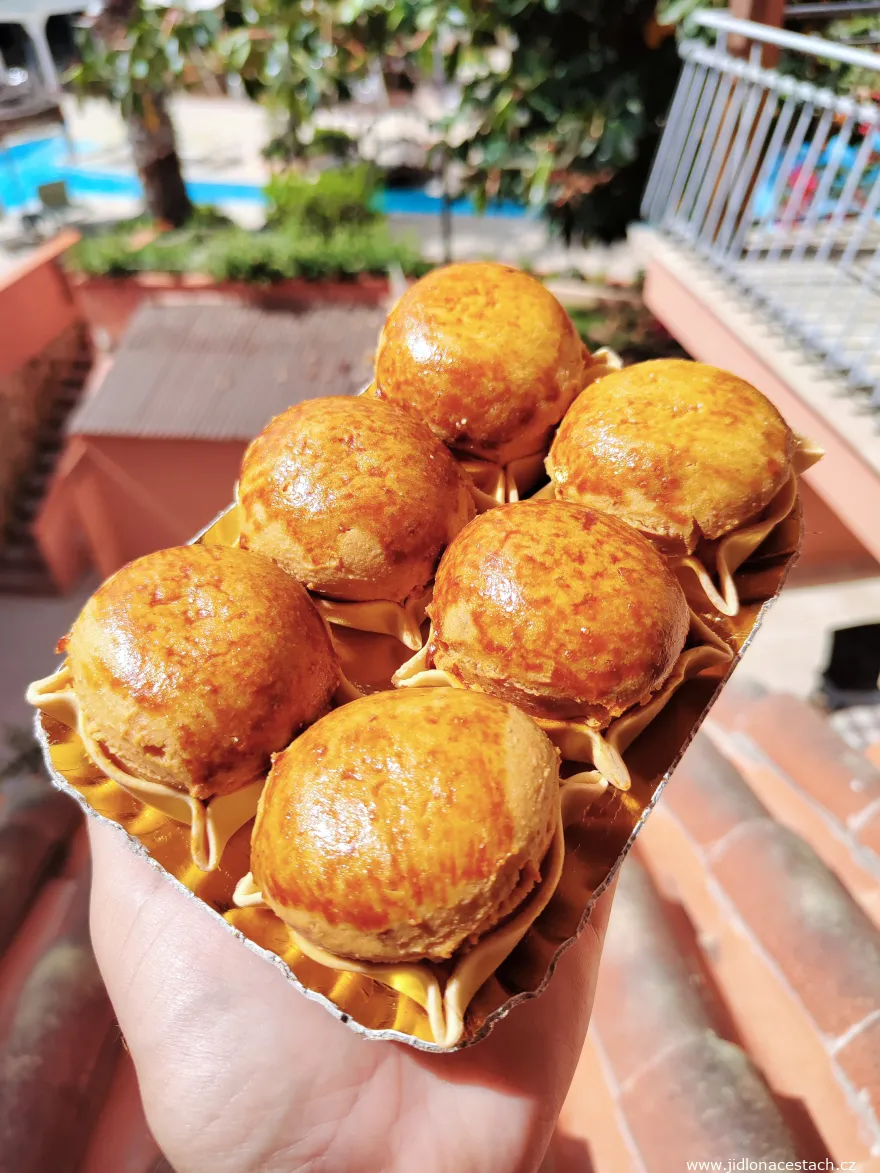
Pardulas (in Sardinian the singular is sa pàrdula) are little pastries of thin dough, its edge pinched into points with your fingers, filled with sheep's milk ricotta flavored with saffron and citrus zest and baked golden - a Sardinian offshoot of Italian cooking that is practically unknown on the mainland. You eat them out of hand, they are about two bites each, and the dough is drawn up around the filling into points, so from above they look like a sun somebody drew in a hurry.
What Pardula Means and How Many Names One Pastry Has
There is a small catch with the name right from the start: pardulas is the plural, the singular is pardula, but Italians from the mainland have taken such a liking to the Sardinian form that they will happily order "una pardulas". The origin of the word is most often traced to the Latin quadrula, a little square - the edge of the dough used to be pinched into four corners, so the pastry came out almost angular. A second theory detects the Latin partula in it, a woman in labor, because of the bulging little belly of filling; nobody has been able to settle it yet. The geography is simpler: pardulas belong to the whole of Sardinia, not to one village, and off the island they have no documented cousin - the closest are the Corsican imbrucciati, little pies of brocciu (Corsican fresh cheese) across the strait to the north. On the island itself, though, the name and the filling change from region to region: in the south, in Campidano, they are pardulas with ricotta and saffron; in the mountains around Nuoro they are casadinas made with fresh sheep's cheese, moister and usually without saffron; in the north around Sassari they are formaggelle and ricottelle, with the edge closed into a little crown and with raisins added. And in the Nuorese there is even a savory casadina salìa with mint and parsley - the same dough, they just turned the dessert into a snack.
When Pardulas Went Door to Door
Nobody puts a date on the history of pardulas; Italian websites like to reach all the way back to ancient cheese cakes, but that is the history of cheese in pastry, not of this particular one. What is documented is something else: besides Easter, pardulas belonged to All Souls'. On All Saints' Day, Sardinian children go from house to house for the custom of Is Animeddas (elsewhere Su mortu mortu) and are given sweets, fruit and nuts for the souls of the dead - pardulas or casadinas among them. Sardinia had its own Halloween long before it turned into a plastic pumpkin, only with ricotta instead of candy. Today pardulas are on the Italian list of traditional agri-food products (PAT), with "the whole of Sardinia" as the production area, and several inland towns hold their own sagra for them in spring (a village festival built around a single dish).
What Pardulas Are Made of and How They Are Eaten
The dough is called pasta violada and it is the Sardinian shortcrust pastry: durum semolina, water, salt and lard, which makes up roughly a fifth of the weight of the semolina and turns a thin sheet into something that snaps when you bite it instead of bending. The filling is sheep's milk ricotta, sugar, egg, grated lemon or orange zest and saffron, in the south ideally the saffron from San Gavino Monreale, which carries a protected designation of origin and colors the pastry yellow before it ever flavors it. A disc of dough is then closed around a spoonful of filling and the edge is pinched between thumb and forefinger into points, biccos in Sardinian; pinch too few and you get a flat cake, pinch plenty and you get a crown. They are eaten with coffee, as a snack or in place of dessert, and at Easter they are served with a fortified wine, Vernaccia di Oristano or Moscato from Sardinian vineyards, or a glass of mirto. They are Easter sweets in name only - bakeries sell them any time of year, by weight or in a box, and they are at their best for the first two or three days, while the dough still snaps and the filling is still soft; if you are carrying them home across the sea, expect them to arrive drier.
Half a Dozen Pardulas from Corronca
I tasted pardulas in Sardinia at the Biscottificio Corronca bakery in San Sperate, the same village my gueffus came from. The dough was thin and dry, more a crisp sheet than a cake, and the filling noticeably less sweet than you would expect from a sweet pastry: the ricotta fine and slightly tart, the saffron more in the aroma and the color than in the taste, and the lemon zest speaking up only at the end, once you had written it off. Six of them cost 4.50 EUR. Easter was long gone. The box had no idea.


