Pavaj Restaurant: Modern Bulgarian Cooking in Plovdiv's Kapana
Some menus you choose from, and some you cross things off. At Pavaj I was holding the second kind: a short list of dishes where I wanted to try almost everything, and the only thing holding me back was the capacity of a single stomach.
Pavaj Restaurant (in Bulgarian: Паваж) serves modern Bulgarian cooking in the heart of Plovdiv's Kapana quarter - and it is my favorite restaurant in the city.

Named After What It Stands On
Паваж means paving in Bulgarian. The restaurant sits on the pedestrianized, freshly paved Zlatarska Street - Goldsmiths' Street - and it seems to have taken its name straight from the surface under its own tables. I have never seen the owners confirm it anywhere, but no other reading is remotely as obvious. The name of the quarter, on the other hand, does come with a story: Kapana means the Trap, after the two Ottoman marketplaces where the craftsmen's lanes have huddled since the 15th century - the blacksmiths', the furriers', the goldsmiths'. It's still a trap today, it just catches differently. Nobody who walks into that tangle of lanes for one drink stops at one.
The Young Couple Behind the New Kapana
Kapana used to be a run-down maze of workshops and shuttered shops. In 2013 the city declared it a creative industries district, studios and festivals moved in, the lanes were repaved - and when Plovdiv held the title of European Capital of Culture in 2019, this was the first stop visitors were taken to. Pavaj was in on it from the start: Madlen Pakratyan and Raycho Markov opened it in mid-2015, both still under thirty at the time, and it was among the very first restaurants of the quarter's new wave. Opening a restaurant here in 2015 meant betting on a neighborhood that was more of a promise than an address.

A Short Menu and Thousands of Reviews
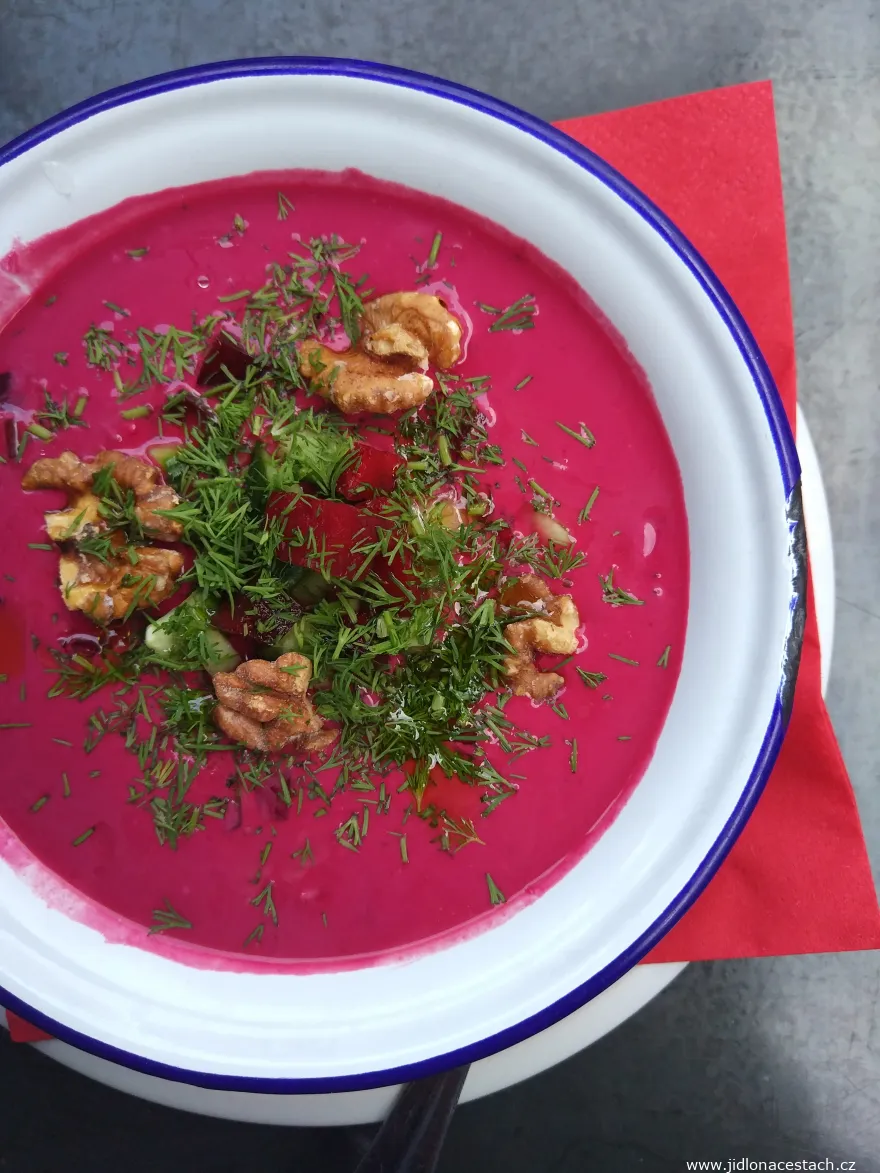
A Bulgarian review site describes the menu at Pavaj as "simple, not large, but well chosen" - and the place has picked up more than 3,800 ratings on Google. That mismatch speaks for it better than the stars do: a short menu is usually a good sign, because a long one is held together by the freezer alone, in Bulgaria just as much as back home. Pavaj belongs to the new Plovdiv wave that rewrites the Bulgarian classics on its own terms: the Shopska salad arrives with fried eggplant instead of raw pepper, and the tarator might come with beets in it. Booking sites call this chef-driven cooking; in practice it means you still recognize the classic on the plate, it just looks better than you remember. That hasn't pushed the traditional mehanas, the old-style Bulgarian taverns with their folk bands, out of Plovdiv - the two schools live side by side.
Kapana today is an evening quarter: pedestrian lanes, tables out on the paving, and people wander among the studios more for a drink than for art. Pavaj fits right in, in both size and pace - sixty seats inside and a summer garden outside are not much for a place this well known. It's popular enough with locals that booking a table ahead is a good idea.
Sausage and Salad on Zlatarska Street
For a main course I had a superbly seasoned house-made sausage with tomatoes, garlic, parsley and fried green peppers. It had a pleasant kick to it and cost 13.90 BGN (7.20 EUR). Alongside it came a take on Shopska salad - peeled tomatoes, fried eggplant, brined sheep's cheese and a garlic dressing - a refreshing plate for 9.90 BGN (5.20 EUR). And because Pavaj is the kind of place where I want to try almost everything on the menu, the pink beet tarator followed; it was excellent, but that is another article. That's three lines crossed off the list I wanted all of. I don't have to come back to Plovdiv for the rest. But I will.
Pavaj


