Tarator: The Bulgarian Cold Soup of Sour Milk and Cucumber
The oldest printed recipe for tarator in the form Bulgaria ladles into bowls today dates from 1956. Turkish cacık, its Anatolian cousin, was written down as early as 1844, and the word tarator itself is older still - but until 1944 it meant something else entirely in Bulgaria. So the soup that looks like the oldest thing on the Bulgarian table is in fact one of the youngest.
Tarator (Bulgarian: таратор) is a cold soup of Bulgarian cuisine: sour milk thinned with water, finely diced cucumber, garlic, dill, oil and often a handful of walnuts; you eat it with a spoon from a deep bowl, and in summer it stands in for the first course.
What Tarator Means and Where It's Eaten
Order tarator in Istanbul and you get a thick sauce of crushed walnuts, garlic and bread to go with fish - no spoon, no soup. It is a namesake - and, in fact, the older meaning of the same word. Etymologists still argue about where the word came from: some hear a Venetian cook in it (trattor), others Persian herbs with sour milk. Bulgarians stress it on the last syllable. The cold soup of sour milk and cucumber is shared Ottoman Balkan heritage, not a Bulgarian invention - every country simply keeps it at a different thickness. In North Macedonia, taratur is more of a thick salad in a bowl; in Serbia it is a "liquid salad" with no water added; in Albania it is a dip before the main course; Turkish cuisine has cacık and Greek cuisine tzatziki, both thicker and made for dipping. Bulgaria is the only one that keeps adding water until it turns into an actual soup.
A Soup Younger Than Its Name
Before the war, tarator in Bulgarian meant a cold dish of ground walnuts sharpened with vinegar; sour milk did go into it now and then, but only rarely. The yogurt version took over the name after the war, along with refrigerators and summer tourism on the coast, and in 1956 the cookbook "The Housewife's Book" put it in print. Tarator as the whole world knows it today is a child of the 1950s that inherited its name from a walnut sauce. Nobody wrote down when exactly the two dishes swapped names. Its thicker cousin Snezhanka, the "dry tarator" you eat with a fork, has a birth certificate that is almost uncomfortably precise: it was dreamed up by the state enterprise Balkantourist, which needed something to offer tourists.
What Goes into Tarator and How to Eat It
The star of the show is kiselo mlyako, Bulgarian sour milk, thicker and sharper than the yogurt from a supermarket back home; without it, tarator is just cucumber water. The cucumber is cut into tiny cubes and never grated - grated, it bleeds juice and the soup thins out into milk with mush in it. Garlic goes in carefully, dill generously, the oil is poured on at the table, and the walnuts are optional, which is why the arguments about them are kitchen arguments rather than national ones.
It belongs at lunch on a hot day, a starter before grilled meat, and it goes down well with a glass of rakija. It comes chilled, often with ice cubes right in the bowl; the ice is not a kitchen mistake but part of the recipe. And because ice melts, the first half of the bowl is thicker than the second - if you would rather not finish off a bowl of water, eat first and take the photo afterwards - of the empty bowl.
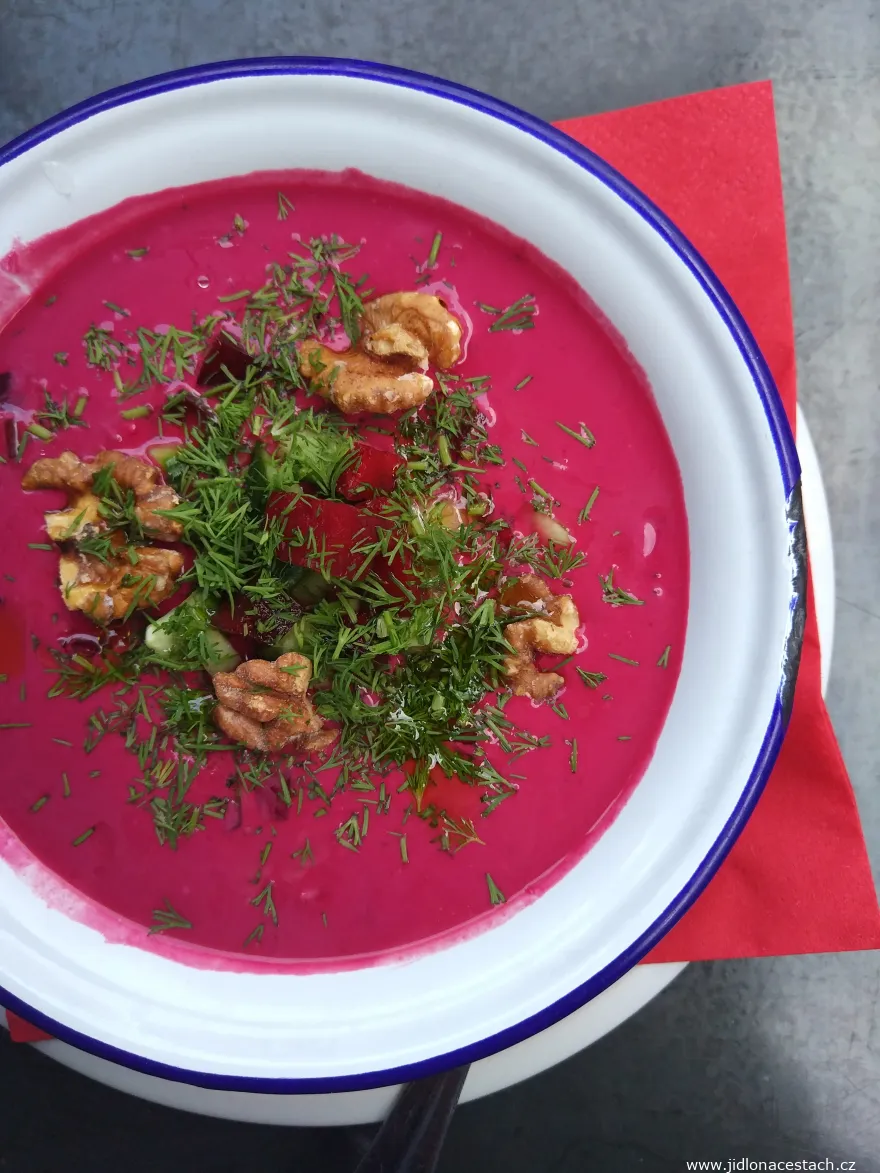
A Pink Bowl at Pavaj
I ate tarator in Plovdiv, at Pavaj Restaurant, where they cook Bulgarian food in a modern register - so instead of a white bowl, a pink one arrived. Beetroot tarator, rozov tarator, is not an old recipe but a summer variation common enough that even beach stalls sell it these days, and at Pavaj they took it seriously: dill and parsley on top, pieces of walnut, a color like raspberry ice cream. The beetroot added an earthy sweetness that softened the sour milk, while the cucumber underneath kept its crunch. It was excellent. At Pavaj, the youngest soup on the Bulgarian table got a little younger still. And it worked.


