Tarta de Queso La Viña: The Burnt Cheesecake from San Sebastián
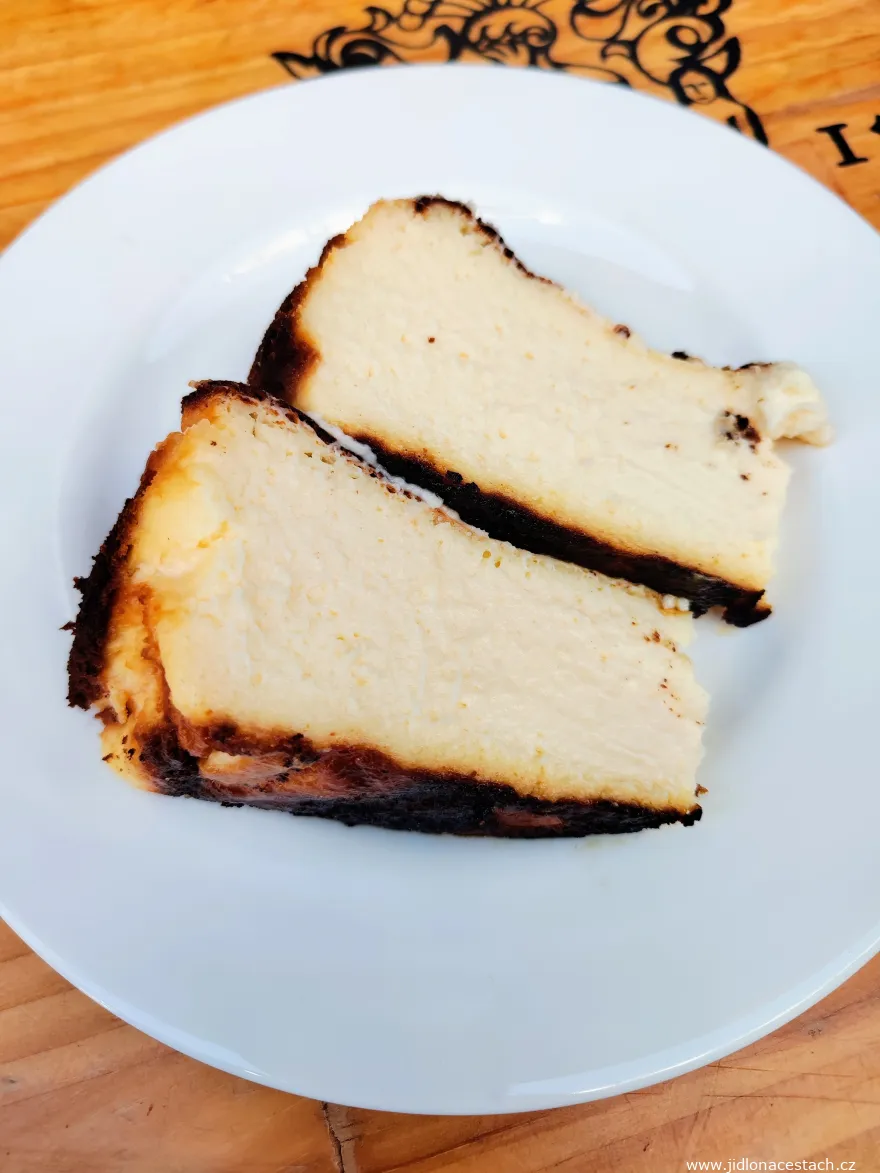
Tarta de queso La Viña (in Basque: gazta tarta) is a crustless cake of cream cheese, eggs, sugar and cream, baked hard in the oven so that the top turns black and the middle stays almost liquid - a dessert that Spanish cuisine gave the world from a single bar.
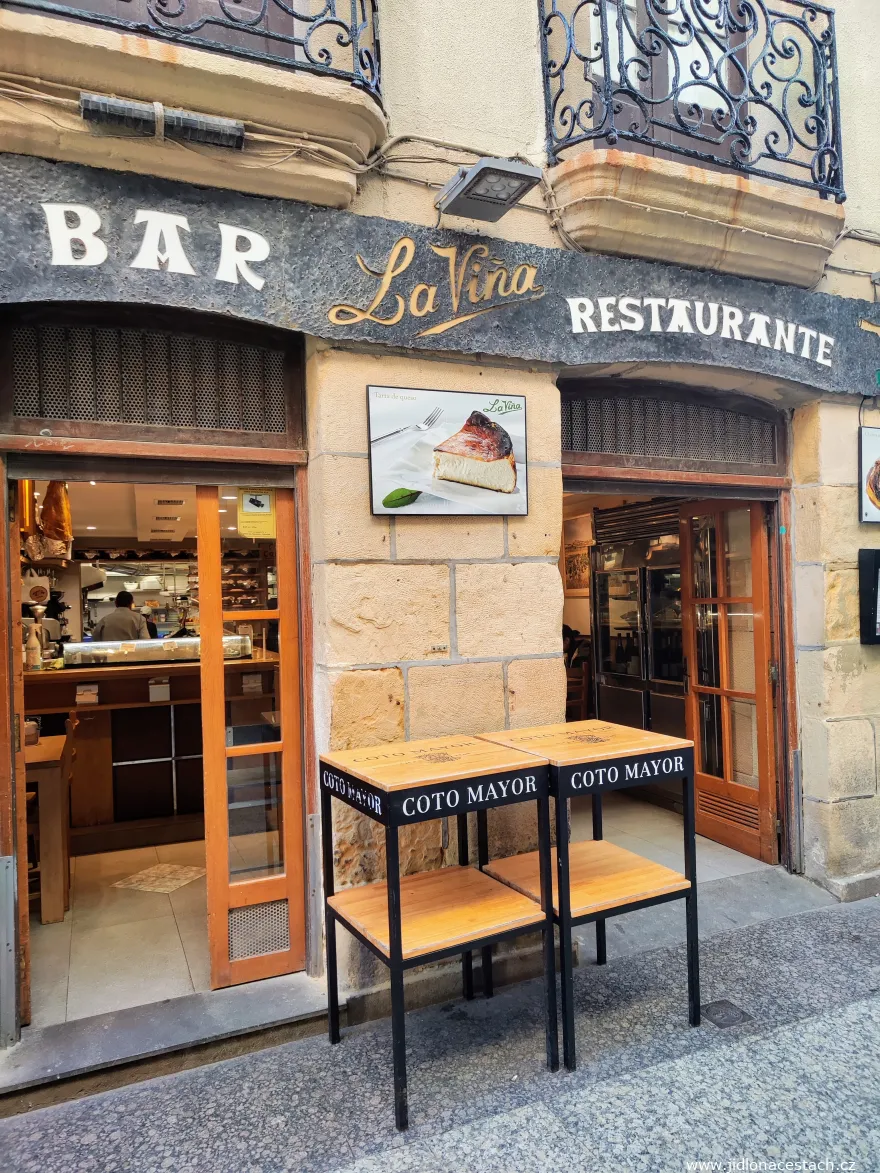
What Tarta de Queso Means and Who Started Calling It Burnt
The sign above the door is literal: tarta de queso is simply cheesecake, gazta tarta in Basque, with not a word about burning in it. It was English that added the word burnt, once the cake reached menus in London and New York, and Asia named it more simply still: San Sebastián cheesecake. The city became the brand and the bar a footnote.
It started out as one bar's dish: no older Basque tradition of a blackened cheesecake has ever turned up, and next to pastel vasco or pantxineta this is a very young dessert. New York cheesecake does everything the other way around - it has a cookie crust and bakes slowly in a water bath so the top stays pale and smooth. The French tourteau fromagé has a black dome too, but it is made from goat cheese and has a history of its own going back in French cuisine to the nineteenth century, and the Cantabrian quesada pasiega is older than both and, in its original form, has no cheese in it at all despite the name. The matching burnt tops are a coincidence.
Who Came Up with the Cake at La Viña, and When
The La Viña bar was opened in 1959 by Eladio Rivera, his brother and their wives, and for a long time it was an ordinary pintxos bar. Eladio's son Santiago grew up in it, and in the late 1980s he started piecing together three cheesecake recipes from cookbooks; it took him about two years and the result dates to around 1990, give or take a year depending on the source. Guidebook legend has it that the cake burned by accident one day and the customers loved it. In Rivera's own telling there are two years of trials, not five minutes of inattention. The base is ordinary cream cheese out of a tub, and a cake with no secret ingredient is easy to copy.
And copy it they do. The New York Times named the La Viña cake one of the flavors of 2021, and cafes from Tokyo to New York have been baking it ever since; in Spain even the supermarket chain Mercadona sells a ten-euro version. Santiago Rivera retired in 2026 at sixty-five and left the bar to his sons; by then the recipe had gone around the world.
Five Ingredients, a Fierce Oven and No Crust
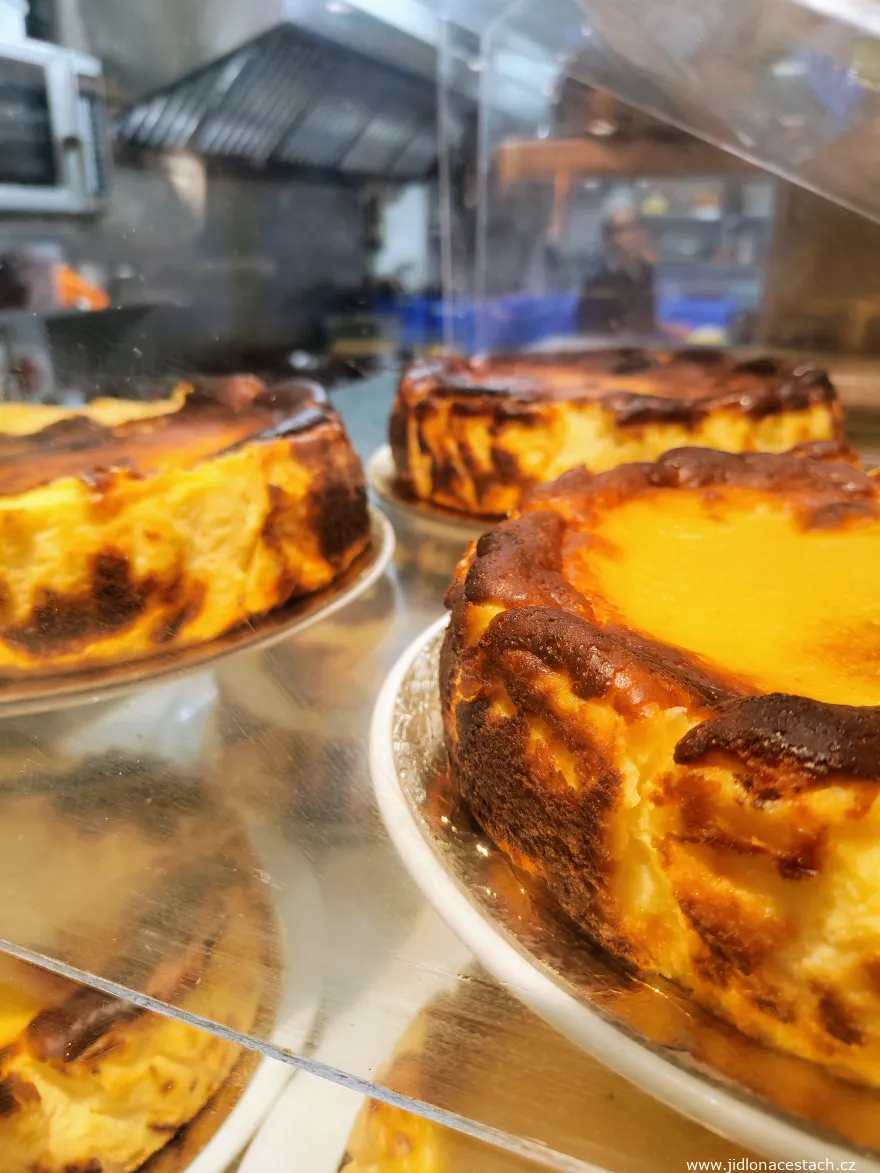
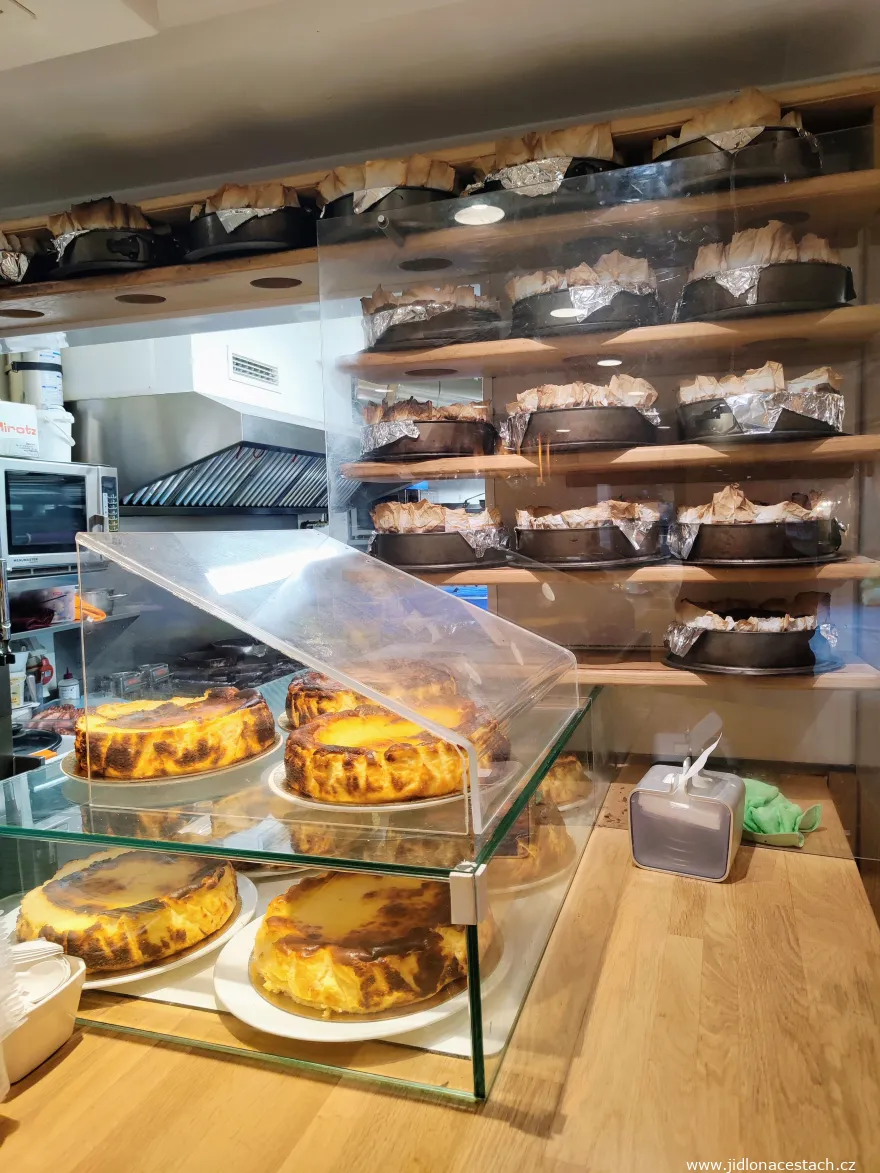
There is nothing exotic in it: cream cheese, eggs, sugar, cream and a spoonful of flour to hold it together - some versions of the recipe also add a piece of sheep's milk Idiazabal, but only as an optional extra. The oven does the work: heated to around 200 °C, forty minutes, no water bath, the parchment left hanging over the rim of the pan so the cake comes out wearing a crumpled paper collar. The sugar and proteins on the surface caramelize from brown to black and seal the middle, which stays creamy to the point of runny.
At La Viña you order at the counter, and they cut it from a whole cake in the display case into wide wedges and serve it with no sauce and nothing on top.
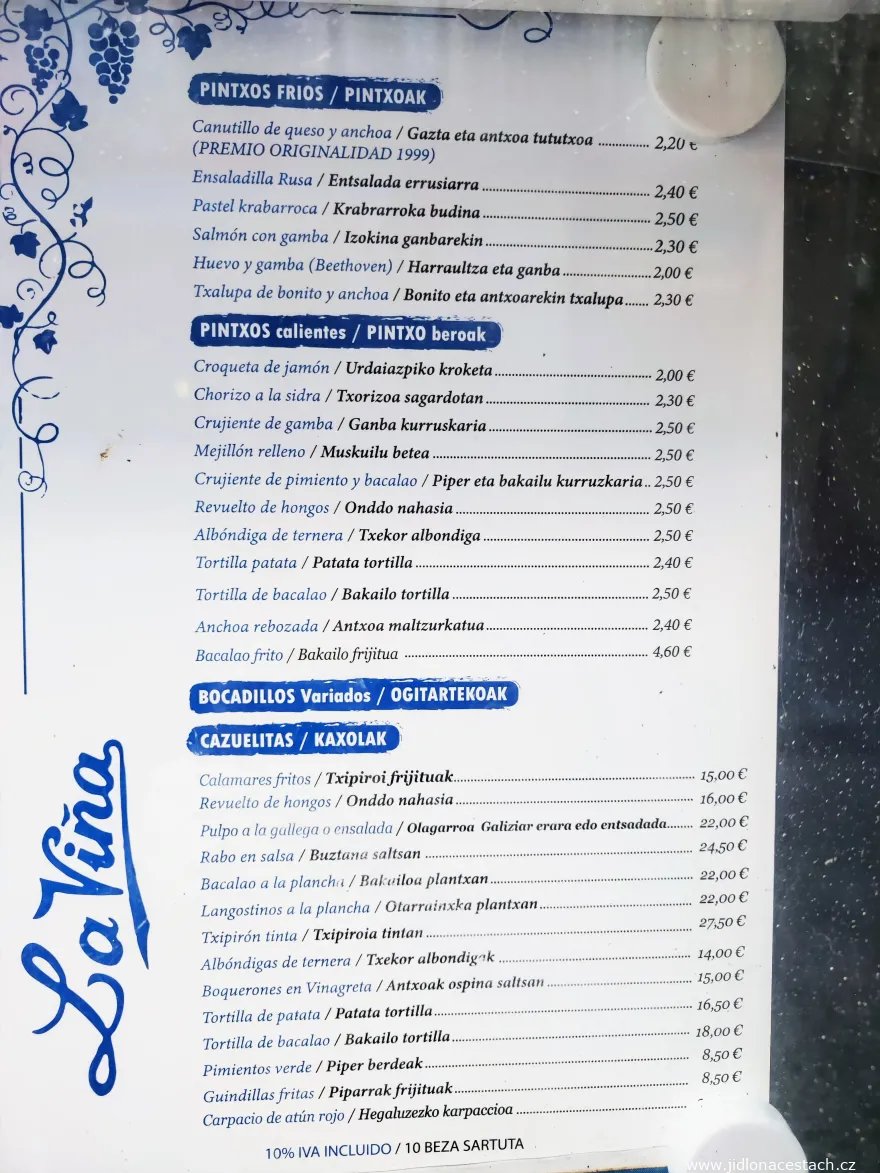
A Morning at the La Viña Counter
I ate the cake in San Sebastián at La Viña on Calle 31 de Agosto, in the morning right after opening; the tables inside were already taken, the line wasn't. The owner brought my plate over himself. The burnt patches tasted of caramel and crackled a little, the middle was still almost liquid, and the two went together exactly as the sign above the door promised. On my list of things to taste in the Basque Country it came in behind pintxos; I never stood in line for it, I got it before the line existed. A generous slice cost 6 EUR. I'm glad I got to taste the burnt cheesecake right where it was invented.
La Viña


