What to Bring Back from North Macedonia?
From North Macedonia I mainly brought home cheese - and for a while it looked like there wouldn't be enough room left in my backpack for it at all. Macedonian cuisine is built on roasted peppers and sheep's milk, and it has a chocolate factory older than the Macedonian state itself. I bought almost everything on this list in ordinary supermarkets in Skopje, the chocolates at the maker's own company shop.
So what would I recommend as the best food souvenirs from North Macedonia?
Macedonian Ajvar
Ajvar is a spread you'll find several jars of in every Macedonian pantry. The hot version of Mama's Home Style Ajvar is made by the company Trgoprodukt in the village of Dabile near Strumica in the country's southeast; the ingredients are nothing but roasted red pepper, roasted eggplant, hot chili peppers, sunflower oil, and sea salt. The brand is exported as far as the United States, and Macedonians buy it for themselves at home - it's no gift-shop invention for tourists. Once you've worked your way through the jar of ajvar, the shelf next to it holds its relative pindžur, made with tomatoes and eggplant. One practical note: the jar belongs in checked luggage.

Macedonian Cheeses: Kaškaval, Sirenje, and Goat Cheese
Kaškaval is the Balkan word for yellow cheese, and in Macedonia it's mostly sold as sheep's milk cheese. The Korab Trnica brand traces back to 1945 and the village of Trnica in Gorna Reka near Lake Mavrovo, where the cheese was originally made at mountain sheepfolds and left to age in caves in the Korab mountains. Today it's a farm with its own dairy and restaurant, but you can buy the cheese in an ordinary supermarket in Skopje. Into my backpack went the classic sheep's kaškaval and, alongside it, a mint-and-basil version with the herbs chopped straight into the cheese itself. That one was the only cheese from the whole haul that didn't quite win me over: I'd been looking forward to it most because of the herbs, yet it struck me as a bit too sharp. Someone else might well rate it the best piece on the shelf. The vacuum packaging holds up just fine on the trip across Europe.


Price for 339 g of Korab Trnica sheep's kaškaval: 242 MKD (4 EUR), or 715 MKD per kilo (11.80 EUR)
Price for 207 g of sheep's kaškaval with mint and basil: 152 MKD (2.50 EUR), or 735 MKD per kilo (12.20 EUR)
Mešano sirenje is "mixed cheese" made from cow's and sheep's milk, and it's a completely ordinary item in a Macedonian supermarket. Here, the word sirenje mainly means a white cheese in brine, the kind you know as Bulgarian sirene or Greek-style feta. I brought back several pieces from two brands: Bačilo, in a blue-and-white pack with a yellow ribbon, and Special Edition from the Mlečen pat dairy in Kavadarci, which claims to be the first dairy in the Tikveš wine region. Both are semi-hard, slice up nicely, and work beautifully in a Shopska salad.

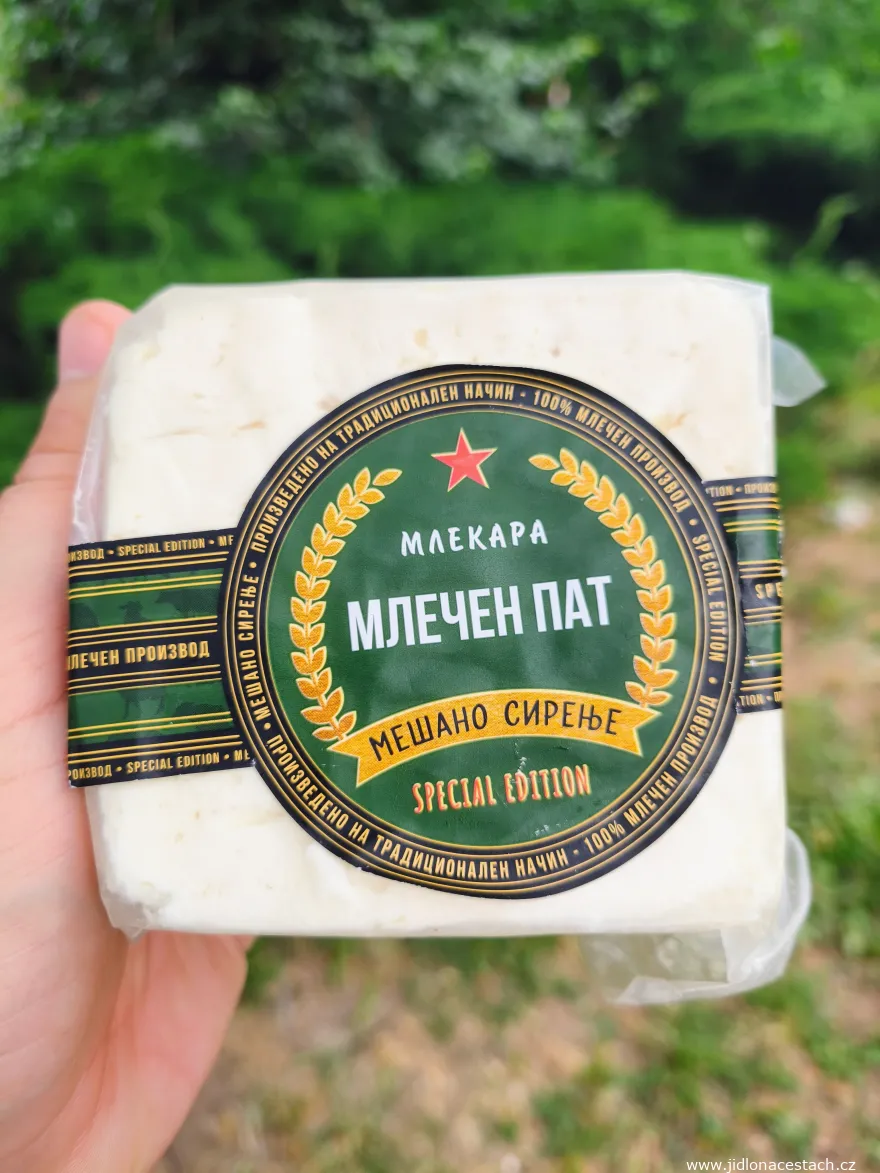
Price for 390 g of Bačilo mešano sirenje: 175 MKD (2.90 EUR), or 449 MKD per kilo (7.50 EUR)
Price for 395 g of Mlečen pat mešano sirenje: 219 MKD (3.70 EUR), or 555 MKD per kilo (9.10 EUR)
Soft white sheep's cheese, called ovčo sirenje in Macedonian, is the closest thing to what anyone who's ever eaten a Shopska salad pictures as Balkan cheese. It's aged, full-fat, and soft; in Trnica they make it from nothing but pasteurized sheep's milk, salt, rennet, and culture. It was the heaviest piece of the whole haul, over half a kilo in a single block, but it also keeps for a long time, and genuine sheep's cheese of this type is hard to come by back in Czechia.

Price for 589 g of Korab Trnica sheep's cheese: 315 MKD (5.20 EUR), or 535 MKD per kilo (8.90 EUR)
Alongside the sheep's and cow's cheese, the goat cheese also deserves attention. The Vemilk brand belongs to the IMV family dairy from the village of Kravari beneath Mount Baba near Bitola, in the Pelagonija plain; it's only had its own brand since 2017, but it sells the cheese as "from Bitola" with a goat on the label, so there's no doubt about it. It's a soft, full-fat white cheese made from nothing but goat's milk, rennet, and salt. Just crumble it into a salad in place of the cow's-milk sirene, and it turns into a real treat.

Price for 385 g of Vemilk goat cheese: 192 MKD (3.20 EUR), or 499 MKD per kilo (8.30 EUR)
Bieno Sirenje
Bieno sirenje, literally "beaten cheese," is a hard, very salty cheese from Mariovo and one of the few cheeses that are truly typically Macedonian. It gets its name from how it's made: the curd is beaten, pressed, and dried, and the result is firm and yellow, with tiny holes, and it holds up to long storage - ideal for a suitcase. I have two at home: a cow's-milk one from the Bačilo brand from a dairy near Veles (bačilo is Macedonian for the mountain sheepfold where sheep move for the summer along with their shepherd), and a cow's-milk one from Korab Trnica. It's good both grated and sliced; anyone expecting a mild cheese will be surprised by the saltiness, but that's part of what it is.

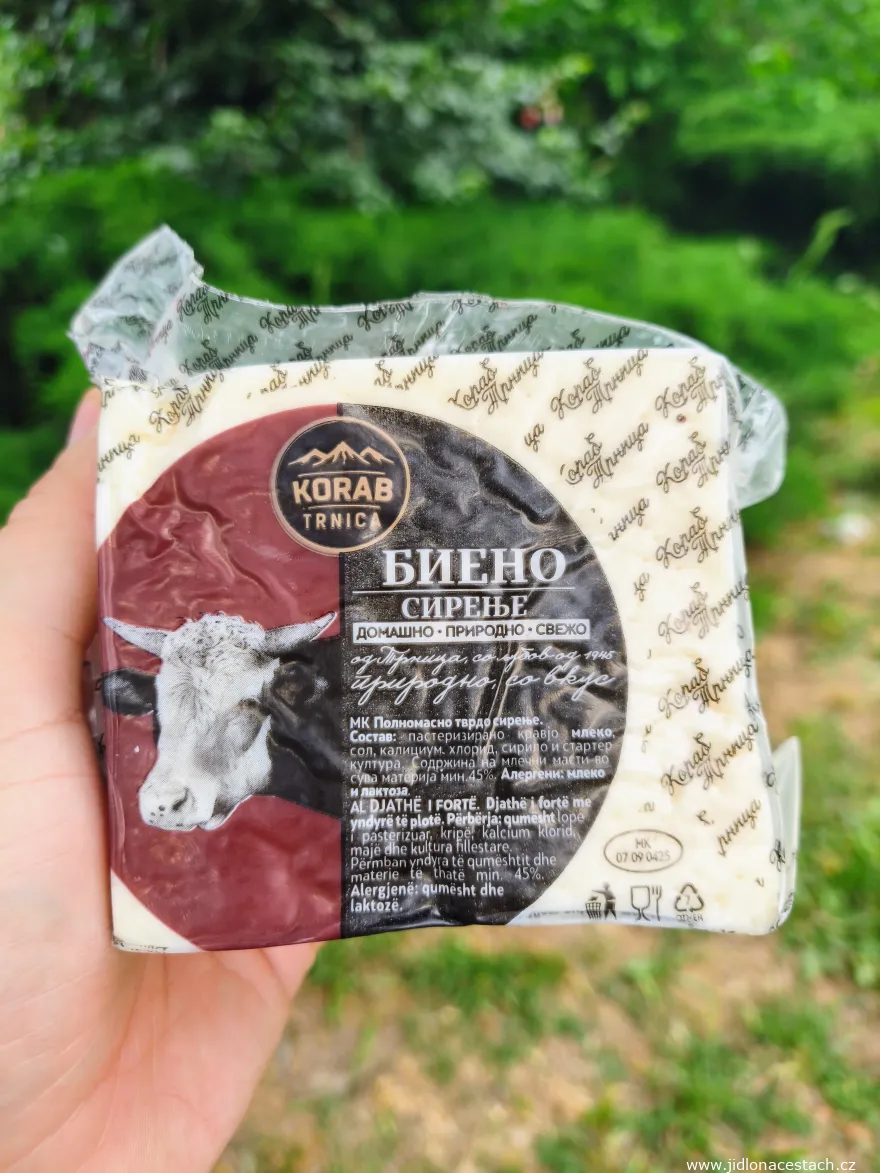
Price for 405 g of Bačilo bieno sirenje: 247 MKD (4.10 EUR), or 609 MKD per kilo (10.20 EUR)
Price for 422 g of Korab Trnica bieno sirenje: 244 MKD (4.10 EUR), or 579 MKD per kilo (9.50 EUR)
Evropa Chocolate
The Evropa chocolate factory in Skopje traces back to 1882 and likes to describe itself as the oldest confectionery in the Balkans. It started out as a workshop making candy and lokum; today it's a factory that exports to roughly twenty-five countries, and yet almost nobody back home has heard of it. Two bars from the dark chocolate range: Elite, with 75% cocoa and orange, in a black-and-orange wrapper with a maze pattern, and the premium 1882 line with pistachios and raspberries, where a window in the box lets you see the chocolate itself. I bought both right at the company shop on Kej 13-ti Noemvri, a riverside street in central Skopje, where they keep the whole range in one place.
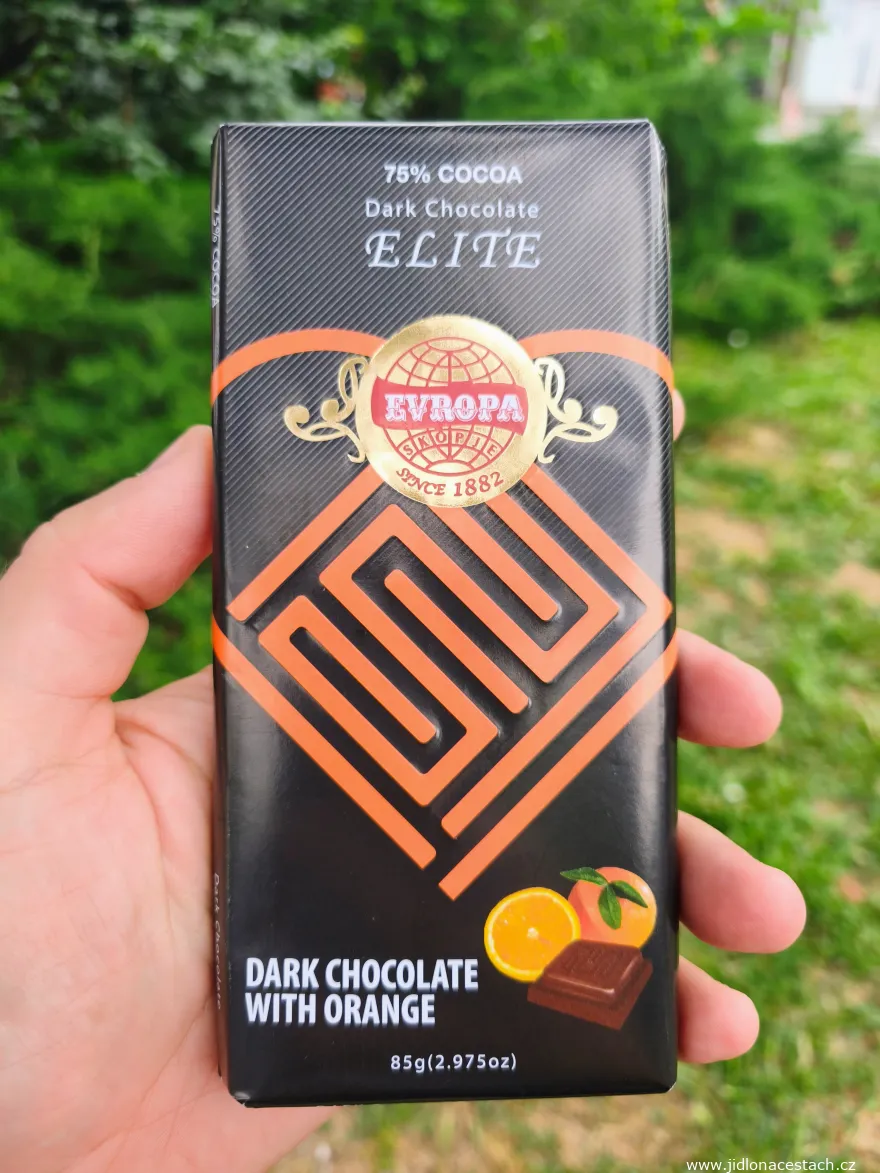

Price for 85 g of Evropa Elite chocolate with orange: 115 MKD (1.90 EUR)
Price for 85 g of Evropa 1882 chocolate with pistachios and raspberries: 115 MKD (1.90 EUR)
Minti from Evropa
Minti were, without question, the biggest surprise of the whole shopping trip. It's a box that cost next to nothing, and I threw it in with the chocolates more out of curiosity - back home it turned out to be mint fondant squares coated in dark chocolate - and they taste great. If you like the British After Eight, here's the Macedonian version at a price that's impossible to resist.

Price for 200 g of Minti: 130 MKD (2.20 EUR)
What food souvenirs do you bring back from North Macedonia?


