Coda Restaurant, Prague: A Tasting Menu with a Breathtaking View of Prague
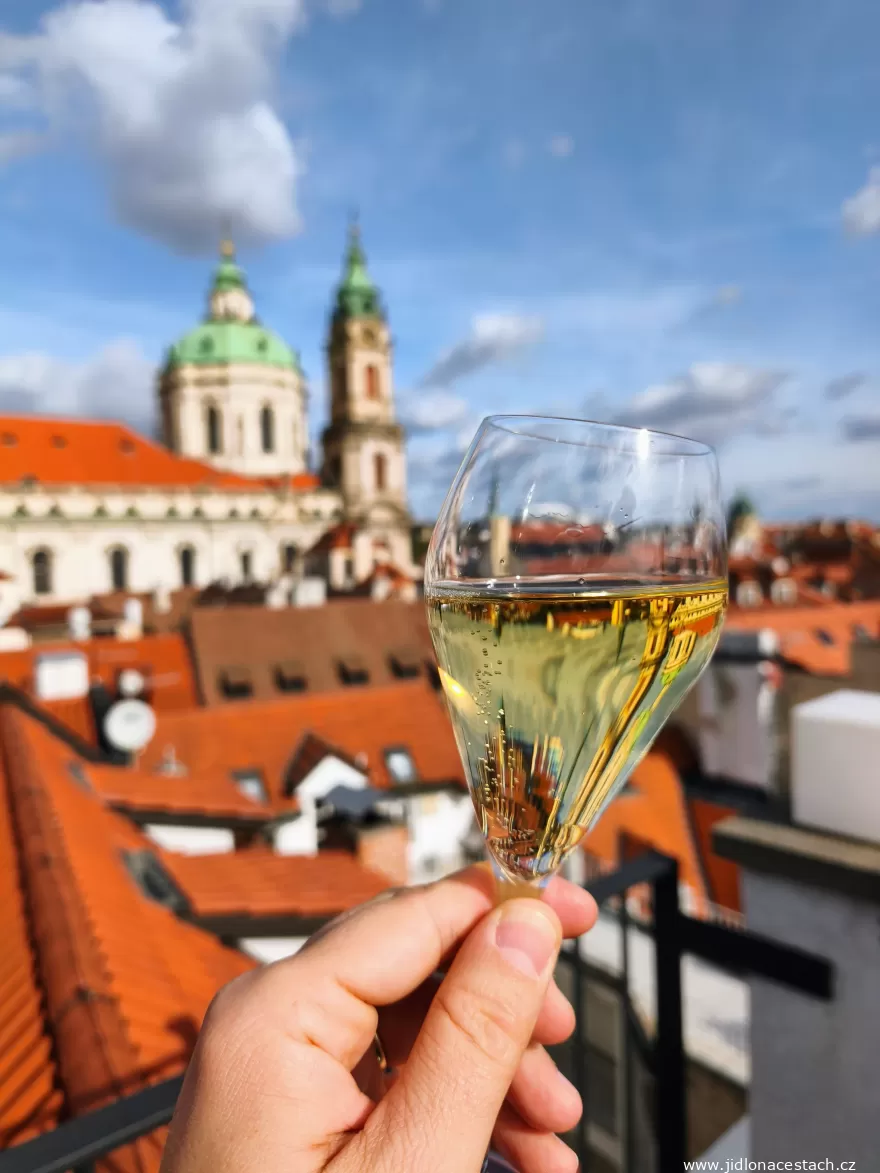
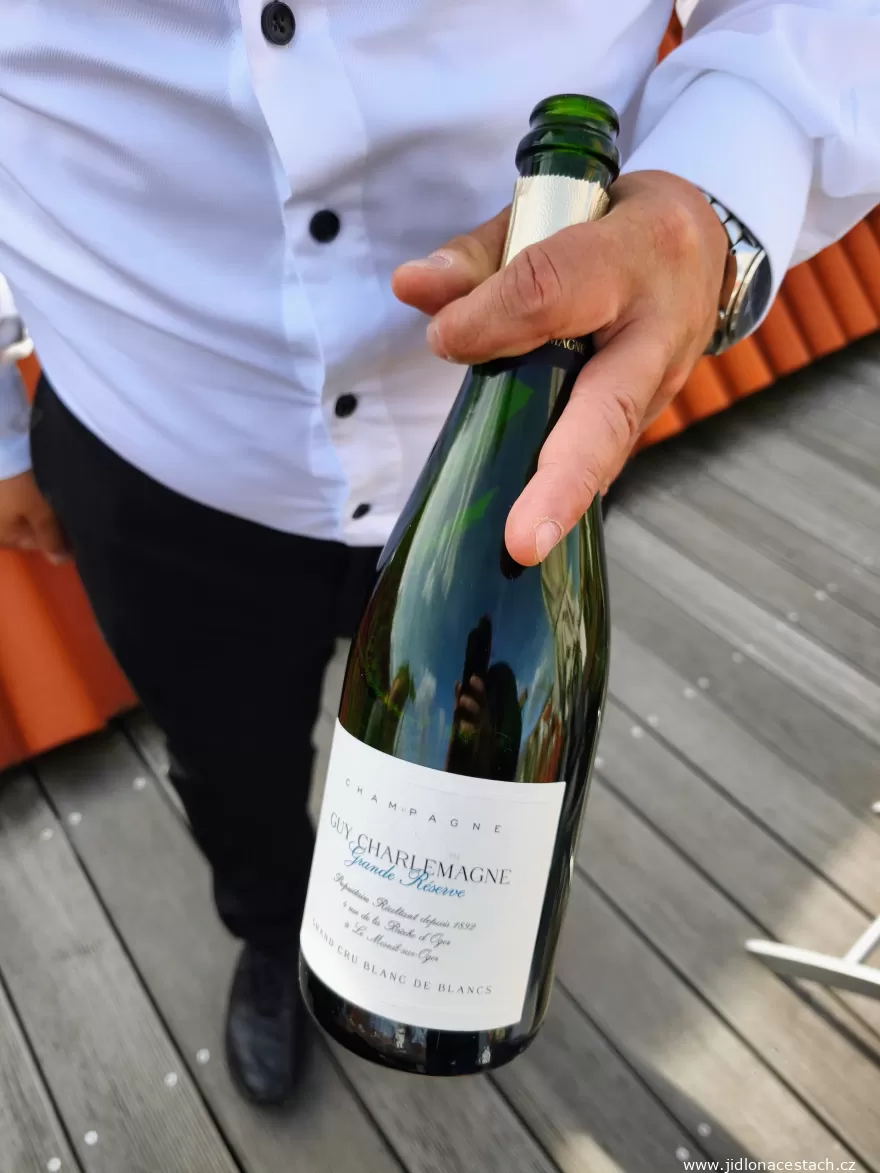
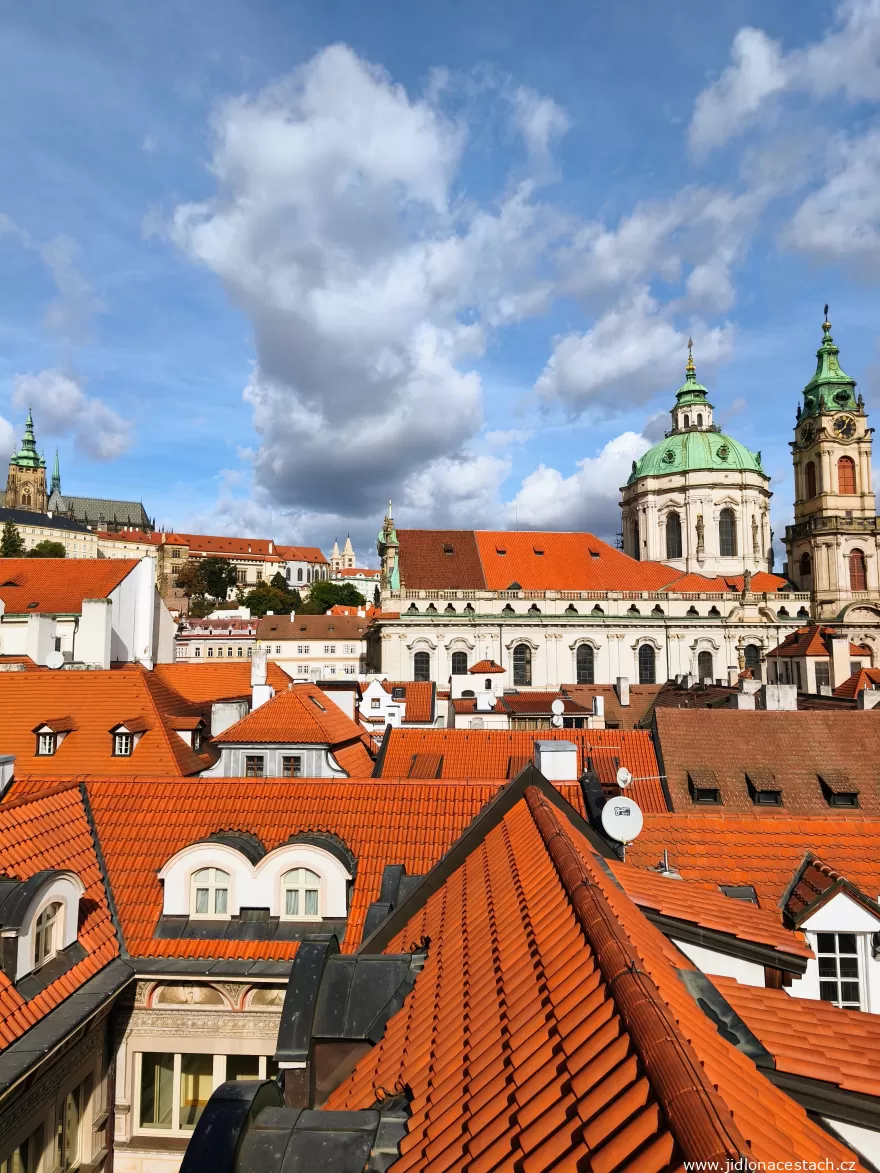
On the rooftop terrace of the Aria Hotel, before the first course had even arrived, the waiter showed me the label: Guy Charlemagne, a grand cru blanc de blancs Champagne. Below the railing stretched the red roofs of Malá Strana, behind them the dome of St. Nicholas, and on the horizon Prague Castle. The Champagne was top-notch and so was the view - and all of it a stone's throw from the Charles Bridge, right in the center. Coda is the restaurant of the Aria Hotel on Tržiště Street in Prague's Malá Strana - a place with music in its name and in every detail you touch.
A Hotel Where the Whole Building Makes Music
New York hotelier Henry Kallan opened the Aria on Tržiště in 2003, and music made its way right into the floor plan: the four floors are divided by genre - jazz, opera, classical and contemporary music - and every room is named after a composer or performer. Add to that a music library and a glass-roofed atrium with a Bösendorfer concert grand, where the hotel serves breakfast. A private entrance leads from the building straight into the Baroque Vrtba Garden. Coda Restaurant plays from the same score as the rest of the house.
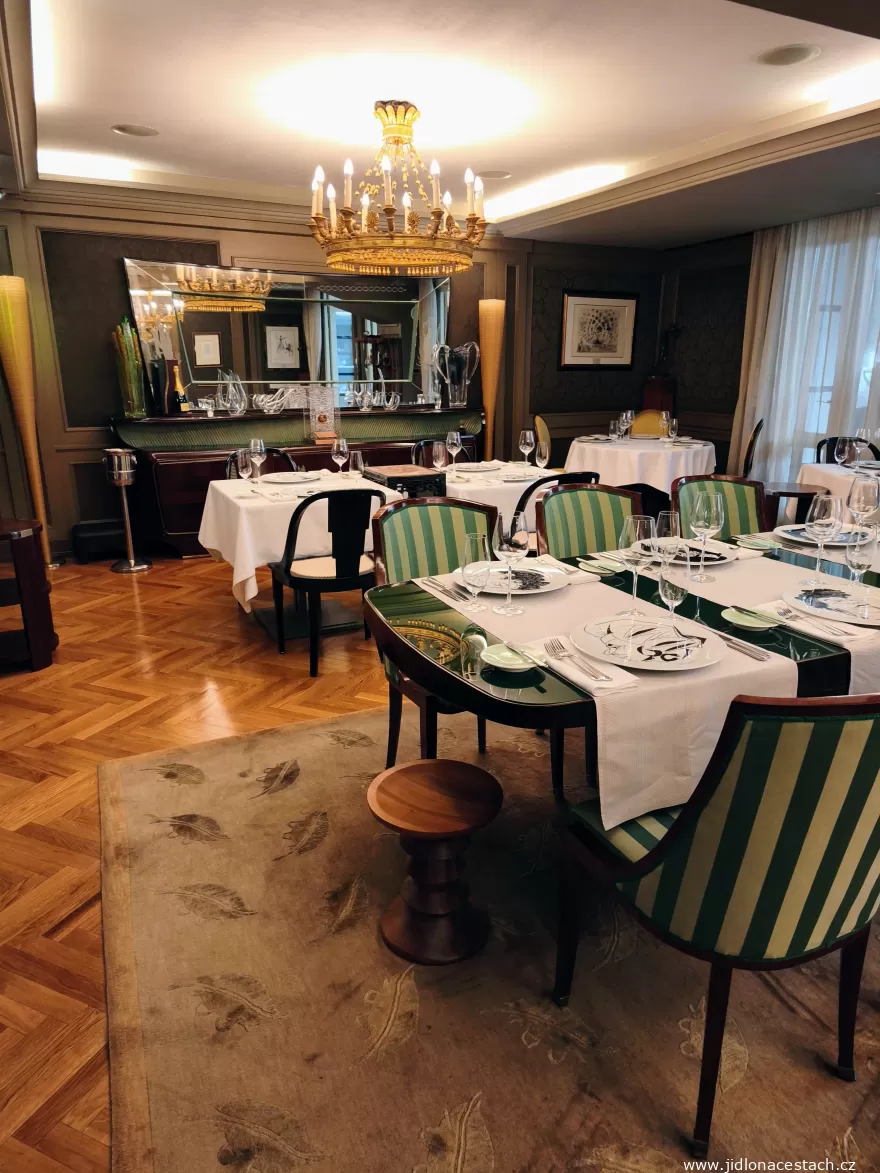
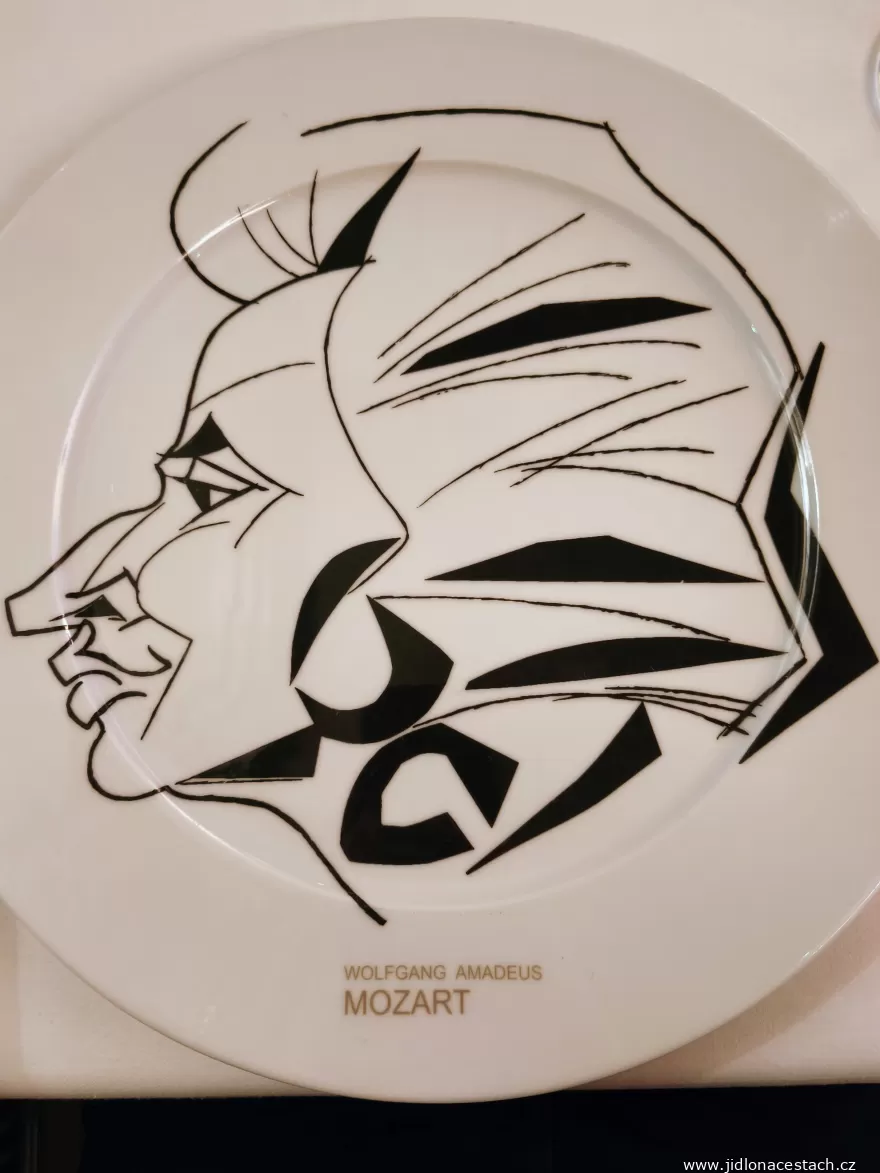
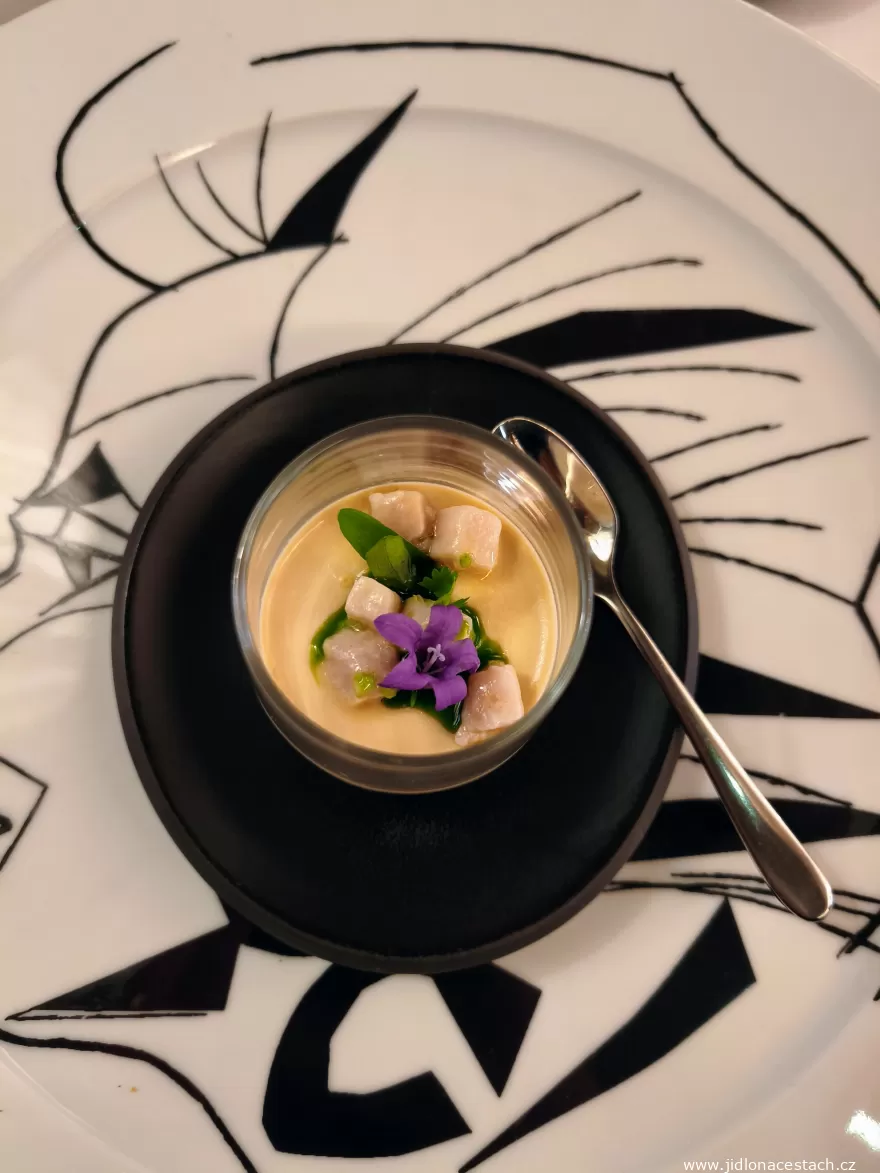
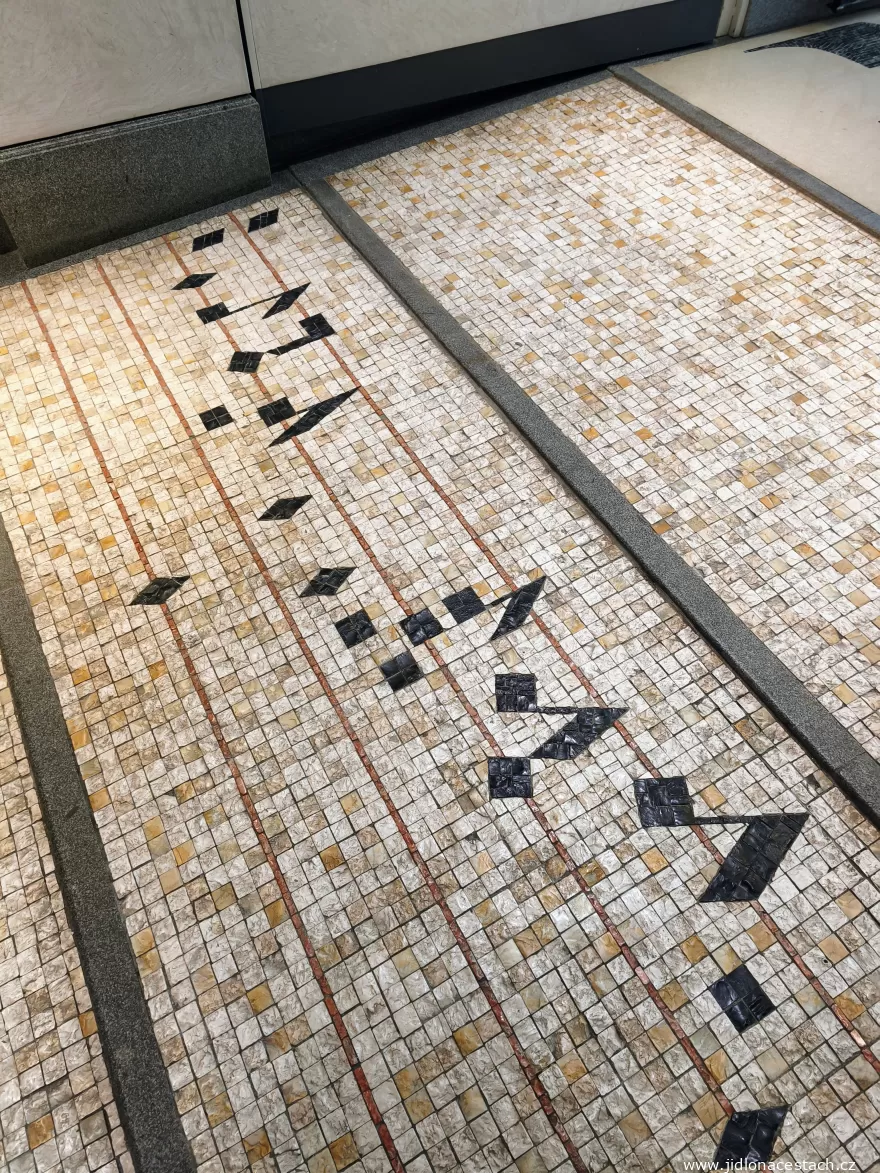
The interiors of both the hotel and the restaurant were designed by Rocco Magnoli and Lorenzo Carmellini, architects famous for their many years of work for Gianni Versace. The dining room is art deco: herringbone parquet, gilded chandeliers, mirrors - the Michelin inspectors sum it up as classic elegance. Among the tables stands a bronze Salvador Dalí - you'll recognize him by the egg in his raised palm. The charger plates from the Rosenthal porcelain factory feature musical caricatures by cartoonist Josef Blecha - Mozart, with his wild, flowing mane, keeps an eye on you until the first course arrives, and if you'd like to take him home, you can buy the plate at the restaurant. And the small touches keep coming: a leather coaster embossed with a musical note, a bar shaped like piano keys, and a mosaic of a musical staff set into the floor.
By the entrance hangs a red Michelin 2025 plaque: in the current guide, Coda is listed among the recommended restaurants (Michelin Selected), and on top of that it holds two Gault&Millau toques.

The Tasting Menu and Two Wine Pairings
The tasting menu runs from smoked catfish through foie gras and zander to steak and dessert, and costs 2,890 CZK (115 EUR). Alongside it, the menu offers two wine pairings with musical names: Sonata explores Moravian wineries for 1,790 CZK (72 EUR), while Orchestra reaches for bottles from France and Italy for 3,790 CZK (150 EUR). Our pairing was put together by the sommelier just for us: the bottles introduced at the table one after another matched the Orchestra line-up, plus the Champagne on the terrace, which you won't find in either pairing. The name on that label is worth pausing on: Guy Charlemagne is a family winery from Le Mesnil-sur-Oger, a village on the Côte des Blancs whose Chardonnay holds grand cru status and which is also home to the renowned Salon. The family has been growing vines here since 1892 and works exclusively with grapes from its own vineyards. And the staff showed how seriously they take wine even before the first course, when they decanted the red for the fourth course at the service table to give it time to breathe.
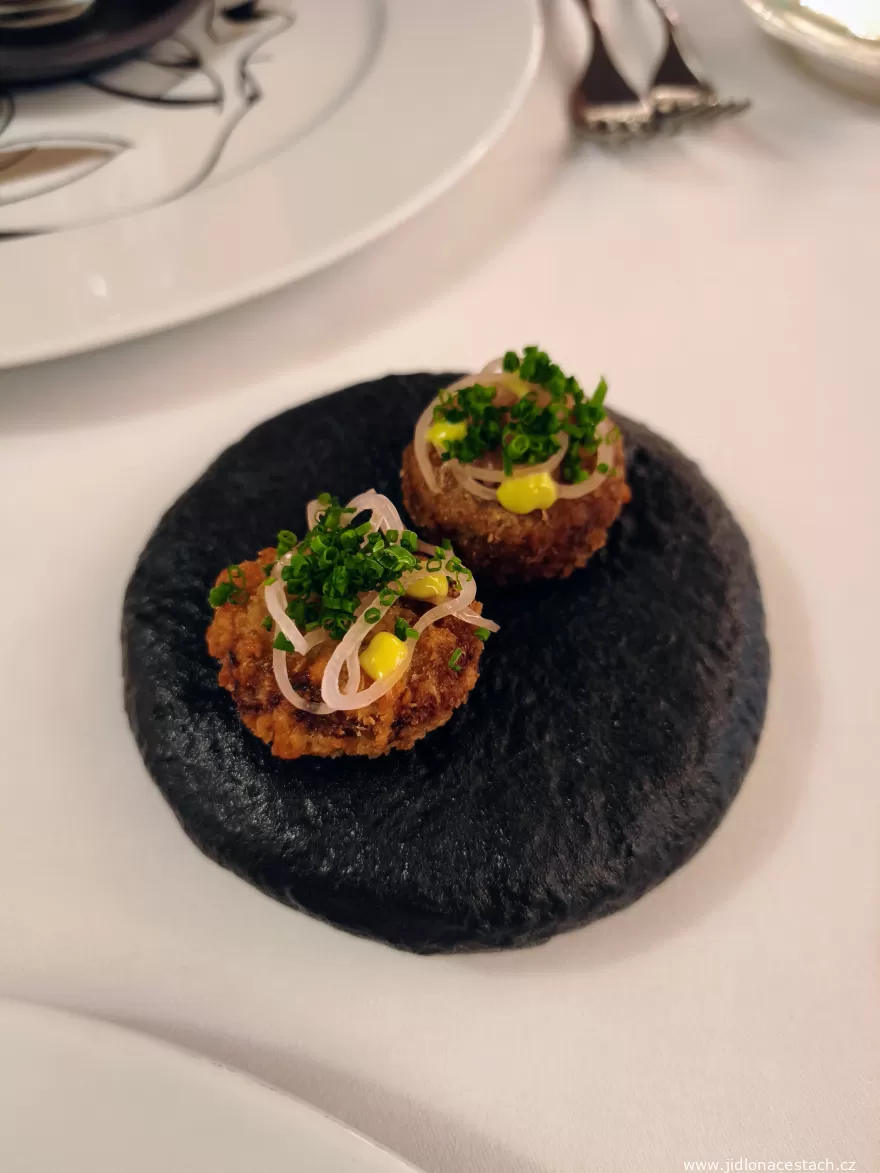
Before the menu proper came two amuse-bouches (little bites the kitchen sends out to greet guests before the first course). The first came in a small glass: a delicate cream with diced fish and cilantro oil - I'll admit I didn't commit the exact ingredients to memory. The second I remember perfectly. The beef croquette with its golden crust was so juicy that it was quite possibly the best croquette I've ever eaten.
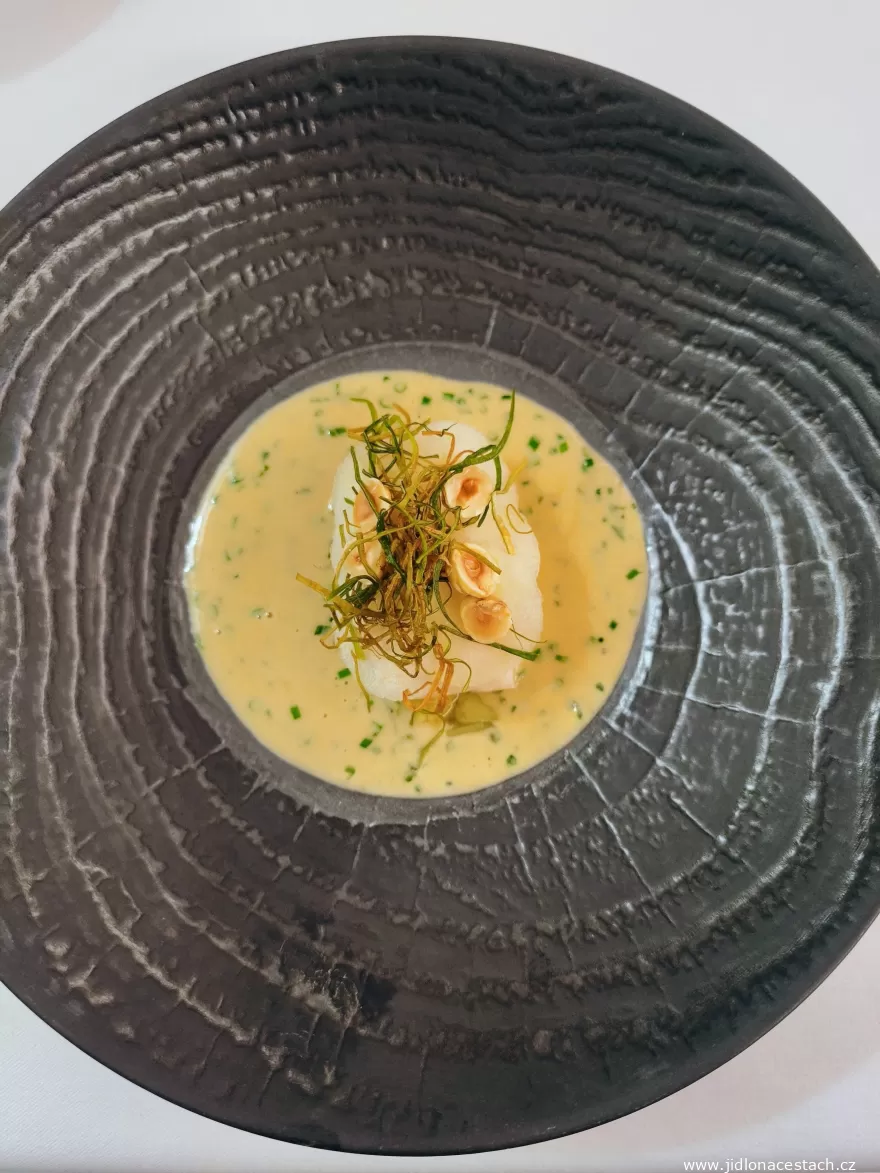
First course: smoked catfish with leek, green apple and brown butter. The deep plate, its concentric ridges making it look like a vinyl record, held white fish in a butter sauce, topped with crisp strips of fried leek. With it came Sancerre Les Panseillots from the Guillerault-Fargette family winery in Crézancy-en-Sancerre: a sauvignon blanc from limestone soils, hand-picked, fermented with wild yeasts and aged ten months on its lees in large old wooden casks. In the glass: clean, mineral and wonderfully easy to drink.

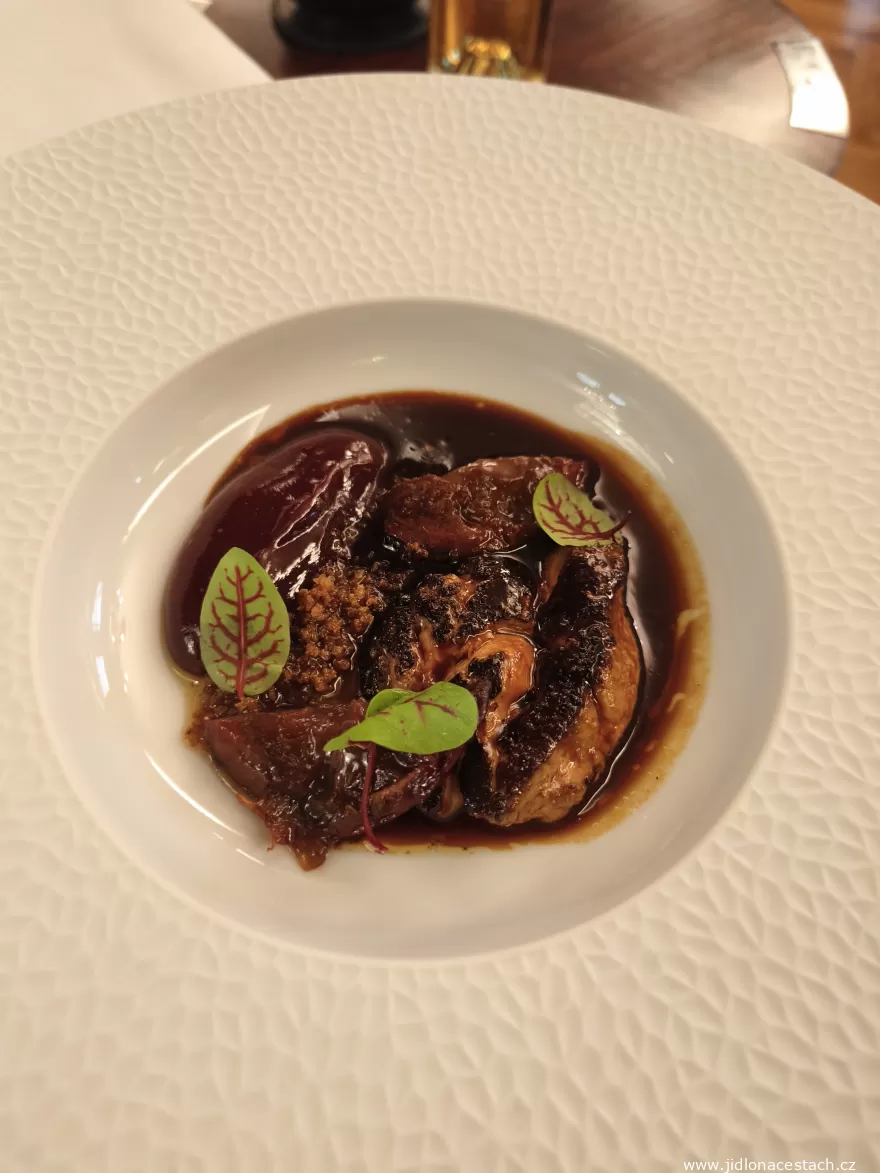
Grilled duck foie gras came with roasted plums, malt and a sourdough crumble: a charred crust and beneath it liver as light as a feather - a little cloud, really - and, with the roasted plum, an absolutely perfect combination; the crumble added crunch. Sauternes, the sweet white wine from Bordeaux whose grapes owe their concentration to noble rot, is a classic match for foie gras, and at Coda they poured one from Château d'Armajan des Ormes - an estate in Preignac that was raised to noble rank in 1565 after a visit from King Charles IX and Catherine de' Medici, and is now run by the sixth generation of the Perromat winemaking family. According to Château d'Yquem, 2022 was the hottest and driest vintage in Sauternes since 1896; noble rot didn't reach the region until October, and some estates harvested barely half their usual crop. Not much wine, then, but intensely concentrated.

Zander, Steak and a Dessert on Request
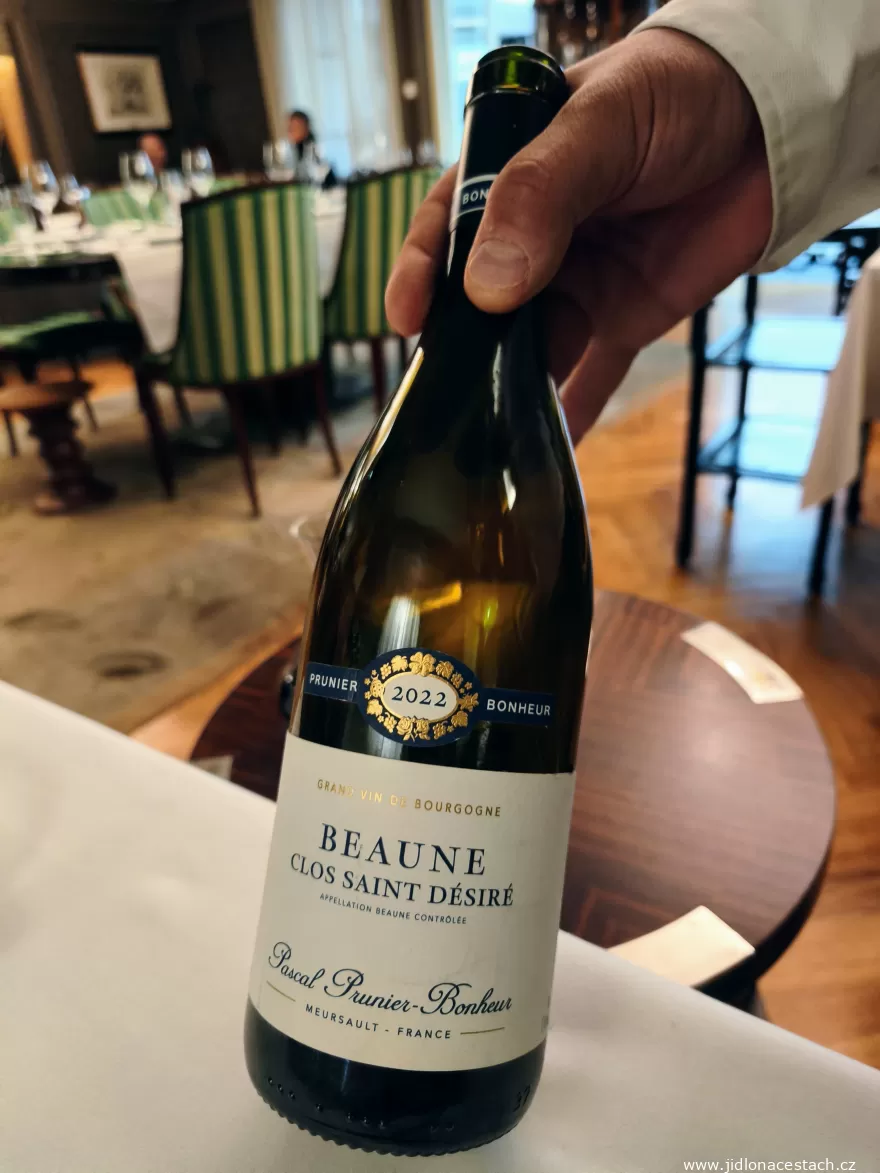
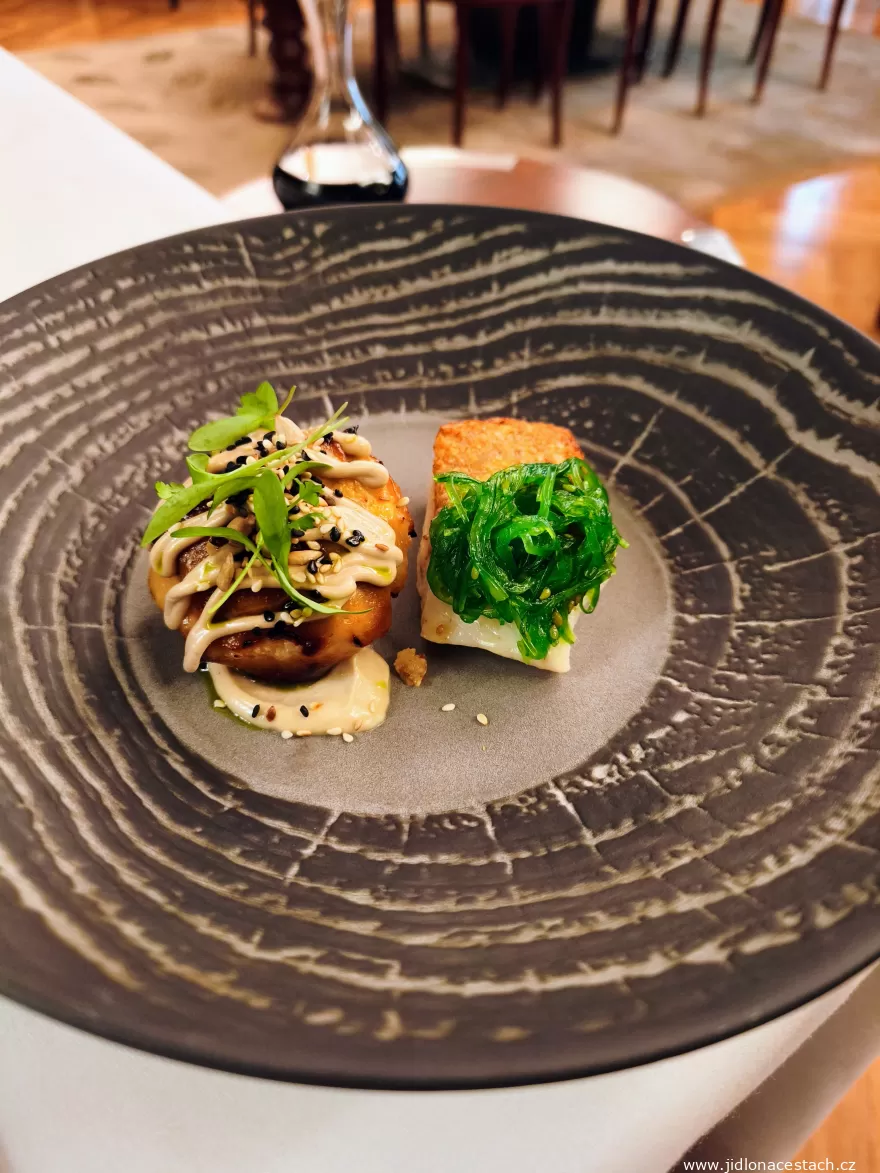
The third course took a different turn: zander with roasted cauliflower, pea miso, tahini and yuzu. The cauliflower, glazed so that at first glance it passed for a scallop, wasn't cooked all the way through - but I took that as a big plus - and the tahini went with it beautifully; I really loved it. Beside it lay the fish, with a seared crust, under a seaweed salad. With it they opened a white Beaune Clos Saint Désiré from Pascal Prunier-Bonheur, a winemaker with cellars in Meursault. The estate was founded in 1983 and carries the combined surnames of the husband-and-wife team - Prunier and Bonheur, French for happiness; it farms around eight hectares scattered across six villages of the Côte de Beaune and bought its vineyard on the southeast-facing slope of Montagne Saint-Désiré in 2007. Clos means a walled vineyard, and the Beaune appellation (the officially defined area around the town of the same name) is otherwise known mainly for its reds. Compared with the Sancerre it was more layered - a wine you enjoy exploring.
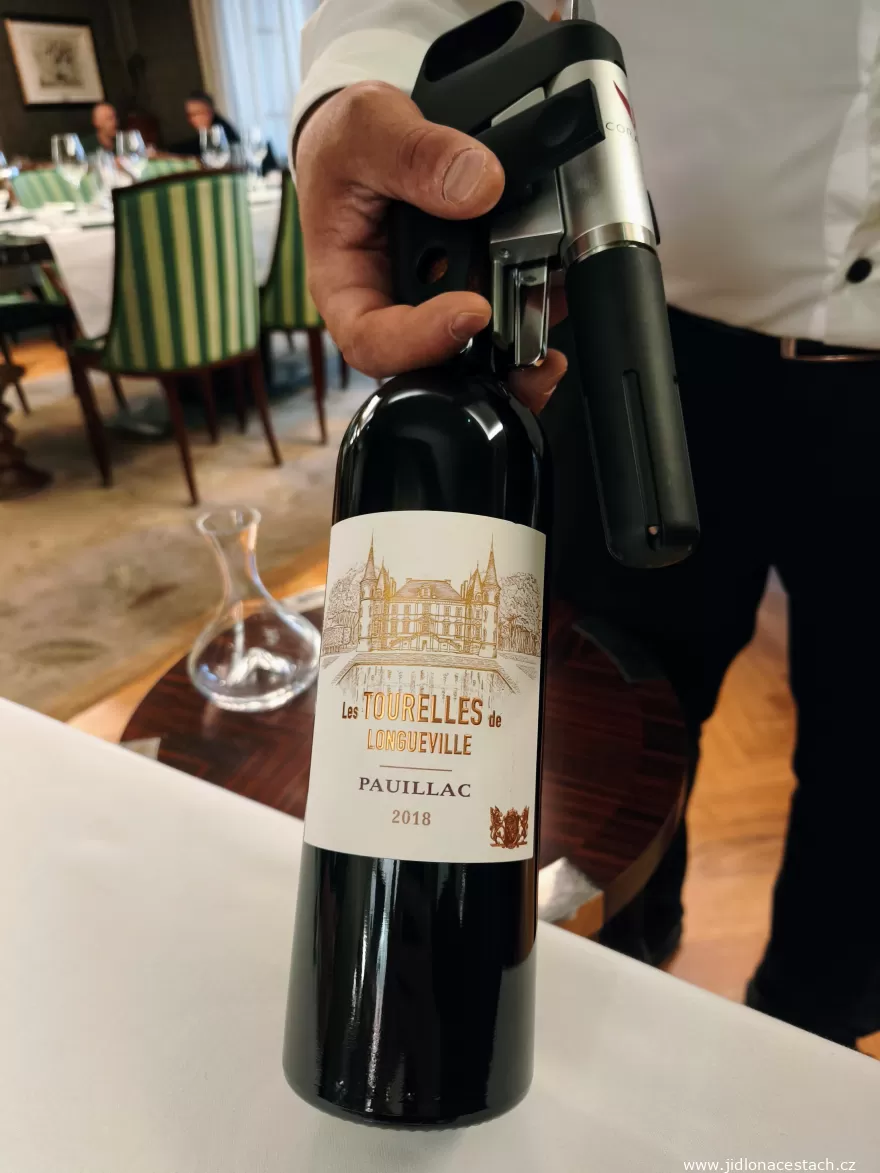
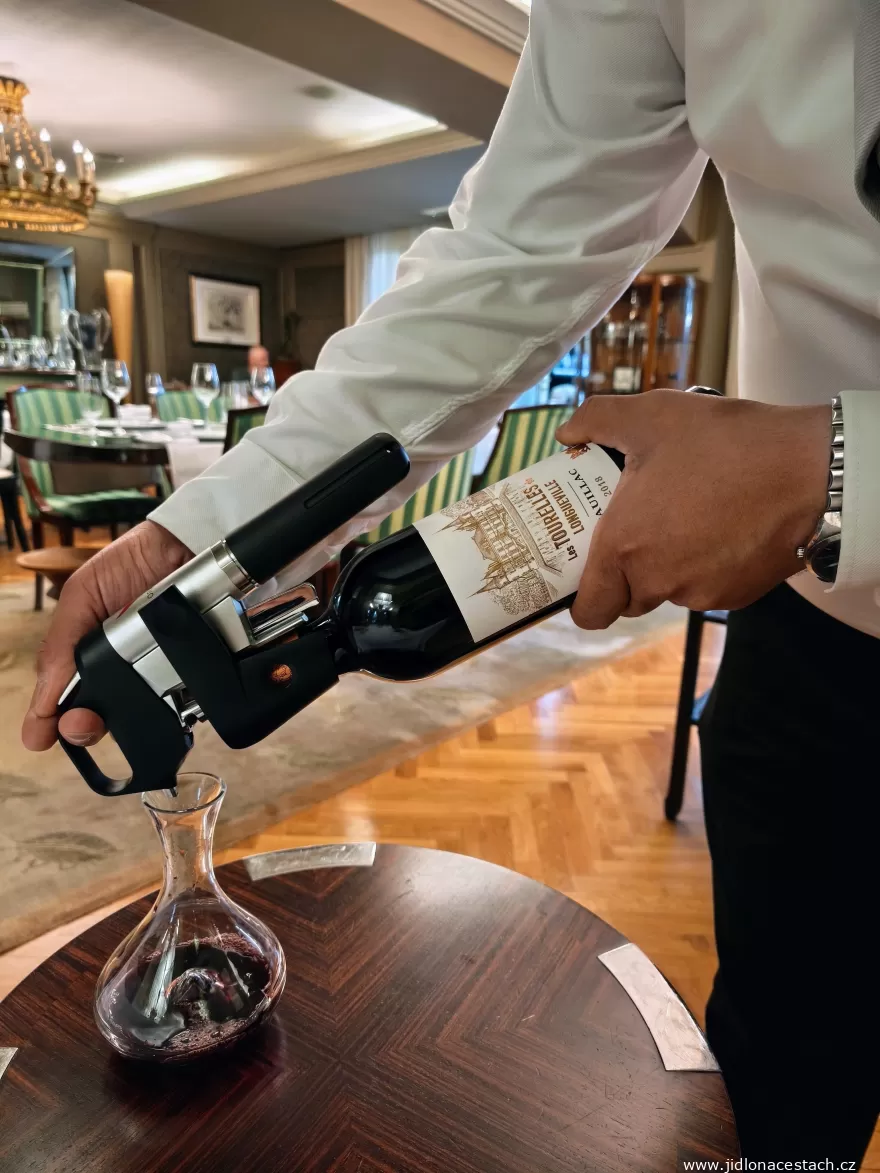
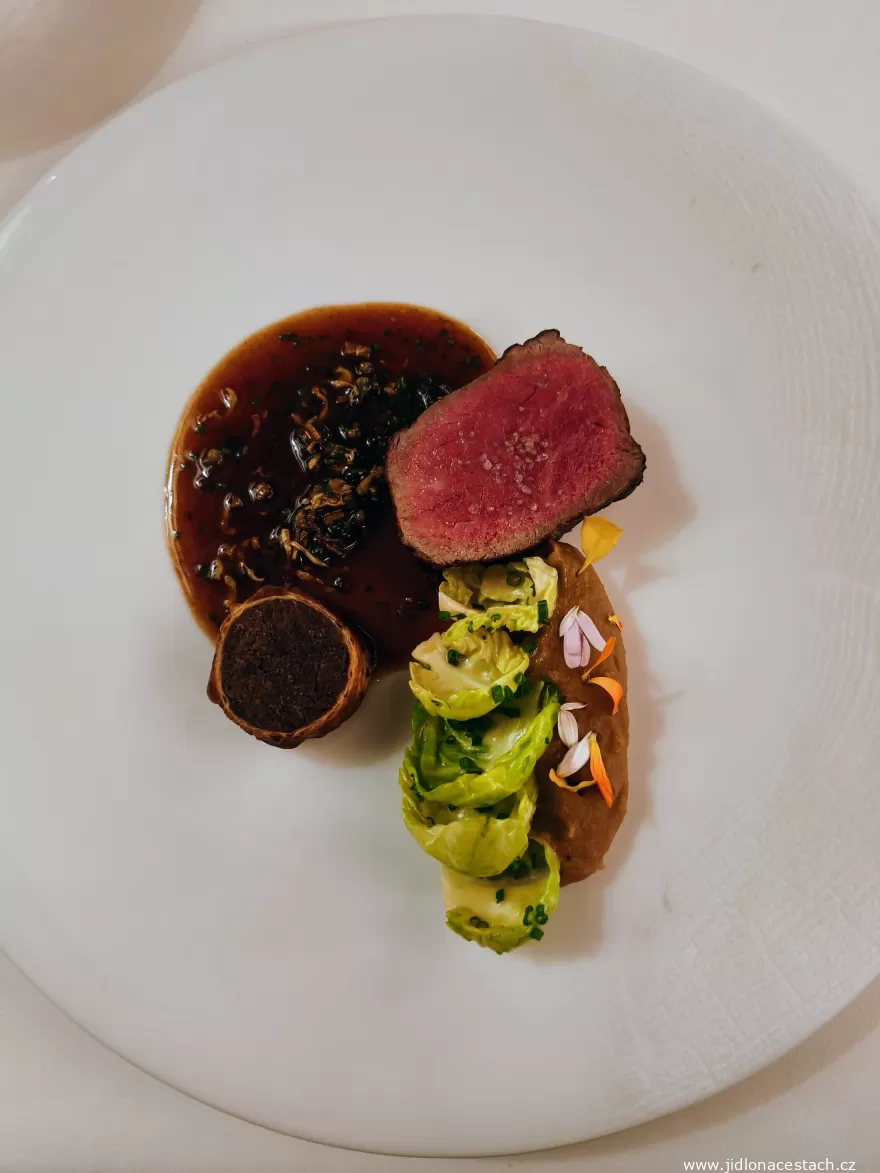
With the striploin steak came the decanter from the start of lunch. Inside was Les Tourelles de Longueville 2018 from Pauillac (a wine village north of Bordeaux), the second wine of Château Pichon Baron - the château whose pointed turrets are reflected in the pool in front of its facade and gave this wine its name. In the 1855 classification, Pichon Baron was ranked among the deuxièmes crus, the second-highest tier of Bordeaux châteaux, and while its grand vin (the flagship wine) is built on cabernet, Tourelles comes from the Sainte-Anne plot, and the 2018 vintage is led by 66 percent merlot. The sommelier never actually opened the bottle: with a Coravin, a thin needle passes through the cork and argon pushes the wine out, so only what flowed into the decanter got any air - the rest of the bottle never met oxygen. It's the invention of engineer Greg Lambrecht, who borrowed the principle from medical technology, and it's what lets restaurants pour wines of this caliber by the glass. On the plate, meanwhile: a pink slice of striploin with flakes of salt, boneless beef short rib alongside, a porcini sauce and Brussels sprouts on a purée with caramelized onion.
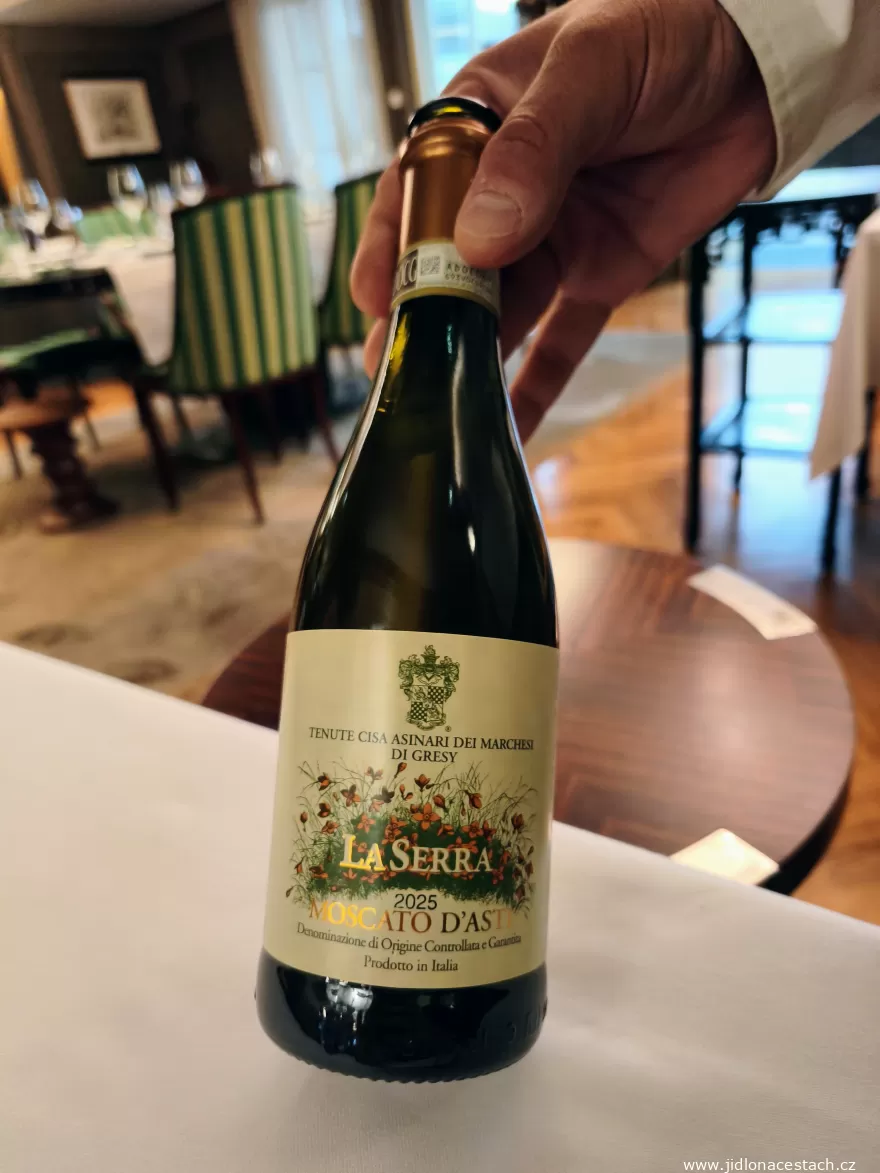
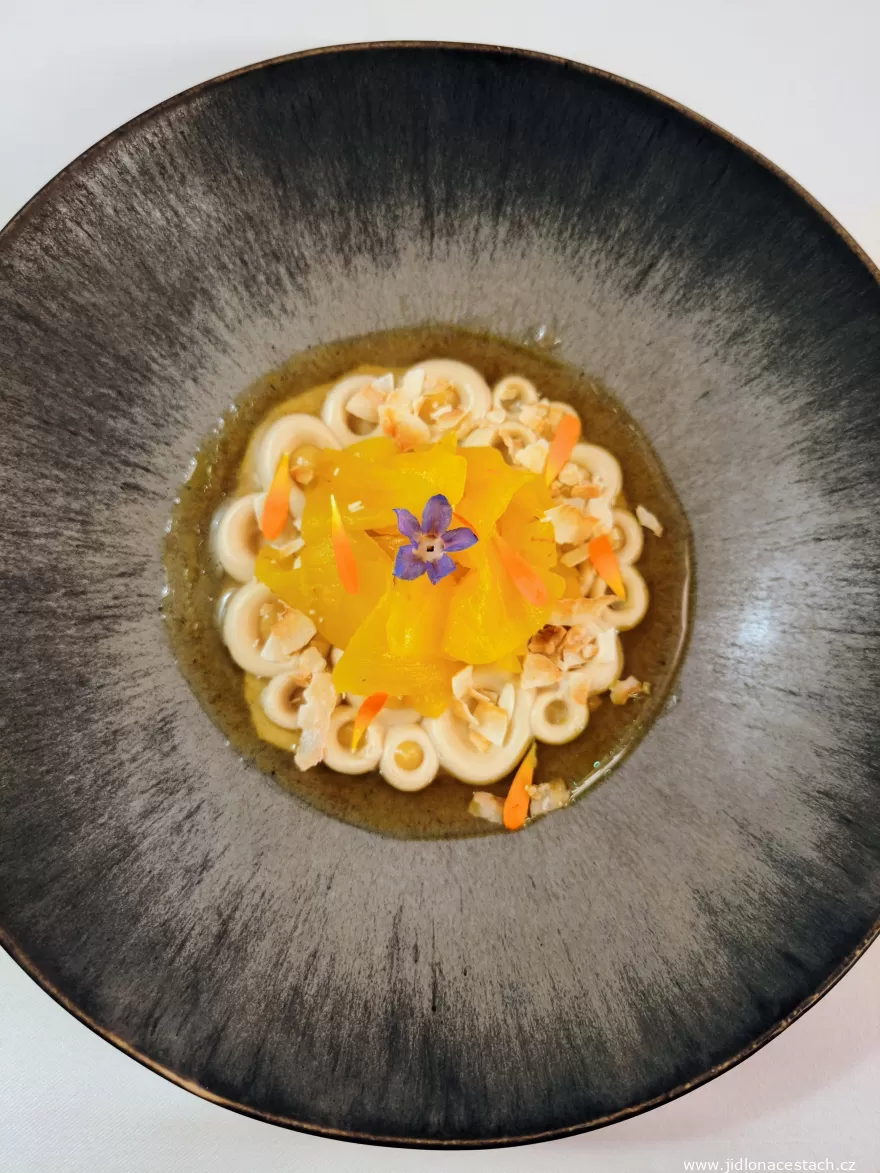
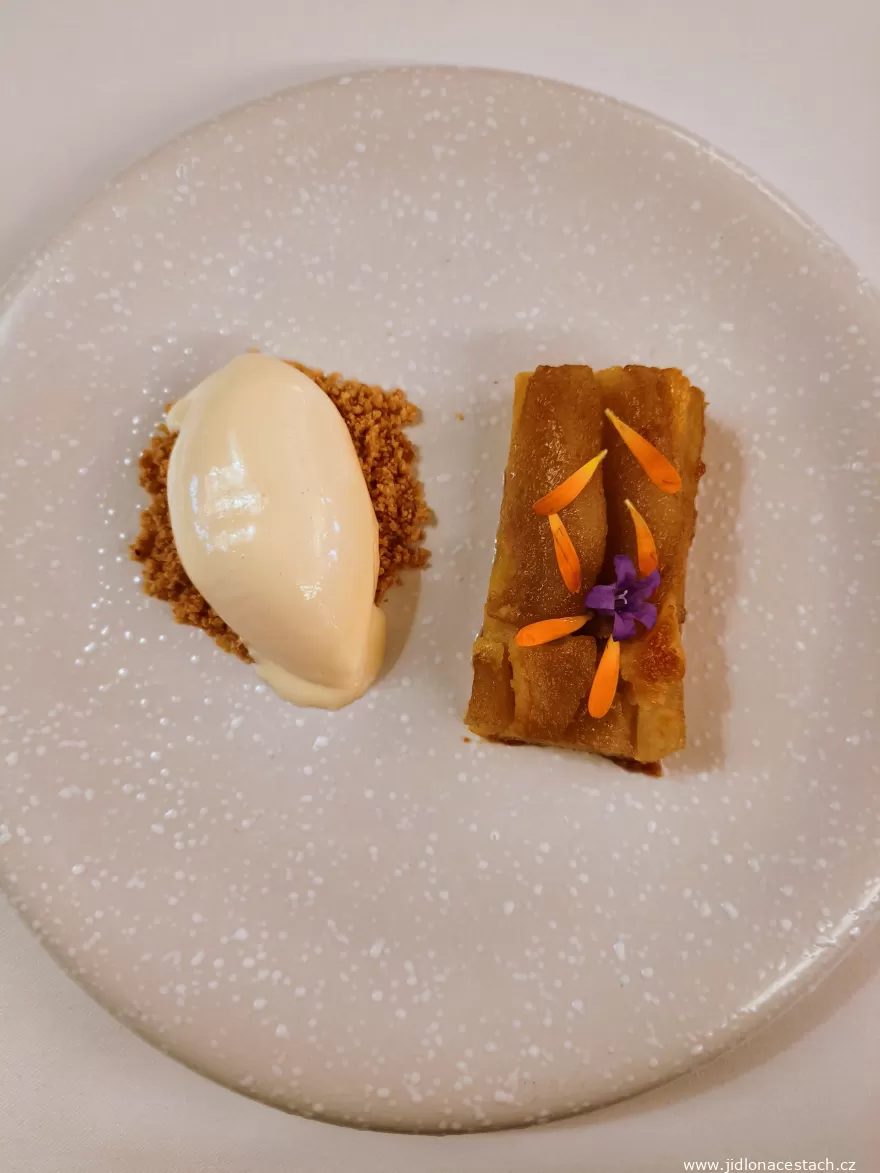
The dessert on the menu - coconut cream with pineapple, lemon verbena and spruce oil - went to my dining companion. I'm not a fan of coconut or pineapple, so the kitchen happily swapped my dessert for a pear and almond tart with sour cream ice cream and pear cider. Both were paired with Moscato d'Asti La Serra from Marchesi di Grésy. The marquises are best known for Barbaresco: the family was given the famous Martinenga vineyard back in 1797, but for almost two hundred years it sold the grapes to local producers, and it wasn't until 1973 that Alberto di Grésy began bottling his own wine. The family grows its moscato at the La Serra estate in Monferrato. Light, sweet, barely sparkling - exactly as much as you can still handle after four courses.
The Chef at the Table
The whole lunch took nearly three hours, and the staff conducted it like a concert: every bottle was first presented label-out at the table, and every course got a few words of introduction. Chef Igor Chramec also came over to our table to introduce himself; he cut his teeth in London and Australia. If you're heading for the terrace, bear in mind that it's usually open from April to October and only in good weather - in mid-October we were lucky enough to enjoy it, if only for that opening glass. And if you're planning ahead for the holidays: Coda also puts on a Christmas Eve dinner and a New Year's Eve menu with a midnight toast on the terrace.

On my way out I walked through the dining room, past Dalí and the caricatures on the plates, then through the atrium under its glass roof - and the last thing Coda showed me was the musical notes laid out in mosaic in the floor. In music, a coda is the closing section of a piece: it's played only once, at the very end. This lunch began with Champagne above the rooftops of Malá Strana and ended with musical notes underfoot. The score was perfect, right down to the last note.

Restaurace Coda


