Hải Hà: The Best Bún Chả in Prague's Sapa
Finding a restaurant in Prague's Sapa market is no easy task: the lanes between the warehouses aren't marked and a map won't get you far. Luckily, Hải Hà comes with navigation of its own. A charcoal grill stands out front, and the smell of smoke and grilled pork belly reaches you several lanes before you spot any sign.
Hải Hà is a Vietnamese bistro in the Sapa complex on the southern edge of Prague, and it serves what I'm not alone in calling the best bún chả in the city - Hanoi-style grilled pork with rice noodles that's worth the trip even when you don't need to buy a thing.
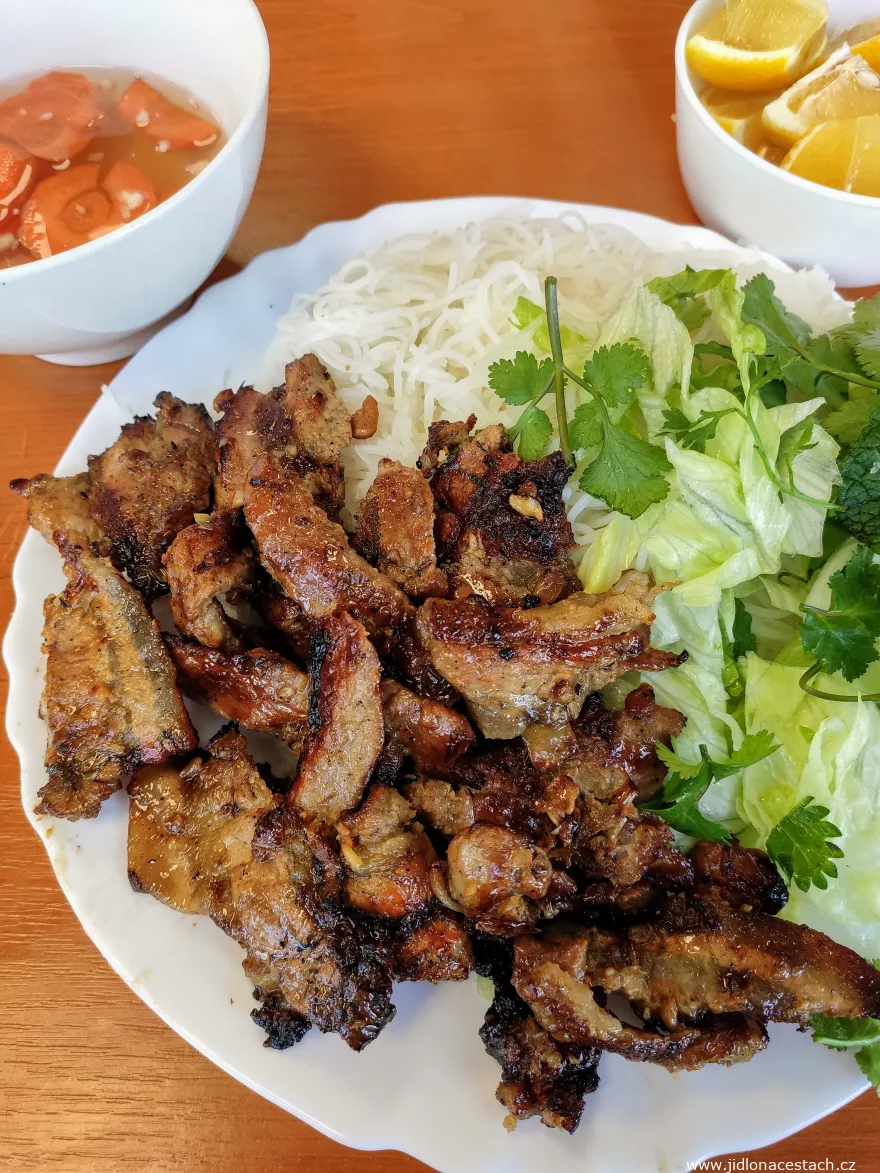
What Bún Chả Is and How to Eat It
Bún chả is thin rice noodles, pork grilled over charcoal and a bowl of warm sweet-and-sour sauce made from fish sauce, sugar and vinegar, with pickled vegetables floating in it. Then a mound of fresh herbs: lettuce, mint, perilla, cilantro. None of it comes pre-mixed. Bún chả is a kit of parts and you put every bite together yourself.
With chopsticks you pick up a few noodles, add a leaf of herb, dip it in the bowl with the meat and eat. The sauce is for dipping; you don't pour it over the noodles - foreigners get this wrong so reliably that in Hanoi you can find written instructions on how it's done. And Hanoi isn't just a throwaway detail here: bún chả is a Hanoi dish, while in southern Vietnam grilled pork with noodles comes tossed together in a single bowl and goes by the name bún thịt nướng. What made the dish world-famous was the 2016 dinner Barack Obama had with Anthony Bourdain at a Hanoi bistro; the table they sat at is still on display there behind glass.

How Things Work at Hải Hà
For as long as I can remember, the same man has been standing at the grill out front, turning slices of pork belly on a rack over coals that an electric fan keeps glowing. Inside you can order in Czech without any trouble and the staff are quick. At lunchtime every table is taken, but the line disappears faster than you'd expect - and watching the grill helps pass the time. Alongside bún chả they also do bún bò Nam Bộ, a noodle bowl with beef that I cover in a separate article. The name of the place translates as sea and river; the closest you'll get to water here, though, is the bowl of sauce.
Sapa sprang up around the turn of the millennium on the site of a former meat processing plant in Písnice, and today it covers dozens of hectares of halls, warehouses, shops and bistros. So pork is still processed here to this day, just on a smaller scale and over charcoal. I mostly come to Sapa to buy Vietnamese groceries, and I always end up at the bistros anyway (I've put together a rundown of the best ones); bún chả is in such demand here that the complex even has places specializing in it, like Thùy Linh Bún Chả. You'll spot Hải Hà among them by the yellow sign reading Bún Chả Hải Hà - and by the smoke.
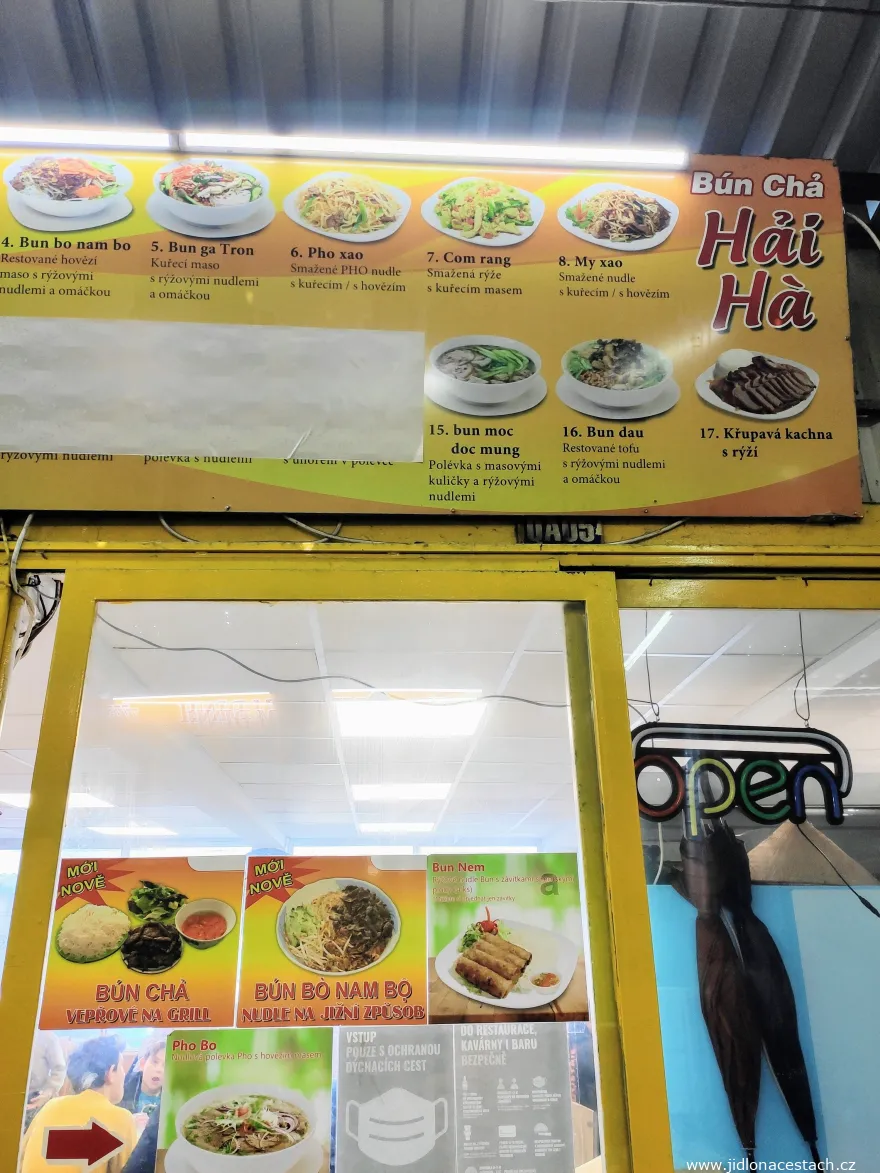
My Regular Stop in Sapa
I drop in at Hải Hà almost every time I'm in Sapa - it's my regular spot, the place where I know exactly what I'm getting: a huge plate, the meat still smelling of smoke when it reaches the table, the edges of the pork belly charred almost black in places, and a warm sauce that keeps sweet and sour in balance. Only once did they bring me noodles chopped into short pieces that were a pain to catch with chopsticks; it took nothing away from the flavor, plenty away from my patience. The portion cost 180 CZK (7.20 EUR) and was - as always - enormous. The lanes of Sapa are as unmarked as ever. And I've still never gotten lost on my way to Hải Hà.
Hải Hà Restaurant


