Bánh Cuốn Phương Phượng: Rice Rolls in Prague's Sapa
In the Sapa market on the southern edge of Prague, a narrow green staircase climbs along a yellow facade between a stall selling plush toys and shelves of textiles. The sign above it reads Bánh Cuốn Nóng, hot rolls, and a round blue sign on the brick pillar translates it into Czech just to be sure: rýžové závitky, rice rolls.
At the top of the stairs sits Bánh cuốn Phương Phượng, a small bistro in the largest Vietnamese market in Czechia that serves a single dish - bánh cuốn rice rolls. You can read the menu here faster than anyone can hand it to you.
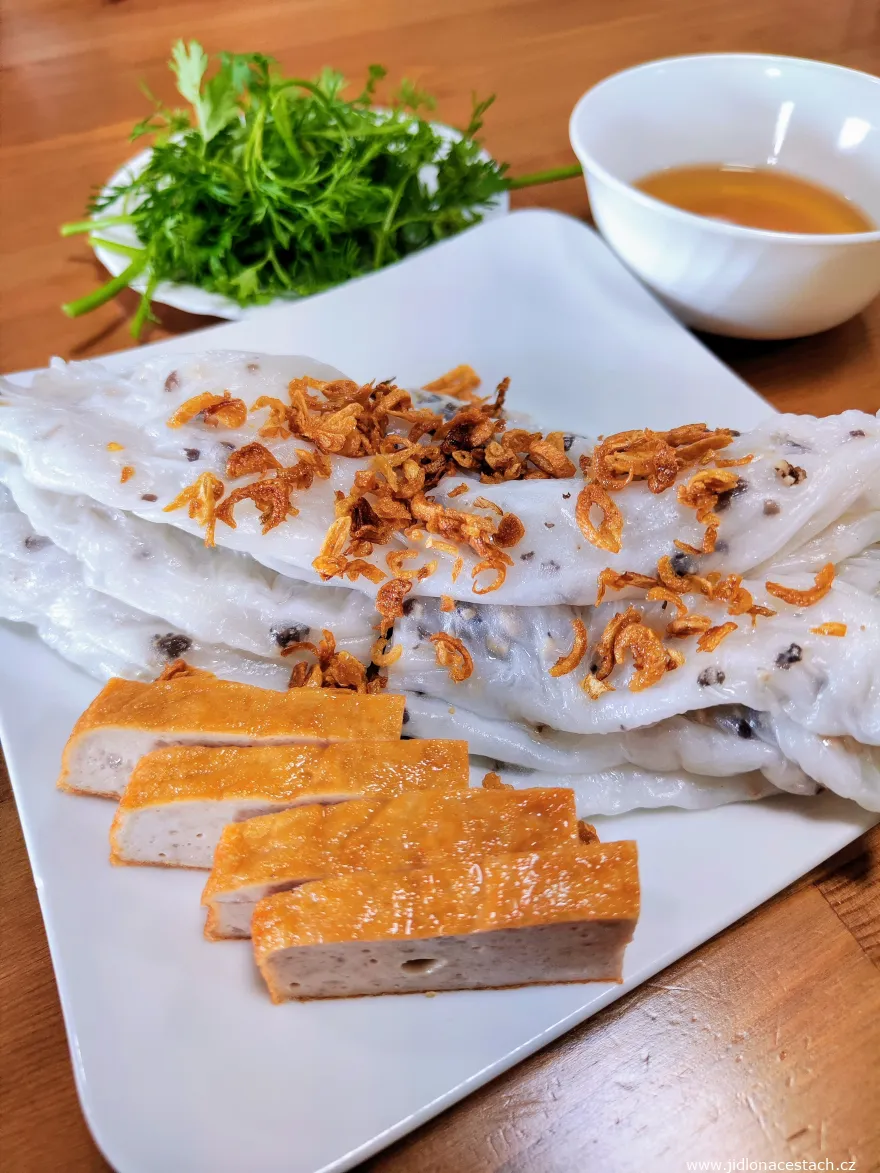
What Bánh Cuốn Is and Why It's Breakfast in Vietnam
A thin rice-flour batter is spread over a cloth stretched across a pot of boiling water, left to steam for under a minute, and the finished sheet, thin almost to the point of translucency, is lifted off with a rod and rolled while still hot around a filling of ground pork and wood ear mushrooms. The name says nothing about the filling: cuốn means to roll up in Vietnamese, so bánh cuốn is simply rolled-up batter. On top goes a handful of fried shallots, on the side a few slices of Vietnamese chả lụa sausage, fresh herbs and a bowl of sweet-and-salty nước chấm sauce that you dip the rolls into, piece by piece. A few celebrated places in Hanoi add a drop of essence from the cà cuống water bug - so rare and so expensive that hardly anyone uses it any more.
In Vietnam, bánh cuốn is mainly a breakfast dish, a lighter counterweight to phở soup. The most famous version comes from the Hanoi district of Thanh Trì - back in the 1940s the essayist Thạch Lam wrote that the sheets were "as thin as paper and as translucent as silk", and in 2025 the Vietnamese Ministry of Culture added the craft of making bánh cuốn from Thanh Trì to the national list of intangible heritage. The original Thanh Trì classic comes with no filling at all, just the plain sheet and fried shallots - the filled version they make in Prague's Sapa is its heartier sister, and its close sibling bánh ướt is the same batter left unrolled and empty. Paper, silk, heritage - and all that poetry is served in Prague above a stall selling plush toys.
A Bistro with a One-Line Menu
The bistro brought its narrow specialization straight from Vietnam - famous stalls in Hanoi will happily sell a single thing for decades and nobody raises an eyebrow. What it doesn't keep is the breakfast etiquette - the rolls are served here all day. Ordering takes a few seconds and the rolls land in front of you within minutes - that speed comes down to the technique: the sheets stick together as they cool, so they're rolled fresh and eaten straight away. The portion is generous: as a starter it easily feeds two, and the bistro counts on that, so anyone ordering for two gets a second bowl of sauce without asking. And if you'd rather not eat upstairs, they'll wrap the rolls to go.
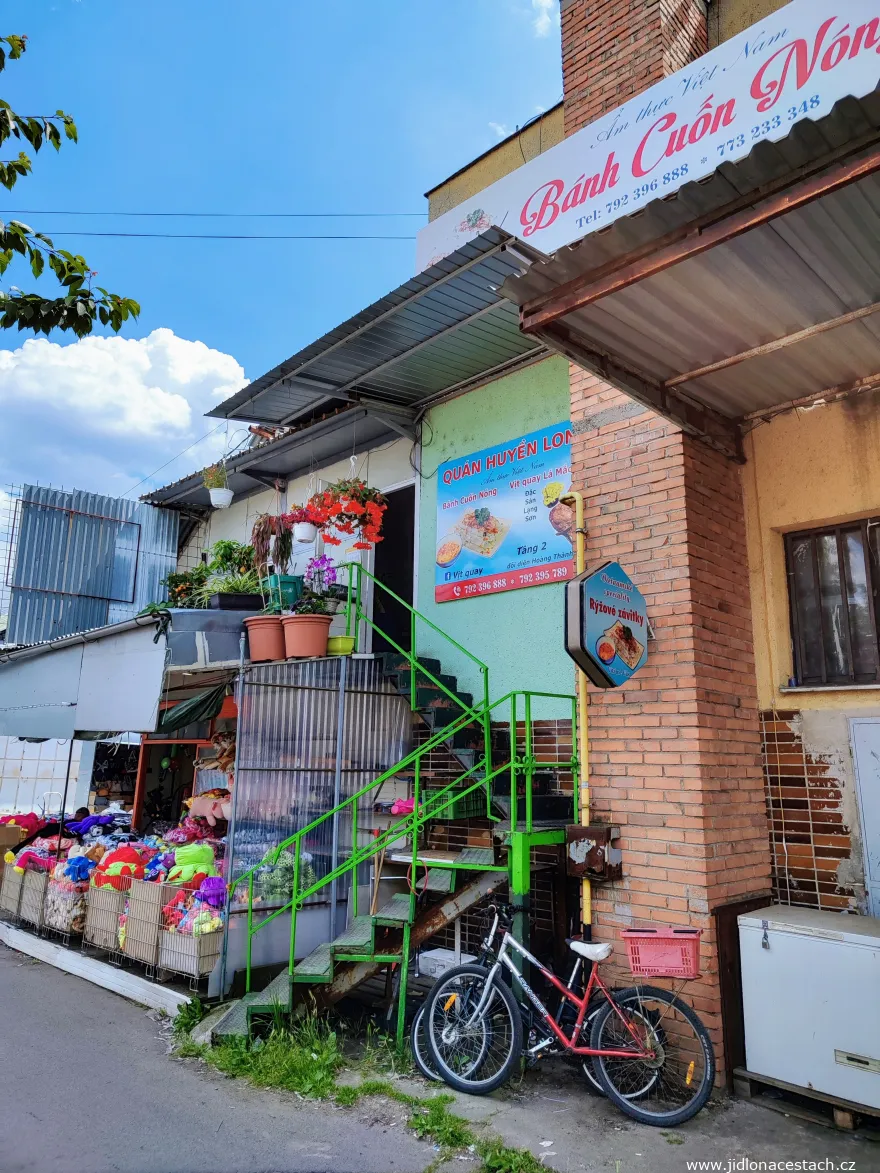
The Rolls That Get Me Up the Stairs
I've been coming to the bistro above the green stairs for more than ten years, and I hardly ever get to Sapa without stopping in. I've tried plenty of places here, from bún chả to egg coffee, but the rolls from upstairs remain my constant. They make them flawlessly: the sheets are warm and supple, the filling tastes of meat and mushrooms, the fried shallots add crunch to every bite and the sauce pulls the whole thing together. The portion cost 160 CZK (6.40 EUR). The menu here is still one line long - and in all that time I've never needed it to be any longer.
Bánh cuốn Phương Phượng


