Jerusalem Bagel: The Sesame Bread from the Gates of the Old City
The cart comes first. Green-and-red tricycles loaded with sesame ovals as long as your forearm roll up to Damascus Gate at first light, and a vendor stands with one at almost every gate of the Old City - it's usually the first food you set eyes on in the city.
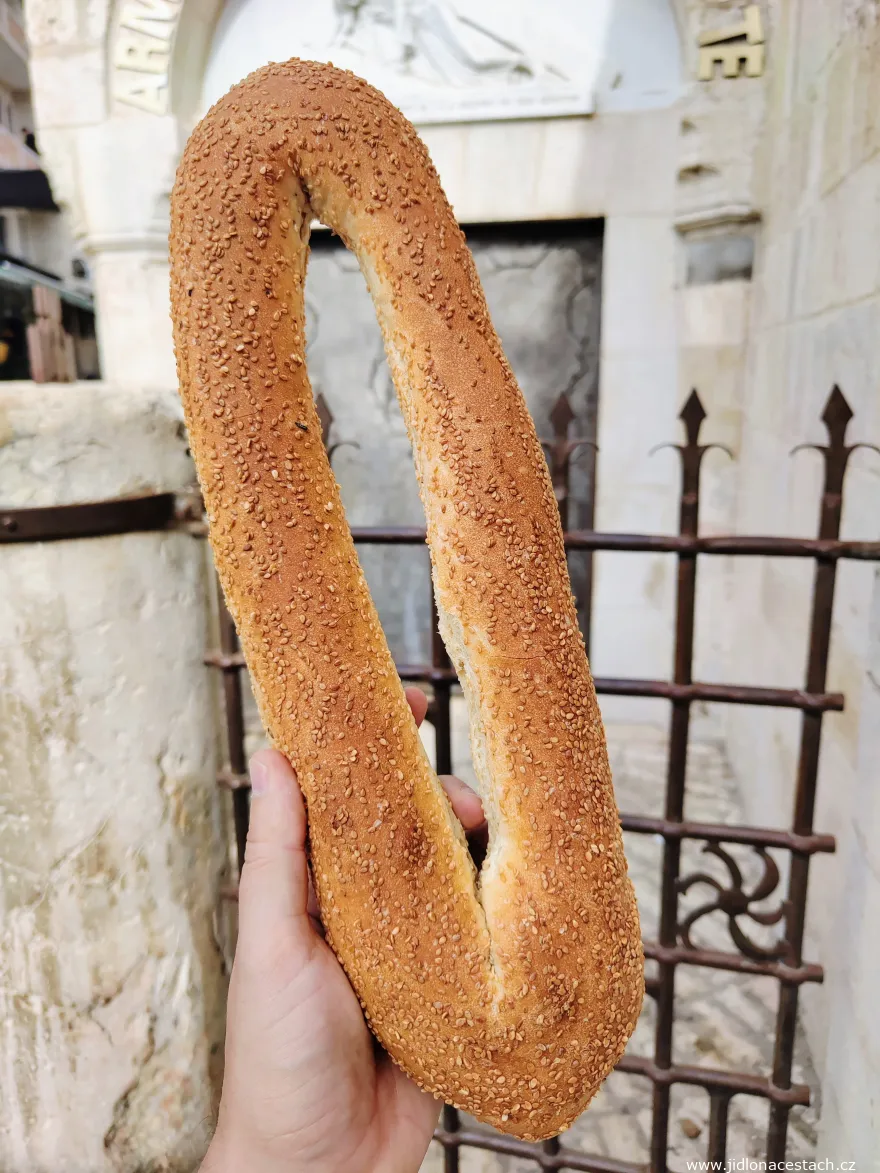
The Jerusalem bagel (Hebrew: בייגל ירושלמי, Arabic: كعك القدس - ka'ak al-Quds) is a large, elongated yeasted bread with a crisp sesame crust that, unlike its famous American namesake, is never boiled, only baked. In Israel you'll find it just about anywhere people eat breakfast outdoors.
Two Names for One Sesame Oval
In Hebrew it's called beigele yerushalmi. The word beigele came in from Yiddish and carries the Old Germanic boug, a ring, at its root - that part of the family tree holds up. Why the bread should be tied to Jerusalem, though, nobody can explain: the Hebrew Wikipedia entry admits that the hunt for the origin of the name came up empty. Arabic keeps it simple: ka'ak al-Quds simply means ring-shaped bread from Jerusalem - and at dawn the vendors fold both words into a rhyming call in which the city and the bread become one.
The family of sesame rings, meanwhile, wraps around the whole eastern Mediterranean. In Turkey they bake simit, a smaller ring dipped in grape molasses before it goes into the oven; the Lebanese ka'ak bi simsim is glazed with sweetened milk after baking and then dried, which puts it closer to a cookie to have with your coffee. The Jerusalem branch is the biggest and the airiest of them - the Turks call it Kudüs simidi and treat it as a type of its own, and coming from the nation that gave the world simit, that's quite a compliment.
The Sultana's Soup Kitchen and the Bakers' Guild
Who baked the first one nobody knows - all that's certain is that it happened long before the word bagel ever sailed to America. One version people like to repeat starts in 1552, when Hürrem, the wife of Sultan Süleyman, founded a charitable soup kitchen in Jerusalem where round bread was handed out to the poor along with rice and meat. Another puts the founding of the ka'akiyeen guild, the makers of kaak, in 1605. Neither can be proven; the stories don't even agree on the century. The ovens offer firmer ground: in the Old City the craft has been in the hands of Arab families for generations, and some of those bakeries have been baking for more than a hundred years. Today's elongated shape is a newcomer by comparison - according to food historian Gil Marks it only caught on in the 1980s. Which leaves the guidebook label "typically Jewish bread" resting mostly on one borrowed English word.
How the Jerusalem Bagel Is Baked and What to Eat It With
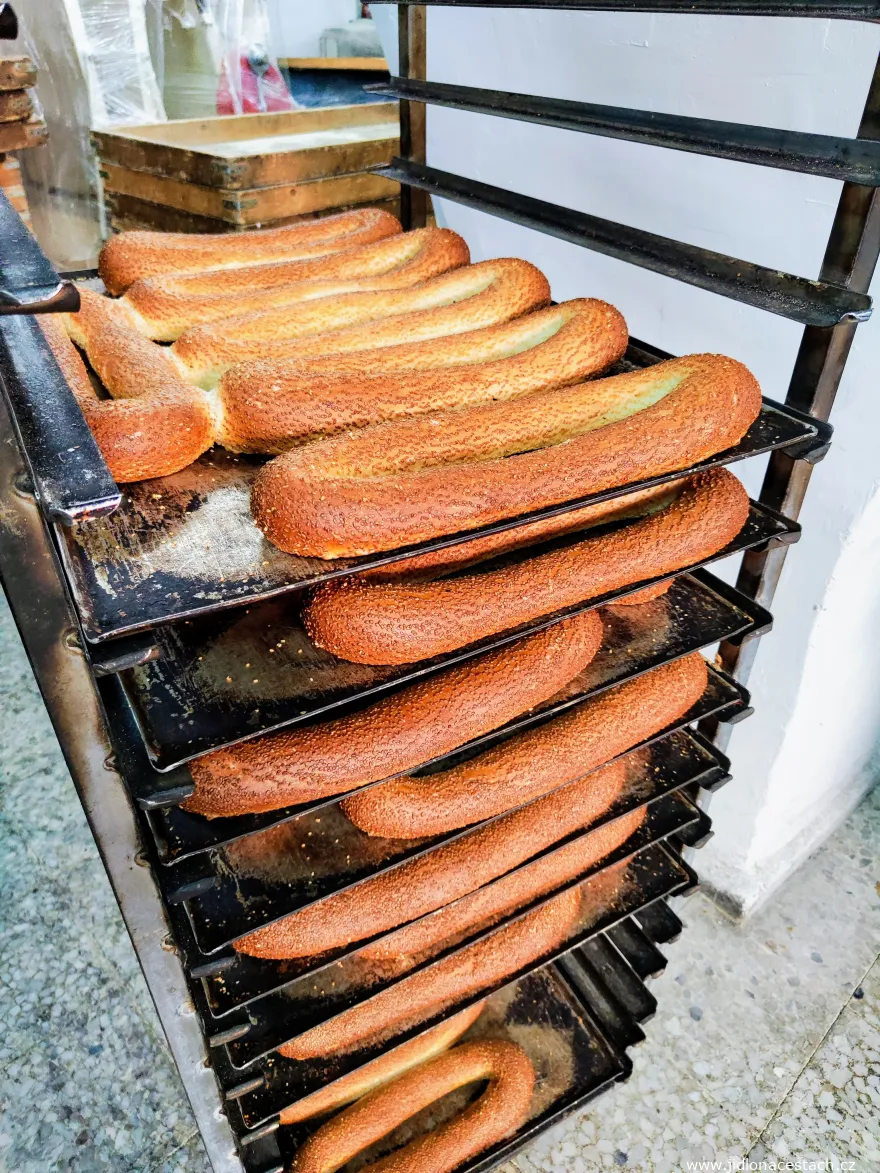
The classic bagel, the one America knows and the one its Polish homeland knows, gets a short boil in water before baking: the hot bath sets the surface of the dough, and that's where the bagel gets its glossy crust and its dense, chewy inside. The Jerusalem one skips the whole ceremony, which is why it's as light as ordinary bread. The dough is yeasted, but it comes in two versions: Israeli bakeries mix it on the sweet side, with a little milk powder, while the Arab ovens in the Old City stick to a saltier one with olive oil. The oval is stretched out on oiled hands and then dipped in water for just a moment, sometimes lightly sweetened, so that an unbroken layer of sesame will hold. Anyone who has ever scattered poppy seeds over rolls at home knows the trick: seeds won't stick to dry dough. The rest is down to fierce heat, in the oldest bakeries still from a wood-fired oven.
It's breakfast, and breakfast in public: eaten standing up, on the street, on the way somewhere. A paper packet of za'atar goes with it: you don't sprinkle it over the bread, you tear off a piece and dip it in, and anyone who wants a heartier version adds a hard-boiled egg or a bowl of labneh. Ask for the packet even where they don't hand it out with the bread - the request won't surprise the vendor.
Where I Bought My Ka'ak
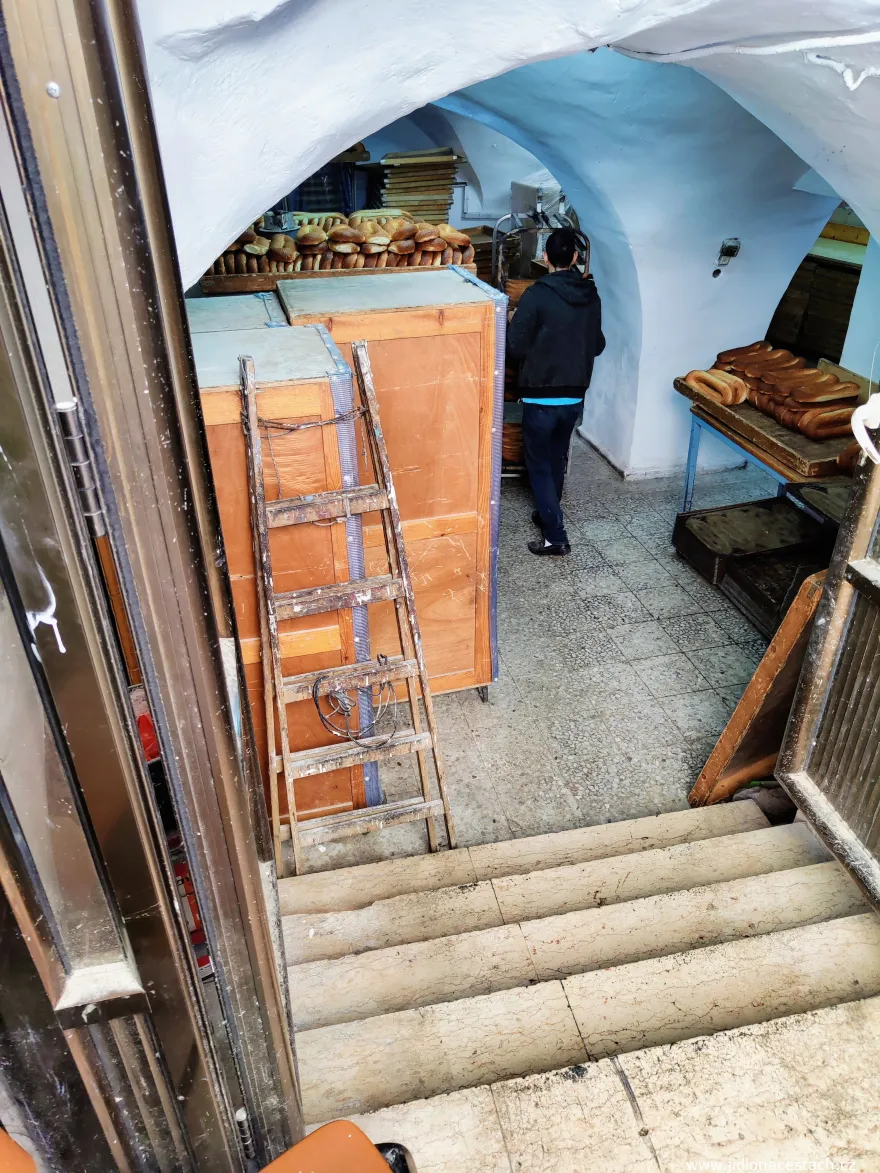
I bought my first Jerusalem bagel at a small bakery with no sign over the door, which I came across in the alleys of the Old City of Jerusalem. Two bakers happily showed me around their whole cramped workplace and threw in something extra with the bagel: a handful of za'atar in a rolled-up piece of yesterday's newspaper. The bagel was still warm, the crust crunched with toasted sesame, the inside pulled apart soft like fresh bread, and the za'atar added salt and the sour note of sumac. At the gates of the Old City this piece of bread costs 10 ILS (2.80 EUR); at a bakery you have to get slightly lost to find, 5 ILS (1.40 EUR) - and the newspaper full of za'atar came free.


