Lán Dê - Xôi Chè: Caramelized Pork Belly with Rice in Prague's Sapa
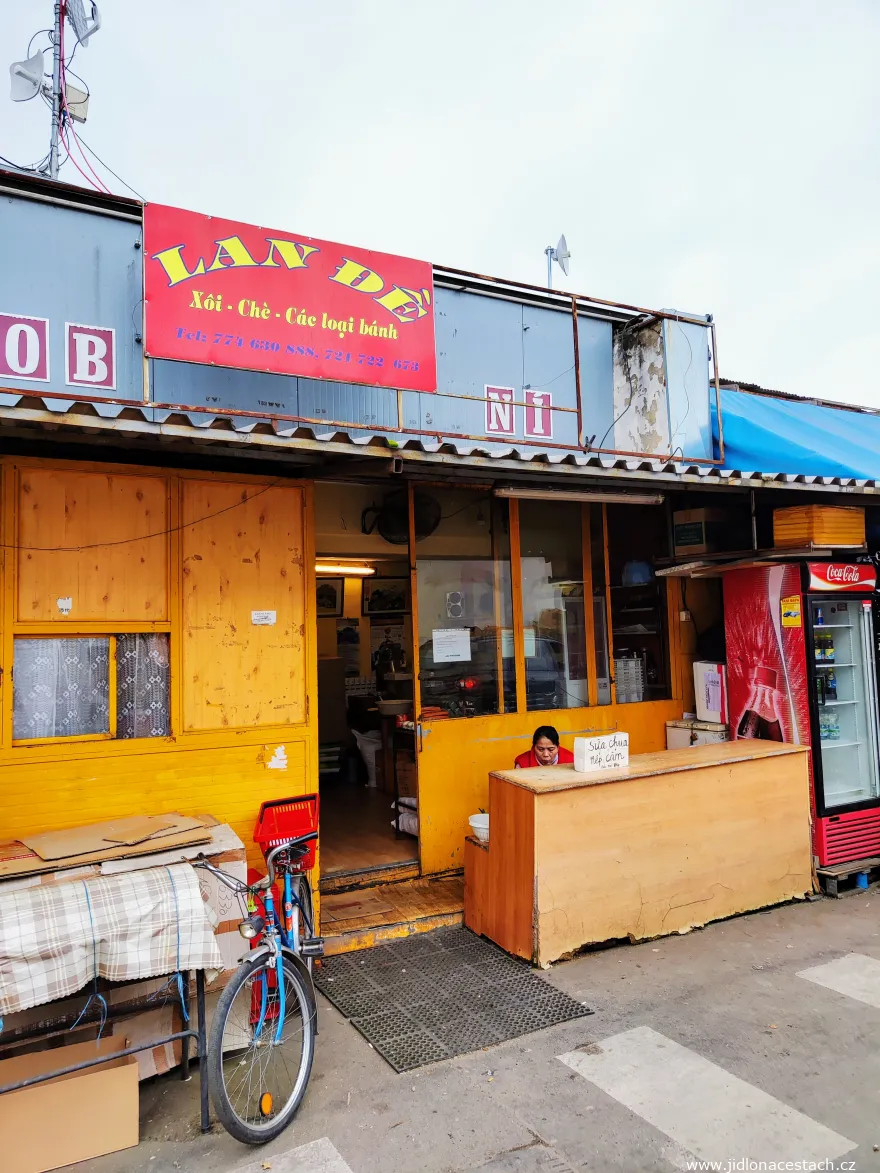
When I'm wandering around Prague's Sapa, nothing pleases me more than stumbling onto something I never knew was there. This time it paid off: right at the back of the market, where most expeditions to the better-known places never even get, I came across a stall without a single seat. You order right in the kitchen, among the pots, and when I stopped by, the only people buying were Vietnamese - which is usually a better recommendation than any review.
Lán Dê - Xôi Chè is a small Vietnamese stall in Prague's Sapa that has perfected a single dish: caramelized pork belly with egg and sticky rice.
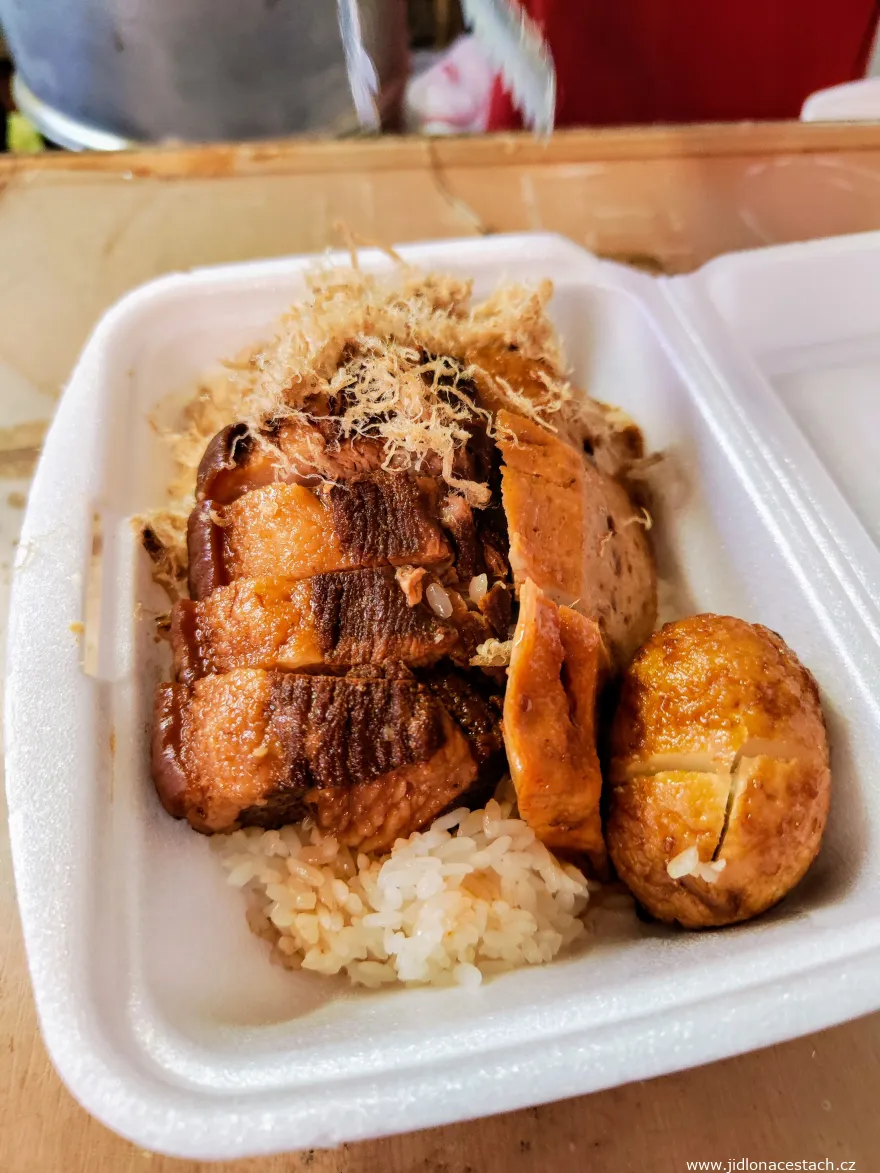
What "One Pork Belly" Gets You
The order is two words long and so, in effect, is the menu - almost everyone comes here for this one thing. A smiling lady takes a plastic box, scoops sticky rice xôi out of one pot and fishes pieces of pork belly, an egg and a slice of chả cốm patty made from pork and young green rice out of the dark sauce in another. She then snips the meat and the egg apart with sharp scissors right in front of you and buries the finished portion under dried shredded pork and fried shallots. Those scissors aren't some Prague invention: the woman at the famous stall by Hoàn Kiếm Lake in central Hanoi portions her pork belly exactly the same way. The topping has names of its own, too: shredded pork ruốc and fried shallots hành phi go on sticky rice all over Vietnam.
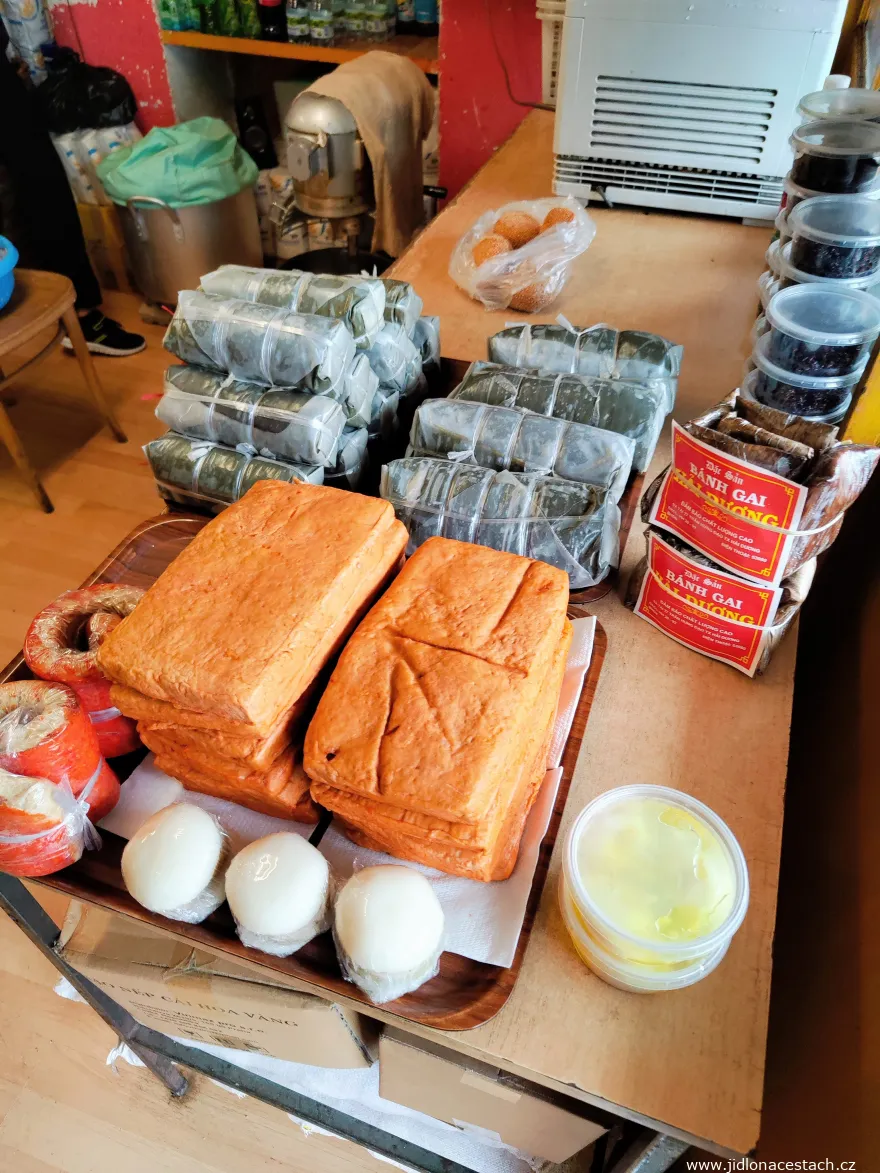
Thịt Kho Tàu, or Xôi Thịt?
I carried the question of whether I had actually eaten thịt kho tàu or xôi thịt out of Sapa along with the box. The answer turns out to be both. Pork belly braised with eggs in caramel sauce is called thịt kho tàu in Vietnamese; the moment it lands on sticky rice, the whole combination is sold as xôi thịt kho. The meat comes from southern Vietnam, where it is traditionally braised with nước màu caramel and coconut water for the Tết New Year; heaping it onto rice for passers-by, on the other hand, is mainly a Hanoi habit. The south supplied the dish, the north the way it is sold, and the Prague stall took half of each.
The word tàu makes it sound as if the whole dish had come from China. There are three Vietnamese explanations, though - a boat, the Chinese, or a southern dialect word for a flavor that is slightly salty and slightly sweet - and the last one, backed by the writer Bình Nguyên Lộc, fits the contents of the box best. The name of the stall, by contrast, is easy enough to decipher: lán means shed and dê goat, so together roughly Goat Shed. The red sign above the entrance dryly lists what's on offer: xôi, the sweet dessert chè and assorted bánh. Why a goat, only the owner probably knows.
Snacks from the Counter: Bánh Khoai Tôm and Bánh Cam
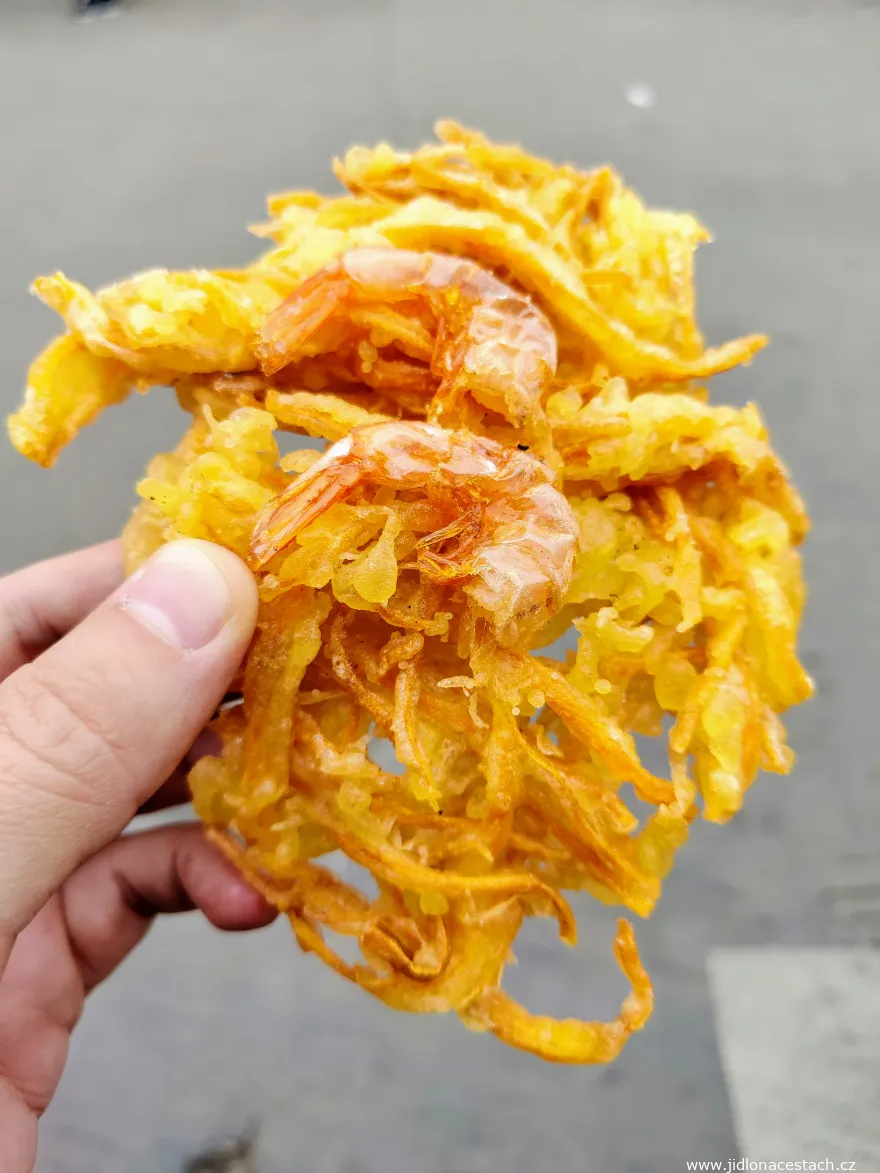
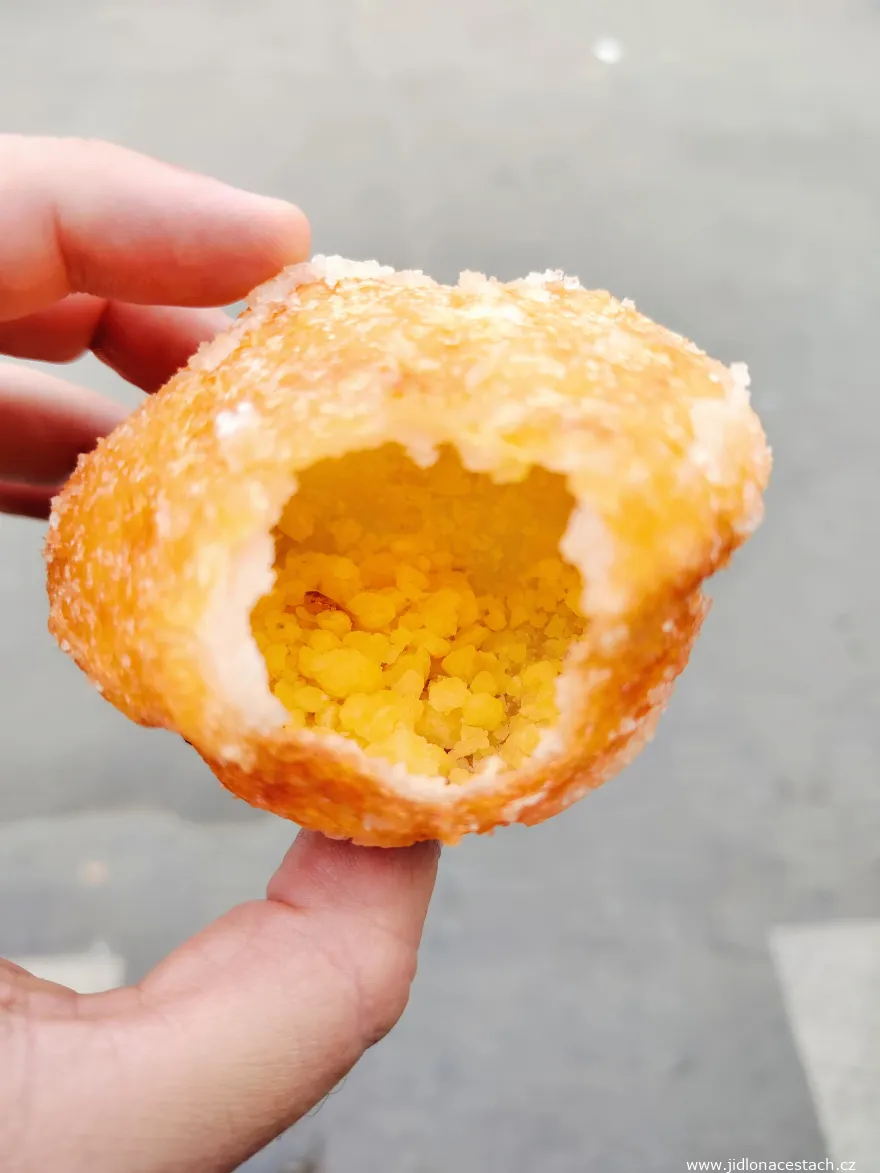
Fried snacks sit ready on a small counter, and the vendor talked up the sweet potato and shrimp fritters bánh khoai tôm to go with my pork belly. I have to be honest here: the fritter was far too soaked in grease for my taste, and the sweet fried ball bánh cam with a yellow bean filling did nothing for me at all. And yet the ball in particular has a pedigree you don't often find in street pastry: the same fried balls were served at the court of the Chinese Tang dynasty before they made their way through southern China and Vietnam all the way to a counter in Libuš. The fritter and the ball came to 90 CZK (3.60 EUR) for the pair; next time I'll happily skip both.
A Box from Beside the Buddhist Temple
I found the stall a short walk from the Buddhist temple; the red shop sign gave it away. The pork belly was so soft that the scissors were barely needed, the sauce tasted exactly as that dialect dictionary promised - slightly salty, slightly sweet - and the egg had soaked it up all the way to the yolk; the sticky rice held every bite together and the topping crunched quietly over it all. The box of pork belly came to 150 CZK (6 EUR). Now I know what the dish is called. At the counter, though, two words still do the job: one pork belly.
Lán Dê - Xôi Chè


