Pane di Altamura: The Bread with a DOP Stamp
The oldest review of this bread was written by Horace. In the spring of 37 BC he was traveling through Apulia and noted that one small town along the way baked bread so good that a sensible traveler stocks up on it for the road ahead. He never wrote down the name of the town, though - it wouldn't fit his Latin verse. Altamura claims that unsigned review as its own, and after two thousand years nobody is going to convince the town otherwise.
Pane di Altamura is a sourdough bread made from semolina and the first bread in Italian cooking - and in all of Europe, for that matter - to carry the DOP protected designation of origin. That one is signed, and dated: July 2003.
A Folded Loaf, a Priest's Hat, and Strict Geography
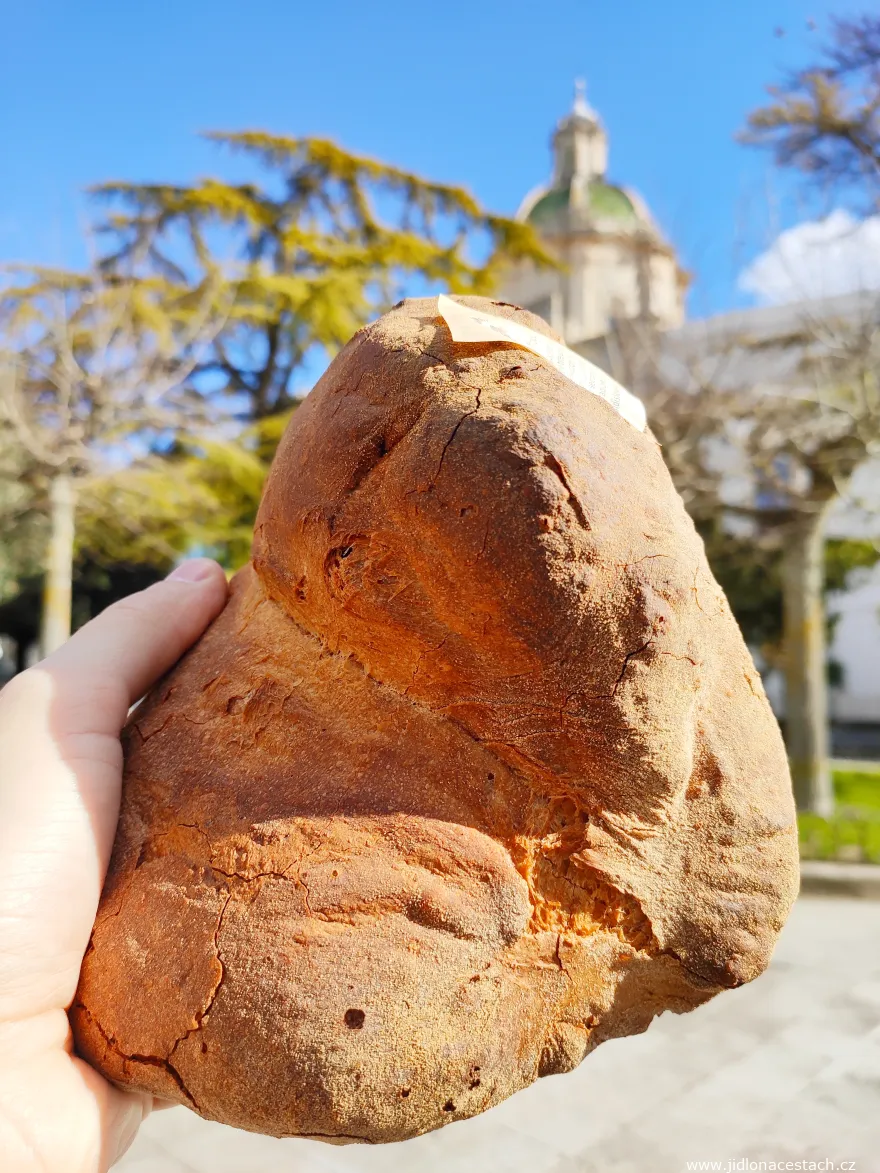
The town didn't overthink the name: pane di Altamura simply means bread from Altamura. The dialect is more interesting. The traditional loaf comes in two recognized shapes - the taller u sckuanète, "the folded one," where part of the dough is folded back over itself, and the lower a cappidde de prèvete, the "priest's hat", named for what its wide roof brings to mind. Standard Italian can only approximate both names - the dialect never even agreed on how to spell them.
The geography here is stricter than the rules for plenty of wines. Baking is allowed only within the town limits of Altamura, and the wheat has to grow in five municipalities of the Alta Murgia plateau. Semolina bread is known all over southern Italy: twenty kilometers away, Matera bakes its own loaf under the looser IGP label, and it was Altamura's ovens that gave birth to focaccia barese, which worked its way up from the same ingredient to become the symbol of neighboring Bari.
A Tax on Ovens and Loaves with a Signature
The written history starts with bookkeeping: the town statutes of 1527 list a tax on ovens. Households would carry their risen dough to the communal ovens to be baked, and they supposedly marked their loaves with an iron stamp bearing the initials of the head of the family, so nothing got mixed up at the oven - bread in Altamura was being signed long before anyone got around to protecting it by law. There is no hard evidence for the stamps, but local tradition insists on them. The law arrived in 2003, when Altamura became the first in Europe to win DOP status for its bread. The Galician town of Cea has laid claim to that first place ever since - but its Pan de Cea is a year younger and sits in a lower category of protection. Europe is simply big enough to have a title for everyone who knows which box to tick.
A Three-Millimeter Crust and Bread That Lasts a Week
The recipe runs to four words: semolina, sourdough starter, water, salt. Twice-milled durum wheat semolina gives the crumb the color of straw, and the mother starter a faintly sour undertone - the sourdough that Czech bakeries have rediscovered in recent years as if it were an event is simply a mandatory ingredient here. The real work, though, is done by the crust: the rules call for at least three millimeters, and it is the crust that keeps the loaf fresh for roughly a week. For that you can thank the shepherds of the Murgia, who spent up to two weeks at a stretch out on the pastures and couldn't take a bakery along with them.
It is sold by weight, and don't go looking for a small loaf - half a kilo is the legal minimum, and one-kilo and even five-kilo loaves are perfectly normal. The best way to start is also the local one: a slice, olive oil, ripe tomatoes, nothing more. And when the bread does eventually go stale, nobody throws it out: stale slices, tomatoes, onion, and cucumber go into a salad called cialledda, which used to be known as the harvester's breakfast, because it was eaten out in the field before work began. Old bread here has a recipe of its own and a name of its own.
With a Loaf in Front of the Cathedral
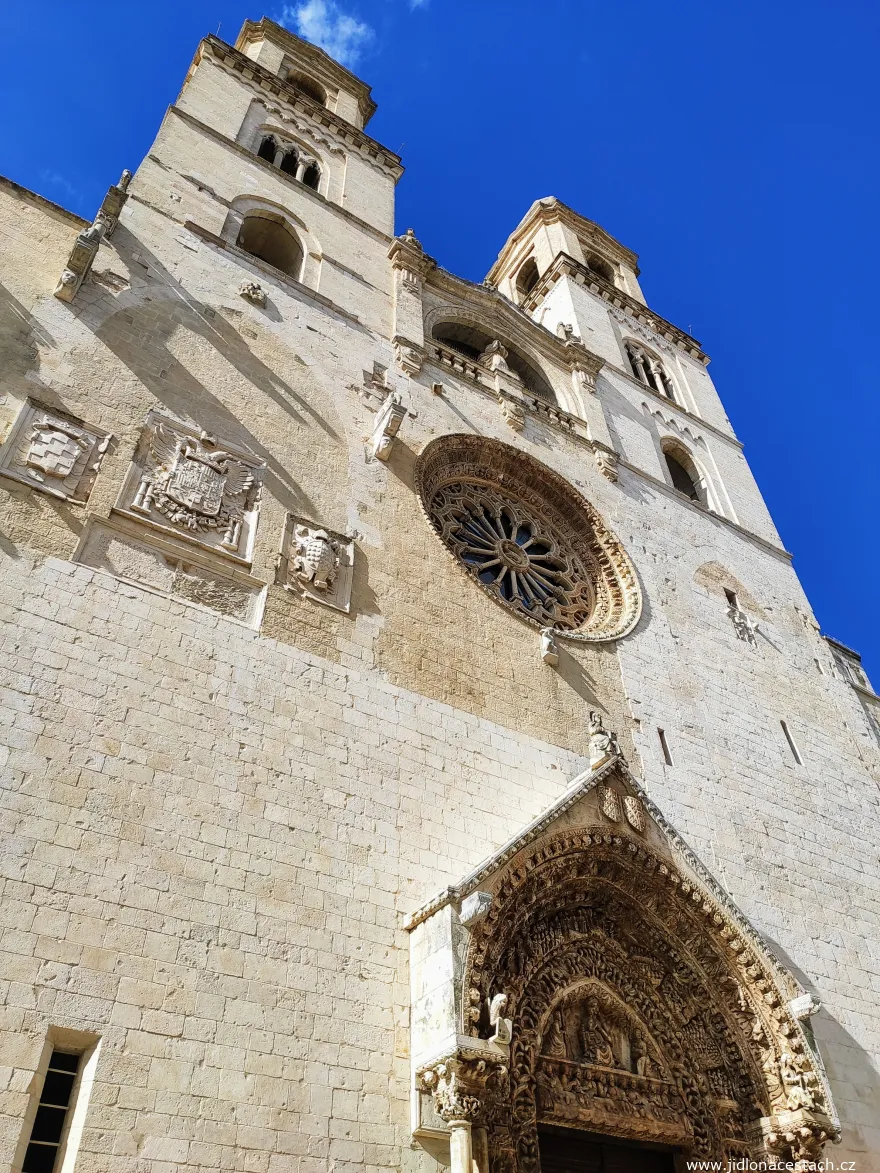
In Altamura we bought our bread at the Di Gesù bakery, one of the oldest in town. The older gentleman behind the counter didn't speak a word of English - and tried all the harder to make himself understood, so the whole exchange was warm and practically wordless. The crust broke off in thick crunchy sheets and the yellow crumb was dense, chewy, and gently sour from the starter - a fuller flavor than you expect from bread. From Bari you can reach Altamura by direct bus in under an hour, and the loaf handles the trip back better than you do: it has the crust for it, and the papers. We carried our purchase all the way to the cathedral and took the bread's portrait. The cathedral made it into the shot too - in the background.