Pane di Matera: Semolina Bread from Basilicata
Italy protects exactly six breads with a European mark of origin. Two of them grew out of the same durum wheat and are separated by twenty kilometers and the border between two regions: the Apulian one from Altamura carries the stricter DOP mark, the one from Basilicata the looser IGP, and the Italian press has turned it into a running series it calls the bread derby.
Pane di Matera is a sourdough bread made from durum wheat semolina, a big loaf with a crust at least three millimeters thick and a yellow, airy crumb - the only bread in Italian cuisine named after a city carved into rock. The derby rumbles on. The loaf knows nothing about it and keeps for a week.
A Cornetto That Isn't a Croissant
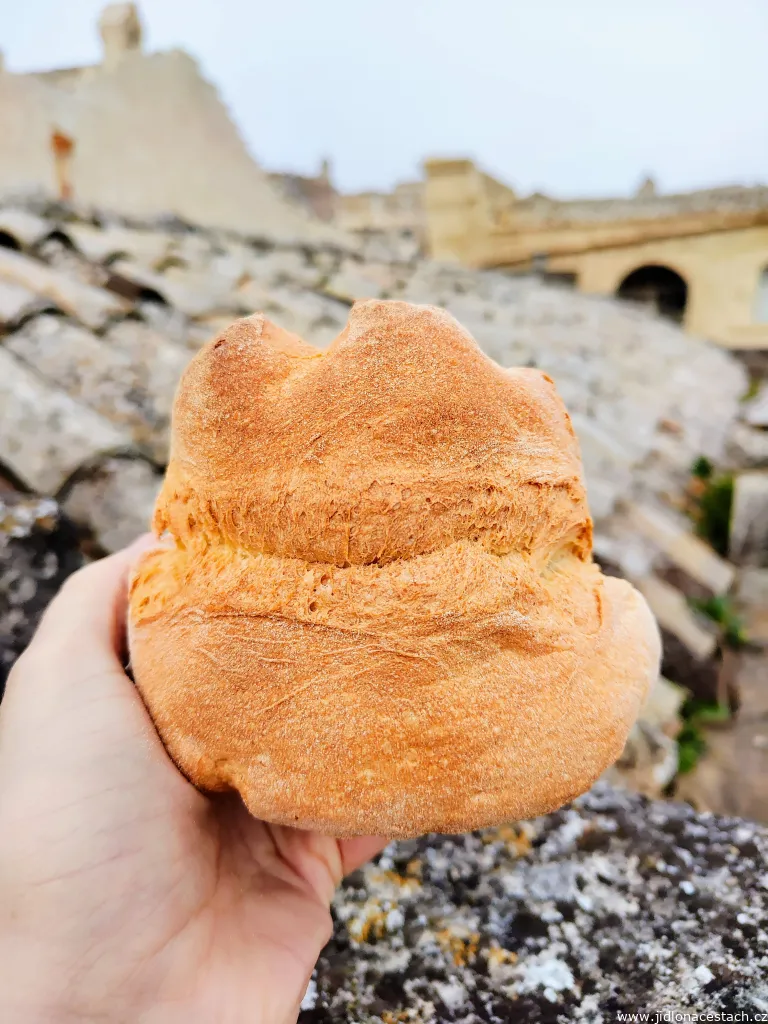
The name says nothing more than "bread from Matera", but the name of the shape is a trap. The traditional loaf is called a cornetto, which in Italy is also the word for a breakfast croissant: ask for a cornetto in Matera and, depending on the time of day, you'll get either a small buttery pastry or a two-kilo loaf. The Matera cornetto is an elongated, knobbly loaf with a raised dome; alongside it the rules also allow a taller and smoother pane alto, and in dialect both are simply u ppen, bread. The IGP mark covers the whole province, but only the city and five villages around it still shape the loaf that way.
Semolina bread belongs to the whole Italian south; only Matera and neighboring Altamura have a protected name. The Altamura pane di Altamura is the same raw material in a different shape - there the dough is folded over itself, here it is scored - and since 2003 it has carried DOP, credentials that are five years older and stricter. The same semolina goes onto baking trays in Bari as focaccia barese, and in Sardinia they bake the thin shepherd's pane carasau - same wheat, same job of surviving out on the pasture, different shape. Nobody knows who's winning the derby. You can buy Altamura bread all over Italy; the Matera loaf, almost only at home.
Three Cuts, Eleven Ovens and Stamps of Olive Wood
The history of this bread is written in waiting lists. Families in the Sassi cave dwellings mixed their dough at home and carried it to communal ovens, where the baker kept a book of whose turn it was on which day; in 1857 the local scholar Ridola counted eleven of them in the Sassi. To keep the loaves from getting mixed up in the oven, every family pressed a stamp with the initials of the head of the household into the dough, in Matera carved from olive or walnut wood - Altamura branded with iron, which is about the only difference between the two breads that both towns agree on. Today you can also read a family's wealth off them in the museum: the better off the family, the more elaborate the carving.
Then there are the three knife cuts on top of the loaf. Tourist blurbs read them as the three peaks of the Murgia hills above the city. Local sources say something else: the three cuts are the Holy Trinity, a gesture of thanks for bread, and incidentally an insurance policy to keep the crust from peeling away from the crumb during baking. Only the official side of the story can be dated precisely: Brussels registered the mark in February 2008.
A Crust for a Week and Bread You Don't Slice
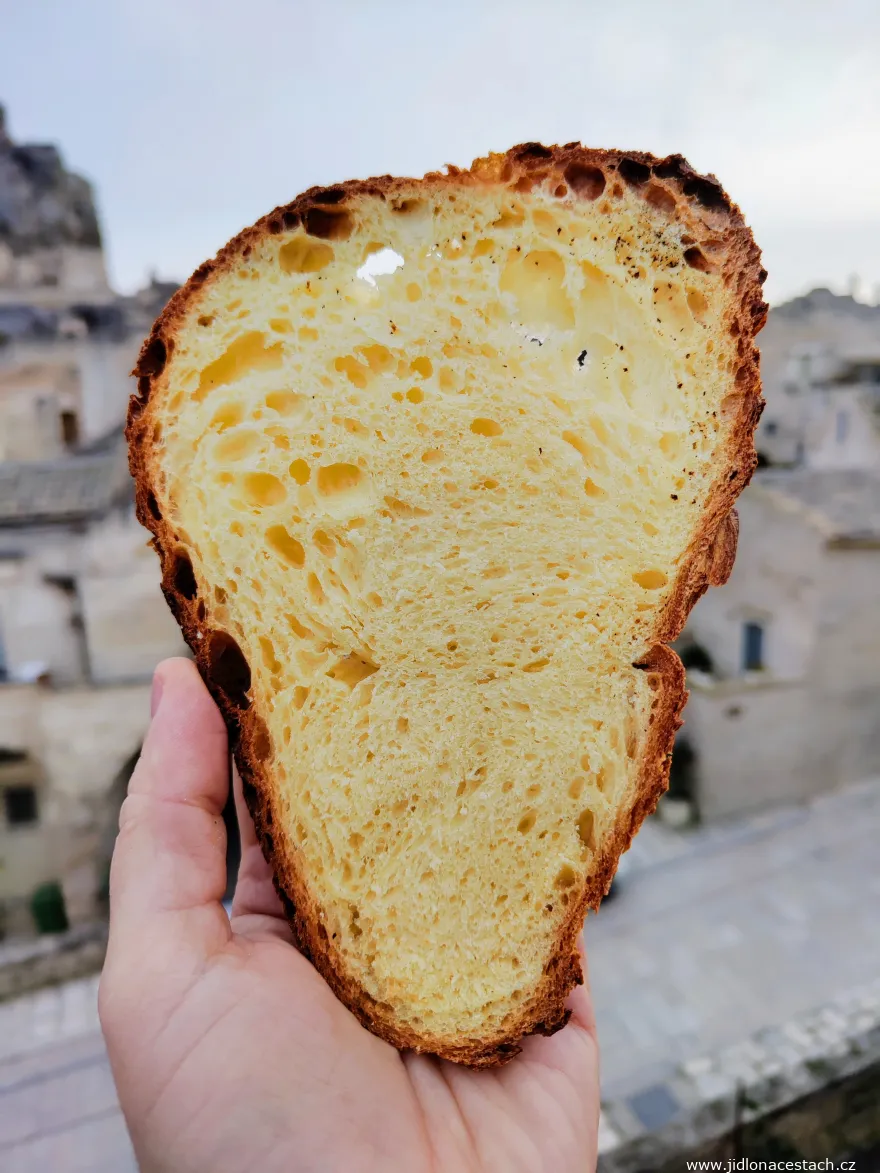
The lead role belongs to the wheat. The rules call for twice-milled durum wheat semolina, part of it from old varieties grown in the province - Senatore Cappelli, Duro Lucano, Capeiti or Appulo. The famous Cappelli is therefore just one of four permitted grandfathers, not the sole father of the bread, as is often claimed. The second role goes to the sourdough starter, refreshed daily as the rules require, with yeast allowed only as a supplement. And the third to the crust: three millimeters and more, dark, hard, built so the loaf survives a week out on the pasture or in a suitcase. This is exactly how bread wrapped in a tea towel smelled back home when I was a kid, except that one lasted three days and then went into the pan as fried bread.
It's the crust that makes people buy Matera bread whole. Bakeries sell it by weight, from half a kilo up to ten-kilo loaves, in paper or perforated film, with a big "MT" as the signature of the province. It goes with everything, best with olive oil and tomatoes. When it gets old, it has a second life in Matera as pane cotto, stale bread simmered with turnip greens.
The Loaf I Never Paid For
I didn't buy my Matera bread. I was given it at the Fratelli De Palo bakery far from the center of Matera, where I stop on every visit to the city (see Where to Eat in Matera). I bought slices of pizza and some focaccia, and the staff, who don't speak a word of English and try all the harder because of it, threw in a small loaf of bread. Just like that, as a gift. I carried it in my hand all the way across the Sassi and photographed it with the stone roofs behind it as a keepsake, which in a way it is. The knife had to punch through the crust rather than cut it; underneath waited a crumb with holes the size of a fingernail, springy and as yellow as egg pasta dough, and the sourness of the starter showed up only at the end of the bite, briefly, like a period at the end of a sentence. The whole purchase cost 10 EUR.


