Alouda: The Mauritian Milk Drink with Basil Seeds
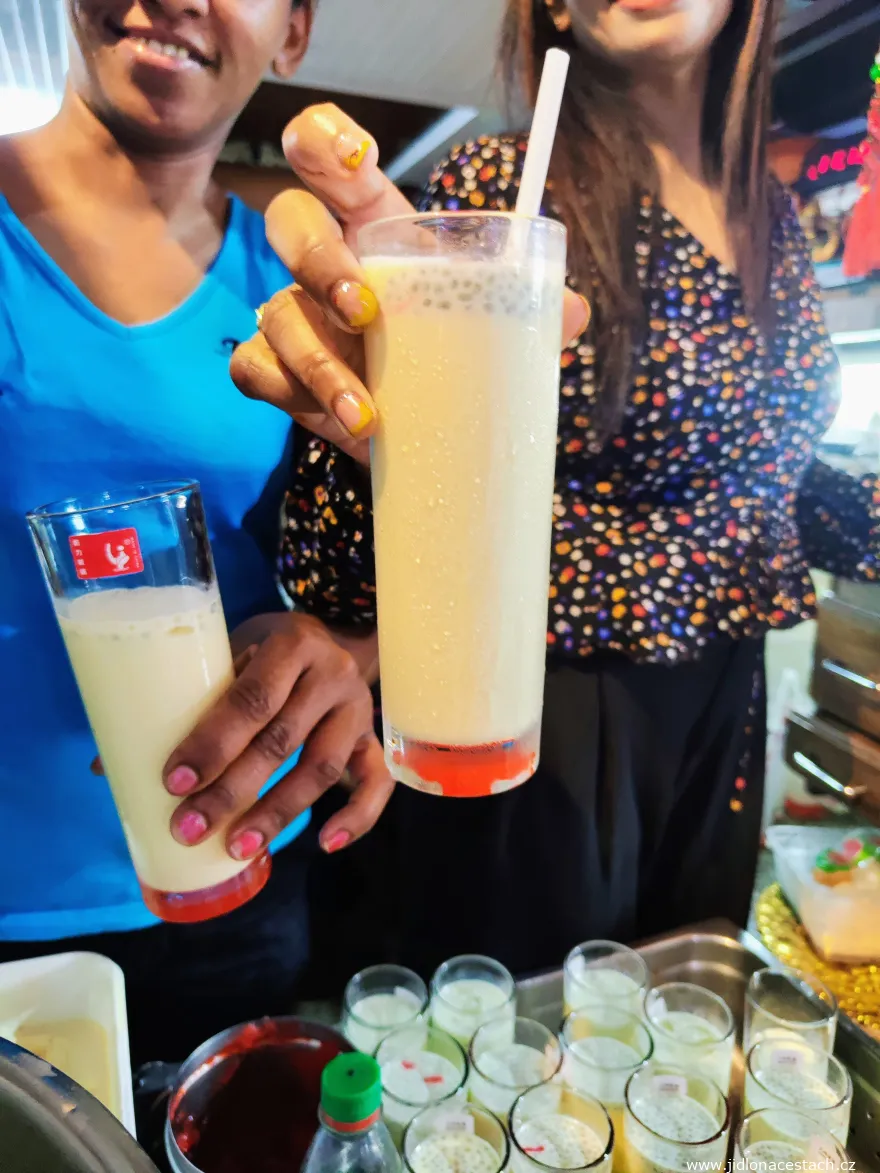
Someone lost a letter somewhere between Shiraz and Port Louis. The Persian dessert is called faloodeh, the Indian drink falooda, and in Mauritius, where the word arrived in the mouths of immigrants who weren't fussy about that first sound, what stuck was alouda. The crossing cost the name a letter and the drink its noodles, but it picked up milk along the way. Alouda is a thick cold drink from Mauritian cuisine, made with whole and condensed milk, flavored syrup, swollen basil seeds and grated agar jelly, usually with a scoop of ice cream on top. You drink it through a straw, but you have to chew as you go.
What Alouda Is and Where Its Cousins Live
The family tree starts in Iran, where faloodeh isn't a drink at all but a frozen dessert: thin starch noodles in shaved ice with rosewater and lime, no milk and no seeds. Traders carried it out of Iranian cuisine and into India, where it became falooda - rose syrup, noodles, milk, basil seeds and ice cream in one tall glass, a drink that is as much a fixture of Pakistani cuisine as of Indian. The Mauritian alouda is the Indian one's offspring, with one act of rebellion: it dropped the noodles and favors vanilla or almond over rosewater. The drink goes by the same name on neighboring Réunion, in Malaysia, a pink condensed-milk drink with much the same seeds is sold as bandung, and the Indian community in Durban, South Africa, calls its version Bombay Crush. So alouda is Mauritian the way almost everything on the island is Mauritian: brought in from somewhere else and, a few generations on, indistinguishable from homegrown.
How Water and Syrup Became a Milkshake
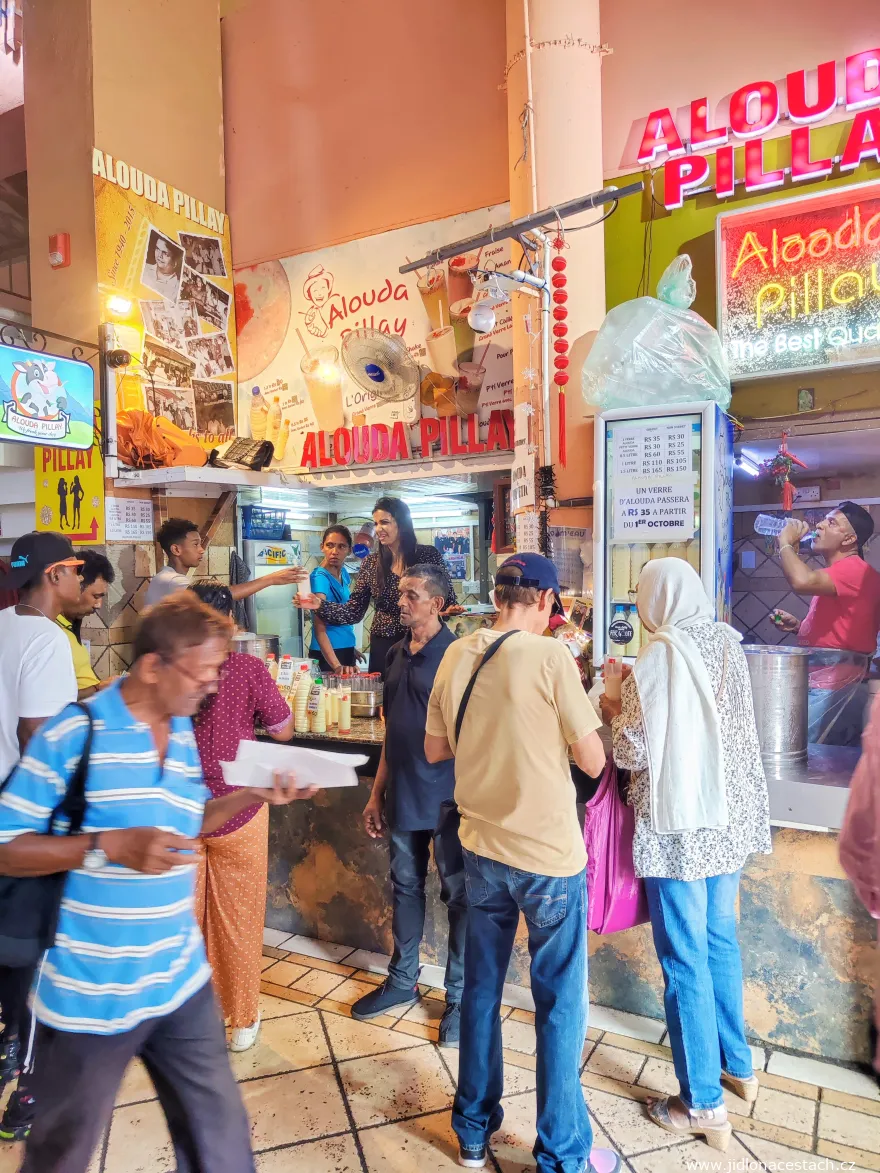
The island's most famous stall, Alouda Pillay at the Central Market in Port Louis, has been selling alouda since the 1930s and is now run by the family's fourth generation. The Pillays' original alouda was nothing but water, syrup and basil seeds - milk came in only when the current owner's father started adding it sometime in the 1950s, and ice followed another thirty years after that. So the drink guidebooks bill as a timeless milkshake has been a milk drink for barely seventy years. Nobody has ever pinned down when falooda reached the island, or with whom. All that's known is that Indian indentured laborers poured into Port Louis from the middle of the 19th century onward and brought the recipe with them like everything else that fits inside a head.
The Seeds, the Jelly, and Why You Chew Your Alouda
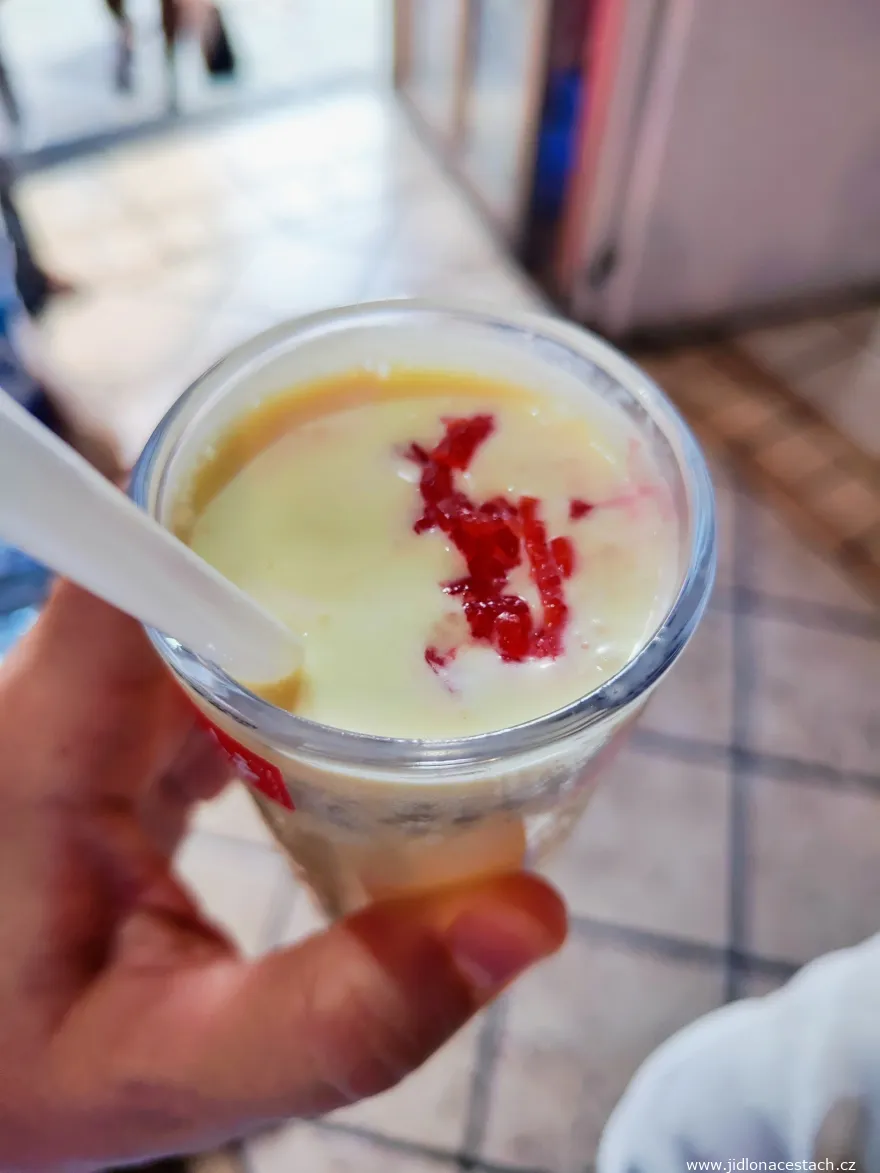
The stars here are the basil seeds, known locally as tukmaria. Dry, they look like poppy seeds, but a few minutes in water swells them into translucent beads with a dark center, the spitting image of frogspawn in a spring pond - which sounds worse than it tastes, because they have almost no flavor of their own and bring nothing to the drink but texture. Agar plays the supporting role: it's boiled, left to set into a block and then grated, so pink threads and syrup-dyed chunks of jelly float in the milk. The thickness comes from the condensed milk alone, with nothing cooked down or thickened, which is why alouda tastes like chilled vanilla pudding someone has stirred into milk. The syrup is usually vanilla, almond or rose, and no one flavor is the authentic one; ask and you'll get it without the ice cream, or less sweet.
Alouda is a drink of midday heat and market halls. You don't buy it to go with a meal - you buy it instead of one. A single glass fills you up like a snack, and you drink it on the spot, at the counter, before the ice cream melts. If you want it to go, you buy half a liter or a liter in a bottle; the Pillays have been bottling it since 2018, so you can even bring some home, though the one from the counter is a different drink from the one off the shelf. At the same market they press sugarcane juice, and if you came here for dholl puri, alouda is your second stop.
The Line at the Pillays' in Port Louis
I drank my alouda in Port Louis right at the source, at the Alouda Pillay stall next to the entrance to the Mauritian food section of the market (see Where to Eat in Port Louis). You can't miss it: a neon sign above the counter, framed old photographs on the wall, and a line out front that moves fast, because the glasses sit poured out in a row, waiting only for their scoop. It was refreshing, not too sweet, with a pleasant vanilla note, the seeds popped between my teeth and the ice cream suited it well. A glass cost 35 MUR (0.80 EUR); the version without ice cream or with less sugar is cheaper, half a liter runs 60 MUR (1.20 EUR) and a liter 110 MUR (2.20 EUR). Had they poured me the 1930s version, I'd have got water with syrup and seeds. Milk, ice and a scoop of ice cream are three improvements I'll happily pay the Pillays for again.


