Ciorbă: Romanian Sour Soups
In Iași (also spelled Iasi) there is a restaurant that makes its living off soup. It's called Ciorbărie, it has ten to twelve kinds on offer every day, and nobody there finds it odd to come in for lunch and leave after a single bowl of soup.
Ciorbă is the umbrella name for the sour soups of Romanian cuisine: thick, with big chunks of meat and vegetables, soured with lemon, sauerkraut brine or fermented bran water, and so filling that with a slice of bread they stand in for a whole lunch. Romanian doesn't care what floats in the soup; it sorts soups by sourness. An unsoured broth is supă, anything sour is ciorbă.
Why Ciorbă Is Sour and What Borș Has to Do with It
The word arrived with the Ottomans: Turkish çorba, and before that Persian shorba, simply means soup, any soup at all. Only on the way north did the meaning start to split. In Bulgaria and Serbia, chorba is a thick soup bound with a roux; in Romania it is a sour one. One Turkish word thus has three definitions in the Balkans, and Romanians picked the one you judge with your tongue rather than with your spoon. The classic source of sourness is borș: water in which wheat bran has fermented for a few days, yellowish and drinkable on its own. It shares a name with Slavic borscht and nothing more. In Ukraine borscht is a finished soup, in Romania it is the liquid you sour a soup with, and anyone who doesn't keep a tub of bran at home buys a sachet of Borș Magic at the supermarket. In the east of the country, in Moldavia around Iași, borș is also the name for the whole soup, so you order borș there and a ciorbă turns up.
Turkey from Rădăuți and Rooster: Two Ciorbe from the North
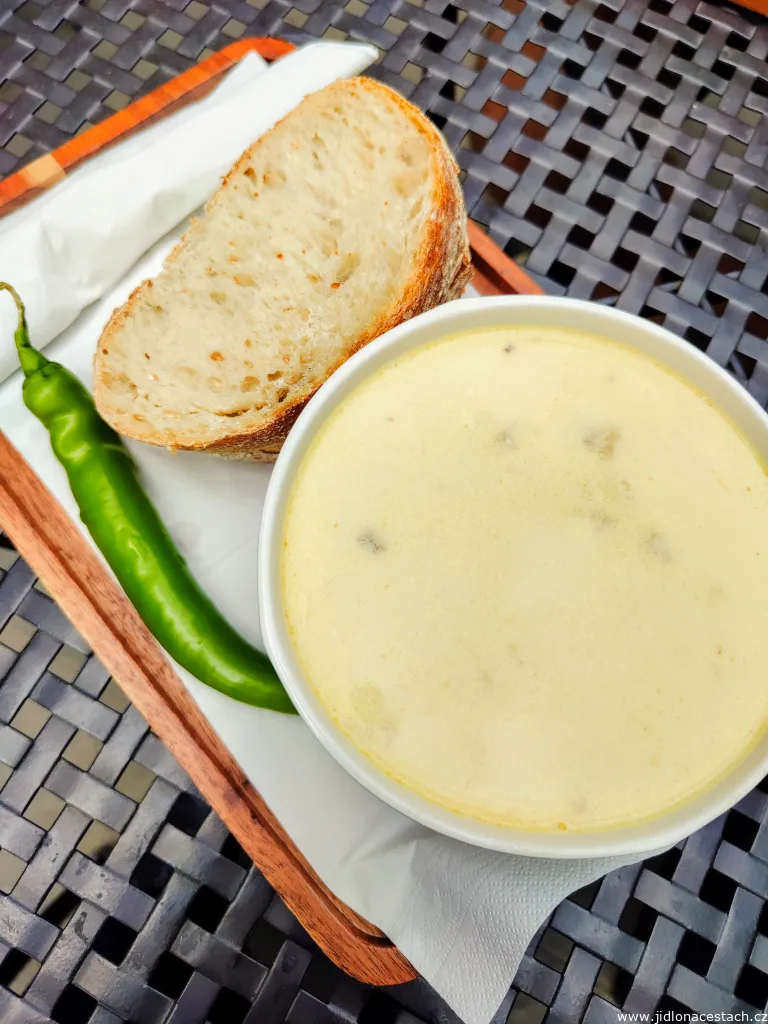
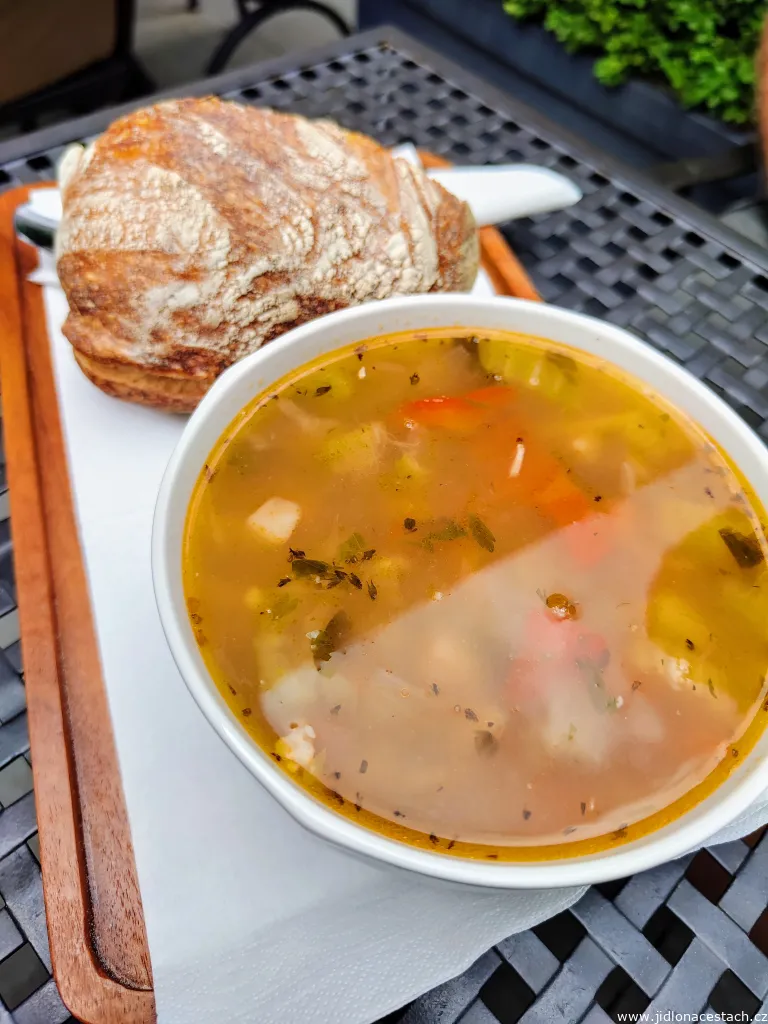
The most famous Romanian soup is roughly as old as I am. Ciorbă rădăuțeană was born at the Nordic restaurant in the Bukovina town of Rădăuți, and it even has a date of birth: on February 14, 1982, a cook named Cornelia Dumitrescu wrote it into the recipe book there. She came up with it for her husband Serafim, who wanted a tripe soup without the tripe and got a creamy ciorbă of turkey breast, thickened with cream and egg yolks and fragrant with garlic. Today it is cooked all over the country and carries a reputation as a hangover cure, inherited from the tripe soup it was modeled on. Its neighbor on the menu, ciorbă de cocoș, is plainer: a strong rooster broth, from a cocoș with a comma under the s, which shares only its first four letters with a coconut. It is cooked mainly in Moldavia and Bukovina, soured with borș, an egg is whisked into the broth, and mămăligă is served alongside.
Tripe and Meatball: An Ottoman Legacy, Romanian Style
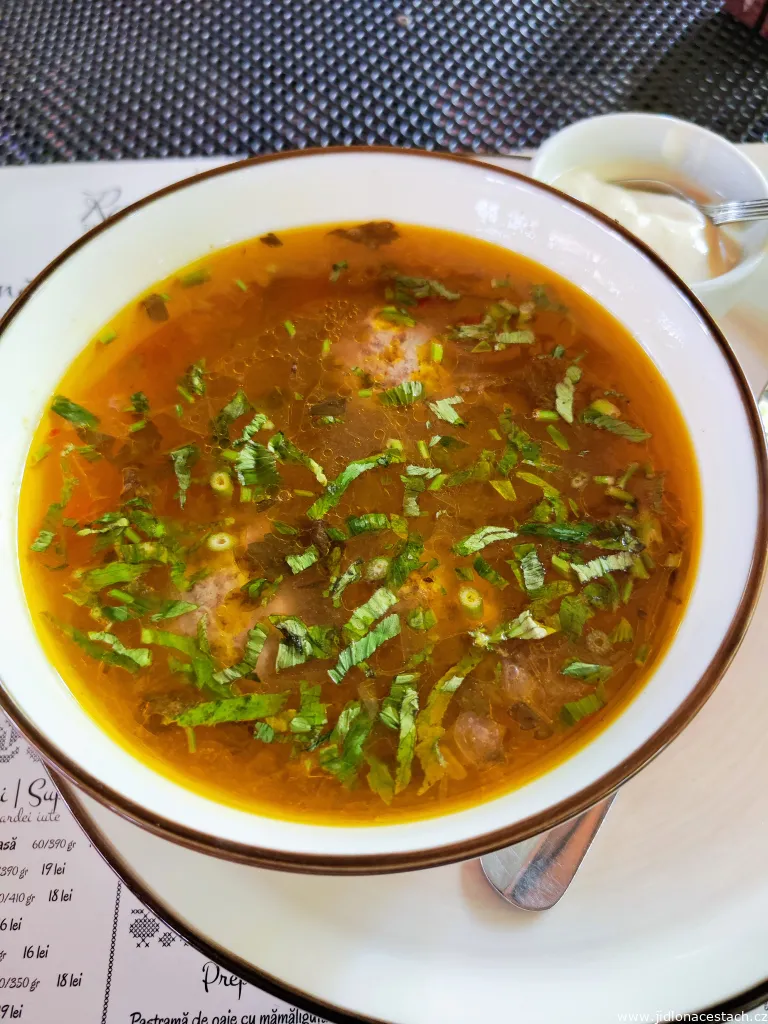
Ciorbă de burtă is the tripe one, and Romania treats it as its own even though it inherited it from the Ottomans along with half the Balkans: in Turkey the same soup is called işkembe çorbası, in Bulgaria shkembe chorba, in Greece patsas. The difference lies in when it gets seasoned: Turks and Bulgarians pour in vinegar and scatter garlic at the table, while Romanians whisk cream, yolks and garlic straight into the pot, so the soup arrives already seasoned, creamy and gently sour. The tripe soup we make back home in Czechia is a loud pub character next to it, all paprika and marjoram; the Romanian one speaks quietly and in cream. Ciorbă de perișoare is another Ottoman immigrant, a relative of the Turkish meatball soups: perișoare are little balls of ground meat, in Moldavia soured almost exclusively with borș and buried under lovage. Lovage, leuștean in Romanian, is the signature herb of the soups here. It goes in at the very end of cooking, and nowhere in the country is it used as generously as in Moldavia.
A Romanian lunch follows an almost fixed pattern: a ciorbă and a main course after it, with a portion of ciorbă running to about 400 milliliters and bread always coming with it. A raw hot pepper, ardei iute, turns up whether you ask for it or not, to bite into between spoonfuls, and the tripe or the meatball soup usually comes with a little bowl of cream. Don't let the sourness put you off: in the west of the country the ciorbe are cooked almost sweet, in the east sourer, and even the Moldavian one is fresh rather than sharp. And anyone planning on a main course should bear in mind that the ciorbă can carry lunch on its own.

Two Restaurants and Four Bowls in Iași
I tasted four ciorbe at two places in Iași. At Ciorbărie on Strada Palas (see Where to Eat in Iași) I had the rădăuțeană and the rooster one: the first thick and creamy, with garlic that stepped in only after the cream, and with chicken, which is how they cook it there; the second clear, with slicks of fat on the surface, plenty of carrot and meat, and only a hint of sourness from the borș. The staff were quick, and thanks to the central location the bowl with bread and a pepper came to about 6 EUR; normally 400 milliliters costs around 4 EUR. I ate the tripe and the meatball soup at Restaurant Rustic. Romanian tripe soup is noticeably gentler than the Czech one, the spices give way to cream and the tripe is cut into thin strips that barely need chewing; the perișoare arrived big, in an orange broth and under a layer of lovage. The meatball soup is supposed to be mildly hot. It wasn't in the slightest, and so the hottest thing about the Romanian soup lay, as with all four, beside the bowl.