Full Irish Breakfast: Ireland's Classic Fry-Up
If Irish cooking had a flag, this plate would be on it. Which makes it all the more surprising that two of the things no tourist could imagine it without weren't invented in Ireland at all: the hash brown came over from America, and beans in tomato sauce were sold to the nation by an ad campaign.
The full Irish breakfast is a hearty fried breakfast and the most famous dish in Irish cooking: bacon, pork sausages, a fried egg, fried mushrooms, a grilled tomato, a slice of black pudding and one of white, plus soda bread with butter and strong black tea. Nearly all of it comes out of a single pan, and the portion keeps you going till the evening.
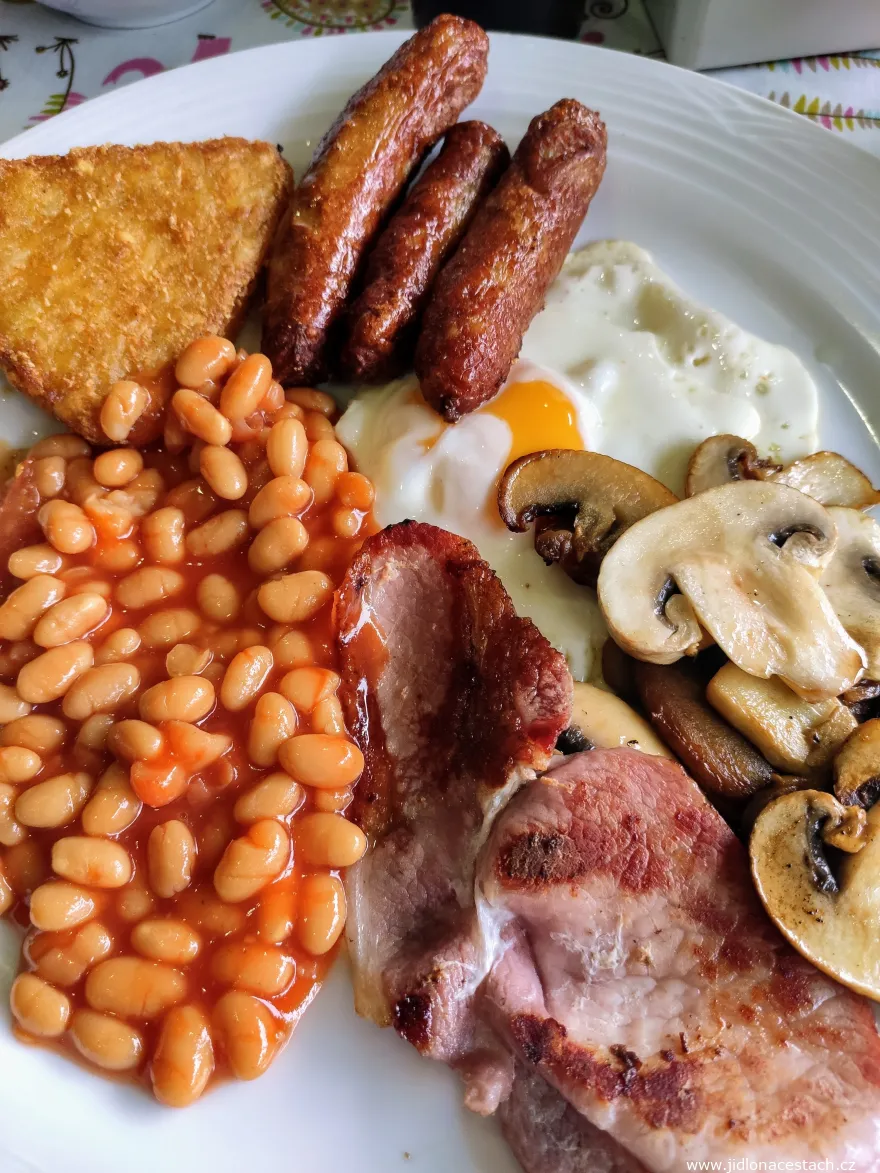
What Full Irish Breakfast Means
The name is pure description - a full Irish breakfast - and the most interesting thing about it is what isn't there. Irish has no word of its own for breakfast: it calls it bricfeasta, a phonetic respelling of the English breakfast. So the most Irish meal of the day goes by an English name even in Irish. And in all honesty: the big fried breakfast is shared across the whole of the British Isles - England has the full English with beans and fried bread, Northern Ireland the Ulster fry with a potato farl, Scotland throws in a square skinless sausage, and Wales even adds little cakes of fried seaweed. Before my first trip to Ireland I went looking for a real difference between the Irish and the English version, and I didn't find one. The Irish version is supposedly given away by the white pudding next to the black, and by soda bread instead of toast. Supposedly.
How a Farmer's Frying Pan Ended Up in Every Hotel
Big fried breakfasts appear in the historical record out of nowhere, and only in the Victorian era - Isabella Beeton put them into cookbooks in 1861 as an affordable imitation of the lavish breakfasts of the country gentry. Nobody can date exactly when people started saying full Irish. The Irish countryside had more practical reasons than the gentry did: a farmer needed calories before a long cold day, and everything was fried in one pan because fuel and water hauled from the well cost money. What turned the breakfast into a national symbol, though, was tourism - the bed & breakfast guesthouses that from the 1950s on built both their name and their living on a filling breakfast.
And those two intruders I mentioned at the start? The hash brown, a fried triangle of potato, is an American invention that reached the Irish pan with frozen convenience food; beans in tomato sauce were pushed by Heinz advertising, which in 1927 turned a luxury import into a "traditional" breakfast. Both were sitting on my Dublin plate. Tradition has a more flexible memory than it lets on.
What Black Pudding Is and How to Order Your Breakfast
Don't let the word pudding fool you: black pudding and white pudding are sausages, sliced into rounds and fried in the pan. Black pudding is a distant cousin of the blood sausage we make back home - pork blood, fat and above all a high share of oatmeal, which gives the Irish version a coarser, grainier texture than English blood sausages. White pudding is the same thing without the blood, paler and more gently spiced. Both come from the old rule of the slaughter that nothing can go to waste - and both are now among the most Irish things on the plate.
Hotel buffets notwithstanding, the Irish don't eat like this every day. On a weekday it's toast and porridge that rule, and this breakfast belongs to weekends, holidays and visitors - though plenty of cafés and pubs serve it all day as an all-day breakfast, so you won't miss out at noon either, which you'll appreciate the morning after an evening spent over a Guinness. A pot of strong black tea with milk goes with the plate; coffee is tolerated. And if you're in a hurry, there's a thoroughly Irish shortcut: the breakfast roll, a baguette filled with the breakfast components, from a petrol station or a convenience store.
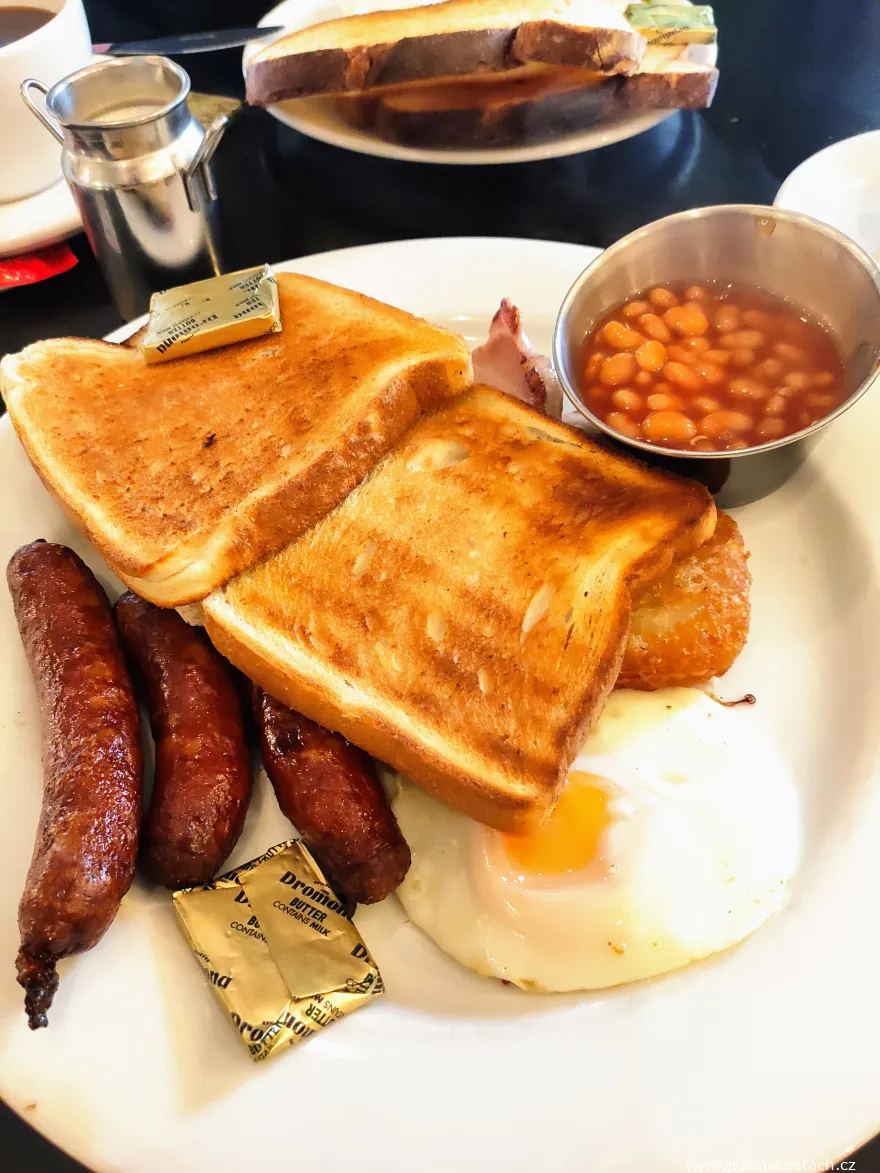
Plastic Tablecloths at Oh'Rourke's
I ate my full Irish breakfast in Dublin at Oh'Rourke's (see Where to Eat in Dublin) - a small place with plastic tablecloths and bare-bones furnishings, where at breakfast time only locals were sitting. You build your breakfast there item by item, picking what you want off the list, and eight items with coffee or tea came to roughly 9 EUR. The bacon stayed tender, the yolk was runny just enough to give the toast something to soak up, and the best of the lot were the two puddings. The waiter threw in a recommendation with the bill: a pub with live music in the evening - what I did with it is in the article on Cobblestone. The next day I tried Tasty 8, a noticeably slicker place with fast, professional service, where alongside the classic breakfast they do excellent eggs Benedict; you pay a bit more there. I'd go back to both. To Oh'Rourke's without a second thought.


