Katak: A Bulgarian Spread of Roasted Peppers and Cheese
On a Bulgarian menu, katak sits among the salads, right below the Shopska. Order it expecting a bowl of vegetables and what arrives is a plate of thick white paste with toasted bread stuck into it - and the only leaf anywhere on it is parsley.
Katak (Bulgarian: катък) is a spread from Bulgarian cuisine made of soured milk and salty cheese, with finely chopped roasted pepper and garlic mixed in; it's eaten cold, with bread, as a starter alongside rakija. Calling it a salad is really just a courtesy to the menu.
What the Word Katak Means and Where It's Known
The Bulgarians borrowed the name from Turkish, and they borrowed it loosely. Turkish katık simply means "something to go with bread" - a topping, a side, anything you can put on a slice; out of that general word the Bulgarians made the name of a single dairy product, and in time the name of the spread made from it. The same root lives on at the other end of the former Ottoman Empire: in Turkish cuisine, in Azerbaijan and across Central Asia, katyk or qatıq is what people call thick soured milk, drunk the way ayran is. Katak itself is a southern Bulgarian thing, most at home in the Rhodopes, but as a ready-made salad it's now served all over the country. Bulgaria's neighbors do something similar with roasted peppers, just without the milk: Macedonian pindžur is a vegetable spread, and so are Serbian ajvar and Bulgarian lutenica. Katak is the only one in the family with cheese mixed in.
The Old Katak from the Well and the New One from the Fridge
That original katak has nothing to do with peppers. It's a dairy product made from sheep's milk, ideally the August milk, the richest of the year: the milk is warmed in a water bath, salted, and set without rennet, and then set aside in a dark, cool place, where it gets stirred day after day; in the Rhodopes they packed it into a clay pot and lowered it down a well, where it could age for more than half a year. The result is yellowish and salty-sour. Nobody knows who made it first. What lands on the table in Varna or Sofia under the heading "katak with roasted peppers" is, going by Bulgarian recipes, usually the quick version: strained soured milk and sirene half and half, pepper, garlic, oil and half an hour in the fridge. The Bulgarian Wikipedia notes drily that the modern versions don't have the qualities of the original.
What Goes into Katak and How to Eat It
Two ingredients carry the dish, and they never quite agree on which of them matters more. Soured milk brings the acidity and the body, sirene the salt and the crumbly texture; let either one outweigh the other and you end up with either yogurt and peppers or salty spackle. Roasted pepper, peeled and finely chopped, adds sweetness and smoke, garlic adds bite, oil adds shine, and parsley is there to keep up the pretence that this is a green salad. The closest thing back home in Czechia is the quark spread our grandmothers used to put on bread in the afternoon - only with roasted pepper instead of chives and sheep's cheese instead of quark. The fork stays on the table: you scoop it up with toasted white bread or a baguette, bite by bite. It comes to the table first, with the other salads and the rakija. Order a Shopska salad alongside it and be warned that katak, thanks to the cheese, is the more filling of the two.
Toasted Bread in Varna
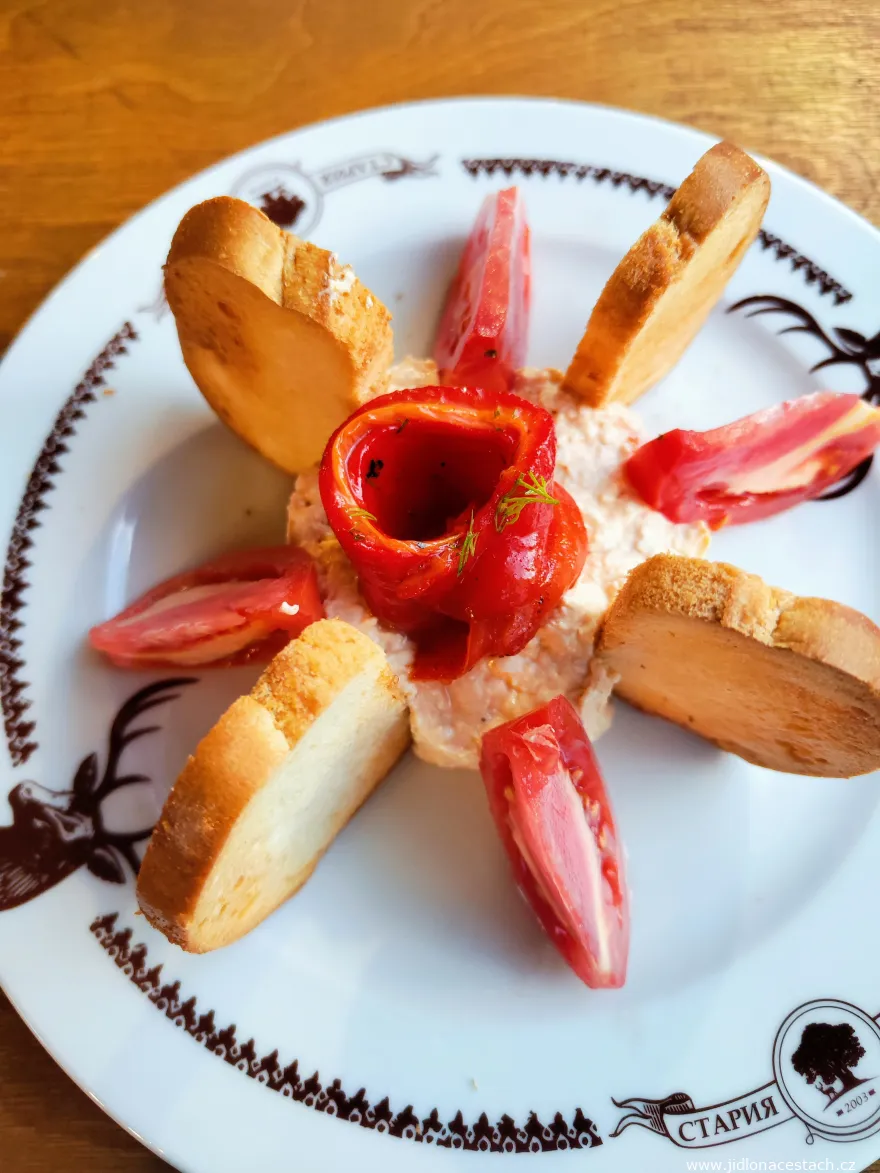
I ate katak in Varna, at the Staria Chinar restaurant (see Where to Eat in Varna); a rosette of whole roasted pepper in the middle, the spread around it, tomatoes and slices of toasted bread around the rim. The spread was thick, salty from the sirene and sour from the milk, the pepper brought a sweet smokiness, and the garlic only showed up after a moment - but then it stayed a long time. The Wikipedia purists are probably right that this wasn't the real katak from the well, only the one you can order. I'd never had it before that dinner; ever since, I've ordered it in Bulgaria before I've even finished reading the menu. A portion with toasted baguette cost 8.50 BGN (4 EUR).


