Mantapur: Baked Manti Dumplings in Armenian Broth
In 1914 an Armenian cookbook came out in Merzifon, Anatolia. It was written by Boghos Piranian, head chef at the American college there, and it holds a recipe for sini manti - dumplings of dough rolled as thin as lavash, laid out on a tray and baked. The Armenian community he wrote the book for was gone from those parts within a year. The recipe wasn't.
Mantapur (Armenian: մանթապուր) is an Armenian soup made from manti: small dumplings of thin dough filled with ground beef and onion that Armenian cuisine bakes to a golden brown instead of steaming, the way its neighbors do, and then covers with chicken broth and yogurt. The Merzifon cookbook is the oldest documented record of that baked version, and today you'll find it on menus in Yerevan, a thousand kilometers and one border away from the place where it was born.
Where Manti Is Eaten and How It Differs
The word itself most likely has a relative in the Chinese mantou. Which way it traveled isn't certain: the usual story sends it west along the Silk Road with the Mongols, though there's also a reading that takes it east from the Middle East. For a traveler a map is more useful than a family tree: manti is a dish shared by half of Asia and every country makes it its own way. In Central Asia they are big dumplings steamed over a pot, filled with mutton and a piece of tail fat; Afghan mantu is steamed as well and served on yogurt with mint; Turkish cuisine boils its mantı in water and spoons over yogurt with garlic and paprika butter; in Azerbaijan the tiny düşbərə are cooked straight in meat broth, and you can tell a good cook by whether forty of them fit on a spoon. The Armenian version has two quirks you won't find together anywhere else: an oven and a soup bowl.
Where the Baked Manti Came From
That oven isn't standard across all of Armenia. Baked manti are a tradition of the Western Armenians of Anatolia, of towns like Merzifon or Aintab - that's where the 1914 cookbook comes from, and it's where Turkish cuisine gets its own baked fırın mantısı from as well. The recipe reached Yerevan with people who had to leave, and in the households of eastern Armenia manti are still steamed more often than not; baked ones are mostly left to restaurants and to families with roots in the west. The restaurant where I ate them is called Anteb, most likely after Aintab, which lies in Turkey today. And the sumac they sprinkled over the portion is a spice from that same region, not from Yerevan. A dish carries the name of its town with it, even once the map has put it in another country.
What Mantapur Is and How You Eat It
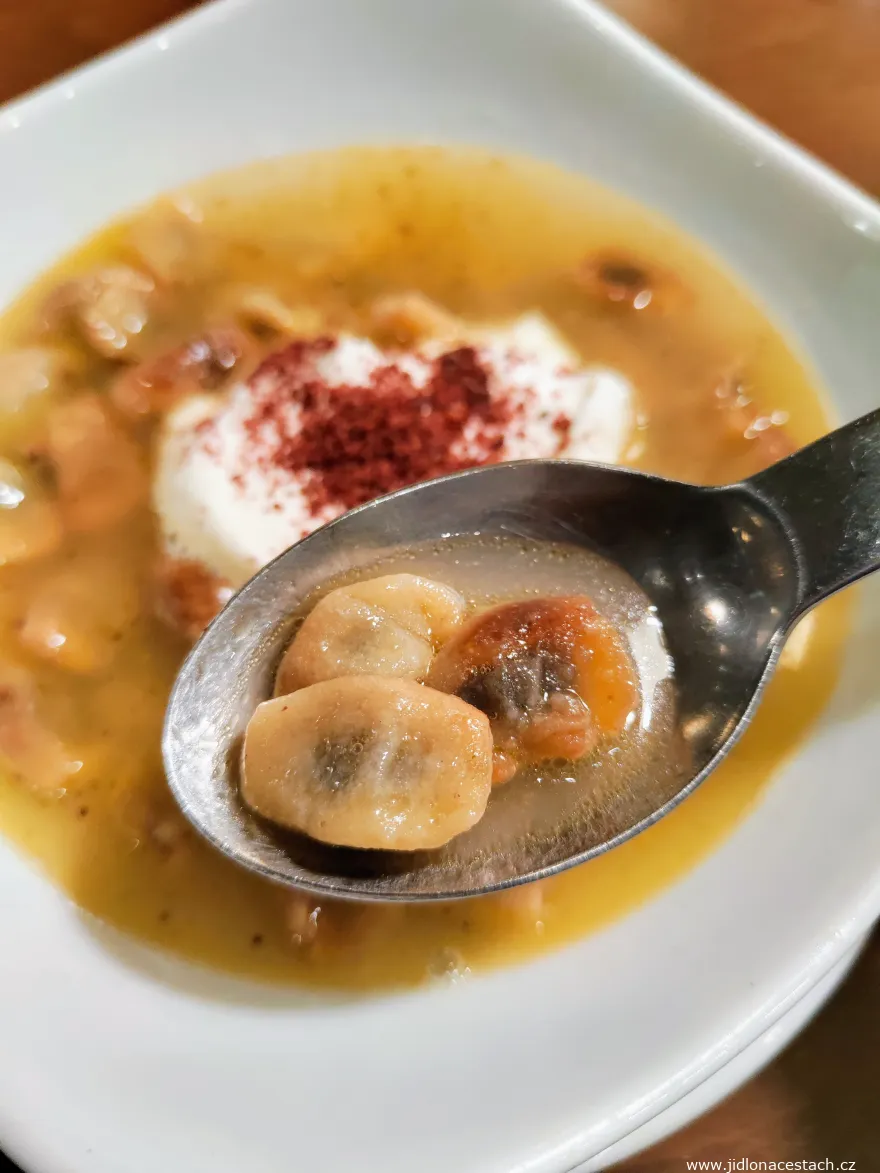
Making them is as laborious here as anywhere: the dough is rolled out into squares the size of your palm, a teaspoon of meat with onion and pepper goes on each one and the corners are pinched together into a little pouch. But then, instead of going into the steamer, the pouches are packed tightly side by side on a tray and baked until the dough browns and turns crisp. On their own they are dry, crunchy dumplings; only once hot chicken broth and a spoonful of sour matsun yogurt go over them do they become mantapur - literally "soup of manti" in Armenian, because apur means soup and nobody waited around for a grander name. The dough holds up in the bowl for a while and then softens, and every dumpling soaks up the broth at its own speed, so one portion has you eating crisp and soggy at the same time. It's the same principle as the little dumplings in the Sunday broth we make back home, only these have meat in them and they go into the soup straight from the oven. In Armenia you can get both the dry dumplings and mantapur; a bowl of the soup looks like a starter but eats like a whole lunch, so don't order it as a first course.
Mantapur at Anteb Restaurant
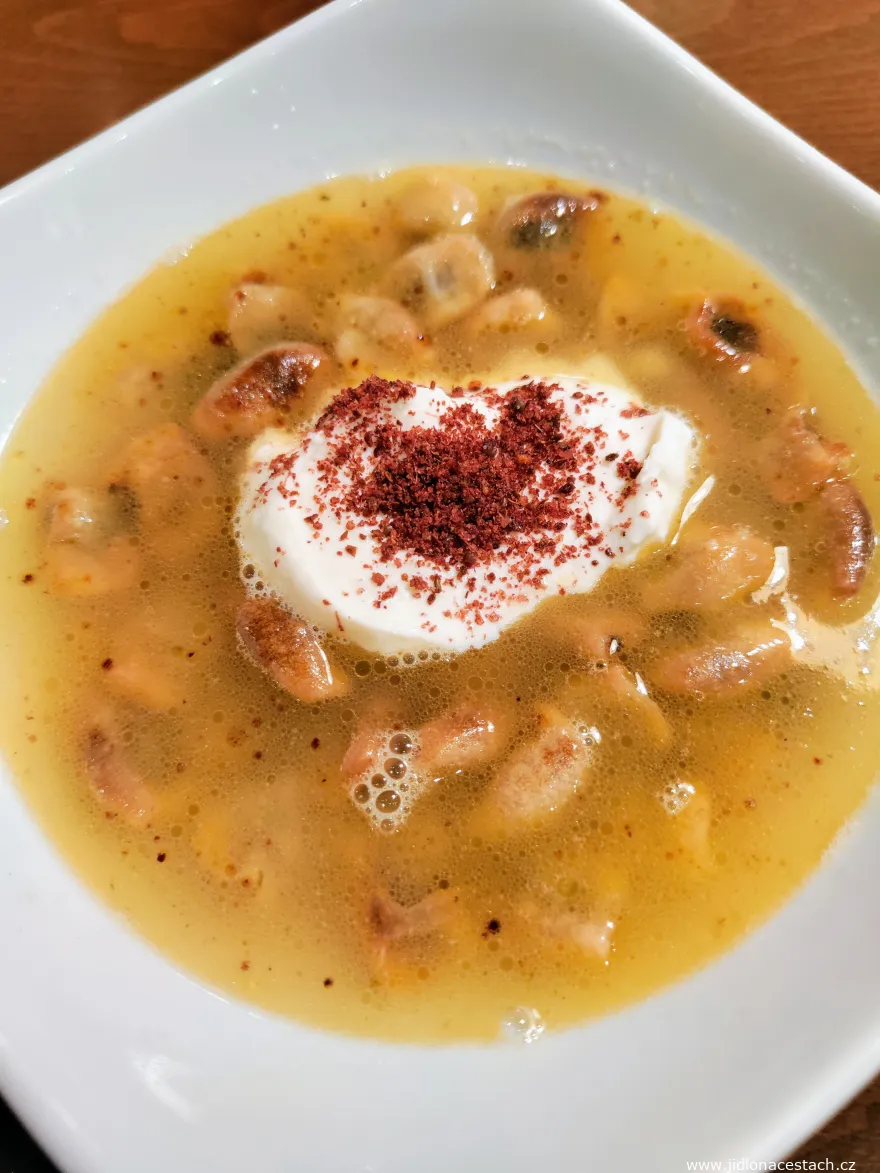
I ate mantapur in Yerevan, at Anteb Restaurant (see Where to Eat in Yerevan), which lays claim to the cooking of Antep in its very name. The portion arrived in a deep bowl. Dumplings baked to a golden brown in a strong chicken broth, matsun yogurt in the middle and a red dusting of sumac over it. The dough was still crisp on top, the bottoms had already soaked through, the meat inside was salty and oniony, and the yogurt with sumac gave the broth a sourness that lightened it more than I'd have expected from a broth that rich. The portion cost 2,400 AMD (6 EUR). After that I ordered mantapur every time I saw it on a menu in Armenia.


