Tolma: Armenian Stuffed Grape Leaves
Armavir Province holds a tolma festival every year. It is called Uduli, after a word that is supposed to be the Urartian term for the grapevine and, at the same time, the key to a theory that the name of the dish is older than the Turks. Trouble is, not even Hrachia Acharian, Armenia's greatest etymologist, signed off on that theory - he filed it under Turkish loanwords without a second thought. So Armenians named the feast of their national dish after an etymology their own scholarship rejects, and nobody minds, because people come to the festival to eat, not to argue.
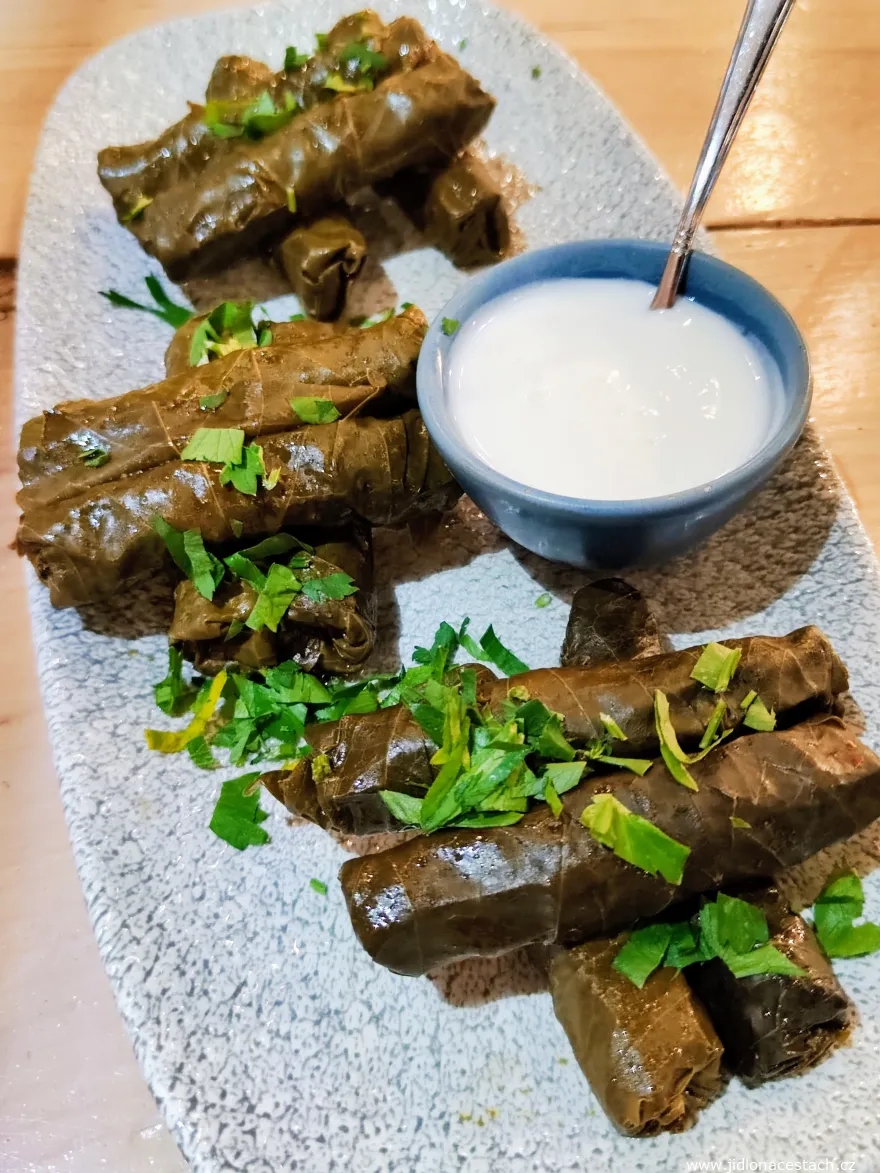
Tolma (Armenian: Տոլմա), known outside Armenia as dolma, is grape leaves wrapped around minced meat and rice, braised in a pot and served warm with garlic yogurt - and Armenians count it as the second most important dish that Armenian cuisine puts on the table.
Tolma or Dolma: What One Consonant Buys You
Linguists, Armenian ones included, derive dolma from the Turkish verb dolmak, to fill; Armenians pronounce it with a hard t at the front and list the encyclopedia entry under the form tolma, as if a single consonant were enough for a new birth certificate. The technique itself - wrapping or hollowing out something edible and filling it with meat and rice - belongs to nobody: it runs from the Balkans through Turkey and the Caucasus all the way to Iran and Iraq, and every country has its own name for it. Turkish, meanwhile, draws a line: dolma is a stuffed hollow vegetable, a roll in a leaf is sarma, so Turkish stuffed mussels are, oddly enough, a closer linguistic relative of Armenian tolma than the Turkish vine roll is. Greek dolmadakia carry the Turkish word in their name as well, dolmeh from Iranian cuisine is braised in a sweet-and-sour sauce of grape syrup, and in Georgia tolma goes by exactly the same name as in Armenia - Georgian cookbooks list it as Armenian themselves.

Who Invented Tolma and Who Has It on Paper
The Armenian version of history says tolma is an Armenian invention that spread around the world through Ottoman cooking, and it leans mainly on the food historian William Pokhlyobkin. Turkey and Greece have versions of their own, Armenians say, and Azerbaijan settled the matter its own way: in 2017 it had "the tradition of making and sharing dolma" inscribed on the UNESCO list of intangible heritage as a marker of Azerbaijani cultural identity. To be fair, nobody in the region gives a date for the oldest mention of a stuffed grape leaf. Armenia, meanwhile, counts more than fifty kinds of tolma of its own: with meat and without, in a grape leaf and in cabbage, in summer in peppers, tomatoes and eggplant.
Three Meats, One Leaf and Garlic in the Yogurt
The textbook filling is made from three meats at once: pork, beef and lamb ground together, then rice, onion and a handful of basil or tarragon. The grape leaf is the second main ingredient - fresh and merely blanched in season, brined for the rest of the year, which is where the roll picks up the acidity and the firmness that let you eat tolma with your hands. The third ingredient stands next to the plate: matsun, thick cultured yogurt with crushed garlic, which gives the rich filling a cold, sharp edge - without it, tolma is missing half its flavor. Central Europe has the same idea - cabbage rolls, minced meat and rice in a cabbage leaf; tolma is their slimmer southern cousin, with a vine leaf in place of the cabbage and garlic yogurt in place of the tomato sauce.
Meat tolma is eaten warm and as a main course, never as a cold appetizer - that is the difference from Turkey and Greece, where the meatless roll with olive oil comes out chilled among the other meze. The calendar has two chapters of its own: in summer the same filling moves into hollowed-out peppers, tomatoes and eggplant and goes by the name summer tolma, and at New Year and during Great Lent comes pasuts tolma, in which beans, chickpeas, lentils and bulgur replace the meat in a sour cabbage leaf, braised for four hours.
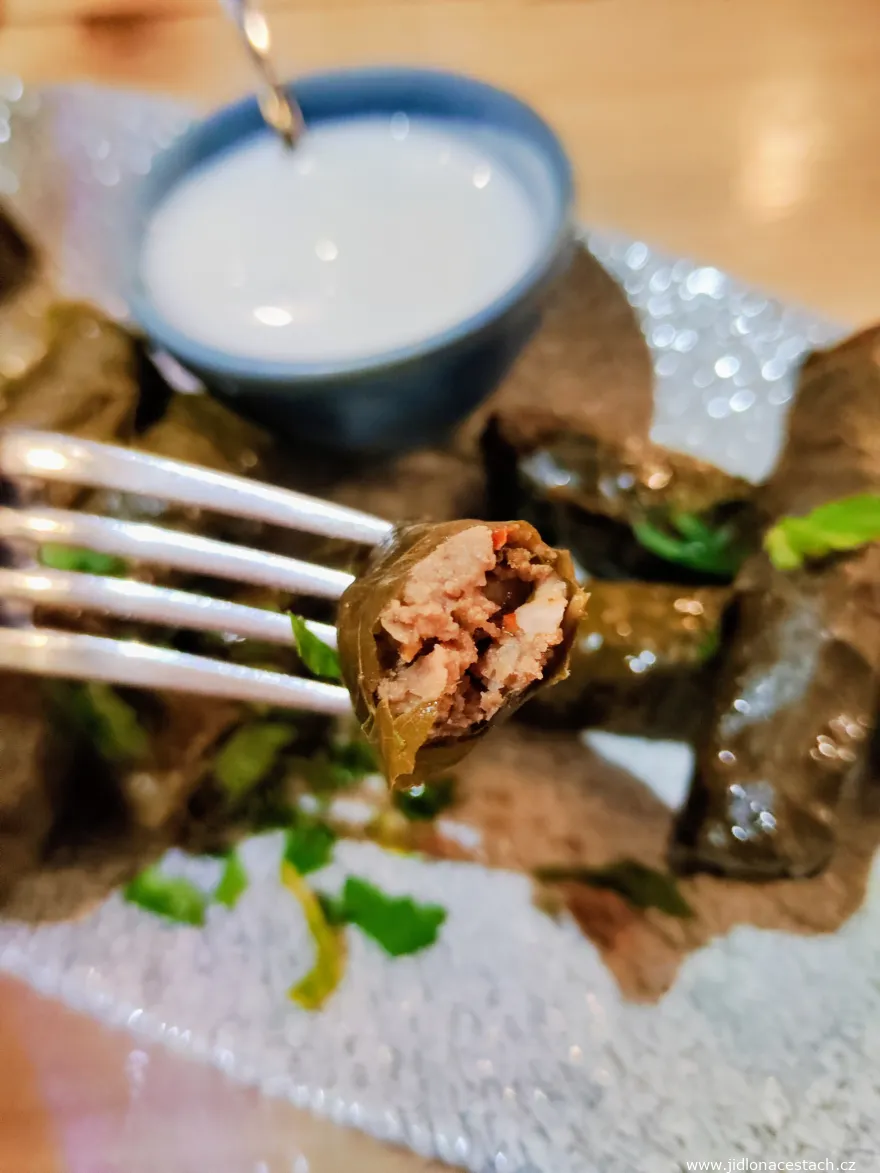
Yerevan Tolma Made with Beef Tenderloin
I ate tolma in Yerevan, at my favorite Lavash Restaurant (see Where to Eat in Yerevan), and the menu promised something no textbook mentions: a filling made of beef tenderloin. Whether it really was tenderloin I honestly can't say - all I know is that the meat was extremely fine, with almost no fibers to it. The leaf held firm and brought just the right acidity, the garlic matsun was cold, and so every bite came with two temperatures and two flavors at once. I rarely had a better dish in Armenia. The bill came to 2,800 AMD (6.80 EUR) a portion.


