Mine Bouillie: Mauritian Boiled Noodles
People of Chinese descent make up roughly two to three percent of the population of Mauritius. Yet their food takes up a strikingly large share of the lines on the board outside every bistro: mine frit, riz frit, boulettes and the humblest of them all, mine bouillie. Mine bouillie are boiled egg noodles with meat and vegetables - either on a plate with nothing but sauce and a piece of meat, or in a bowl of clear ginger broth - and they are among the cheapest things Mauritian cooking has to offer. Nothing crunches, nothing gets fried, and that is exactly what sets them apart from their more famous fried sister.
What Mine Bouillie Means and Why It Isn't Porridge
If you know a bit of French, the menu will trip you up. In France, bouillie is the gruel you spoon into a baby, and mine means a mine, or the look on someone's face. Both are false alarms: here bouillie is simply the past participle of the French verb for boiling, and mine has nothing to do with mining whatsoever. The word for noodles came over with immigrants from Meixian in southern China - in their Hakka, the character for noodles sounds almost exactly the way Mauritian Creole pronounces it today. So nobody in France knows the word mine, while everybody around the Indian Ocean does: on Réunion the boiled version goes by the same name, and in Madagascar fried noodles turned into misao. And because the Hakka never settled on a gender for the borrowed word, the Mauritian press will happily print mine bouilli and mine bouillie in the same article. Both spellings are correct, which on Mauritius is the usual way to end an argument.
Noodles in the Broth, or Next to It
Noodles in clear broth arrived from China with the immigrants of the nineteenth century, the Cantonese first and later the more numerous Hakka, and nobody wrote down the year the soup became a Mauritian dish. What is different from the Chinese original, though, can be. In Hong Kong and in Hakka China, boiled noodles come dry, tossed with sauce, and the soup sits alongside in its own bowl - tipping it over the noodles is bad form. The Mauritian soupy mine bouillie does the exact opposite: the noodles swim in the broth. The second, dry version, called touni (bare) in Creole, stays closer to the Chinese original: noodles with just sauce, topped with pieces of meat, ground meat or an egg fried on one side only, known here as dizef miroir, a mirror egg. One name, two dishes, and which one you get is up to the bistro - there is no fixed rule. If you want to be sure, ask whether it comes with broth.
How Mine Bouillie Is Made and Eaten
The noodles are boiled separately and only briefly, then rinsed in cold water right away - a move familiar to anyone who has ever drained a pot of spaghetti and found it welded together in the colander. Here it has a different reason: rinsed noodles stay springy even when hot broth lands on them a moment later. The broth is chicken, clear and fragrant with ginger and garlic, and it belongs to the same family of clear ginger soups as the one the Mauritian dumplings boulettes swim in. The vegetables change with whatever the bistro bought that morning - bean sprouts, leafy cabbage, spring onion on top - and the seasoning comes from soy and oyster sauce and a drop of sesame oil. On the table you then find a bowl of homemade chili sauce and a bottle of black vinegar, because every Mauritian seasons their own bowl and the cook doesn't try to guess in advance. It is everyday food: lunch eaten standing up, or dinner once you get back from the beach. Nobody orders it to celebrate, and yet thousands of people on the island eat it every day. And if you are fond of broth, order a few boulettes on the side.
The Dry Version on a Glass Plate
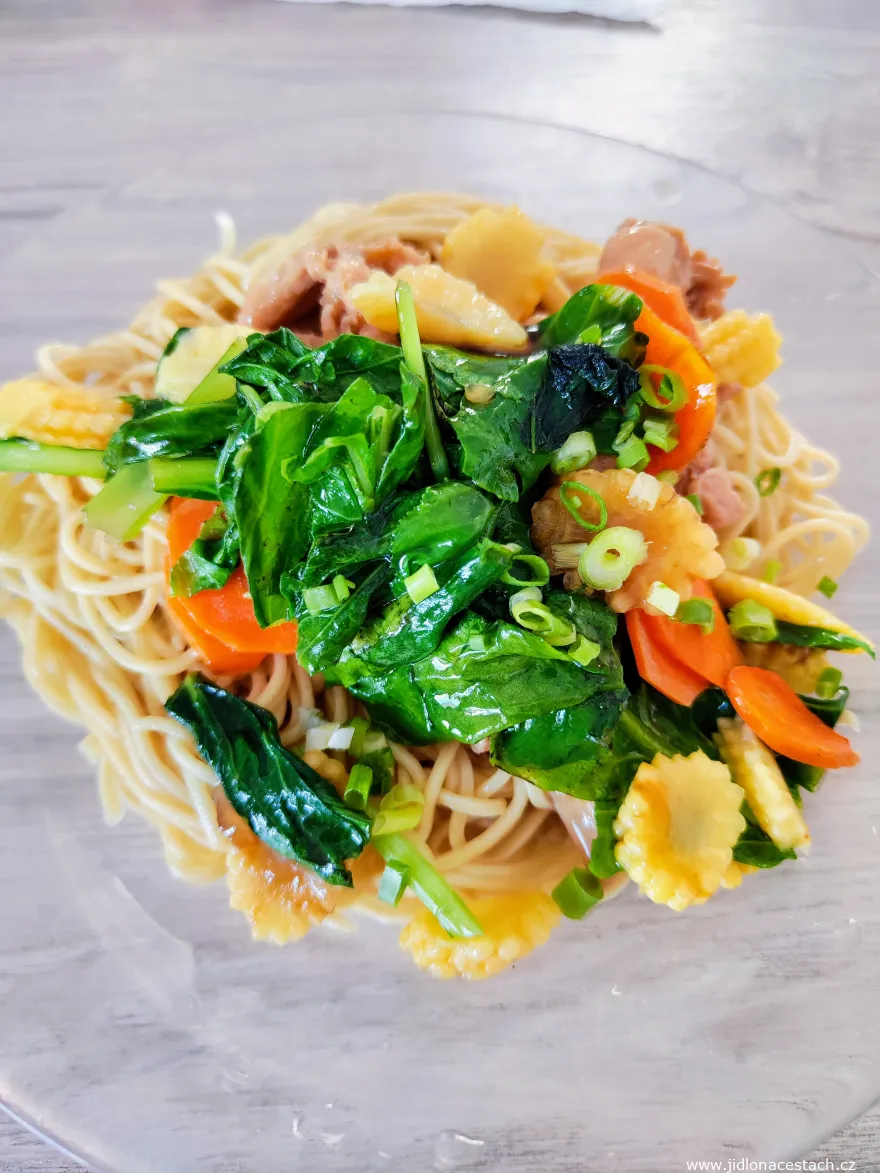
I ate mine bouillie in Flic en Flac, at the Nam Wah Snack bistro (see Where to Eat in Flic en Flac). A plate of thin noodles, chicken on top, slices of carrot, baby corn, leafy greens and a handful of spring onion. The noodles were slippery and springy, the meat tender and salty with soy sauce, the corn and carrot still had a crunch, and the ginger stayed in the aroma rather than on the tongue. The portion cost 125 MUR (2.80 EUR). The fried sister has more flavor. The boiled one has better manners: it leaves no oil on the plate, it doesn't hold you up and it doesn't draw attention away from the vegetables - and there were almost more of those on the plate than noodles.


