Napolitaine: The Mauritian Cookie with Pink Icing
There's a shade of pink that nature never uses on anything edible. Raspberries, watermelon, guava - none of them come close; it's the color of bubble gum, of a plastic toy, and of a bakery window in Mauritius. See it once and you no longer need a menu or a dictionary - you just point.
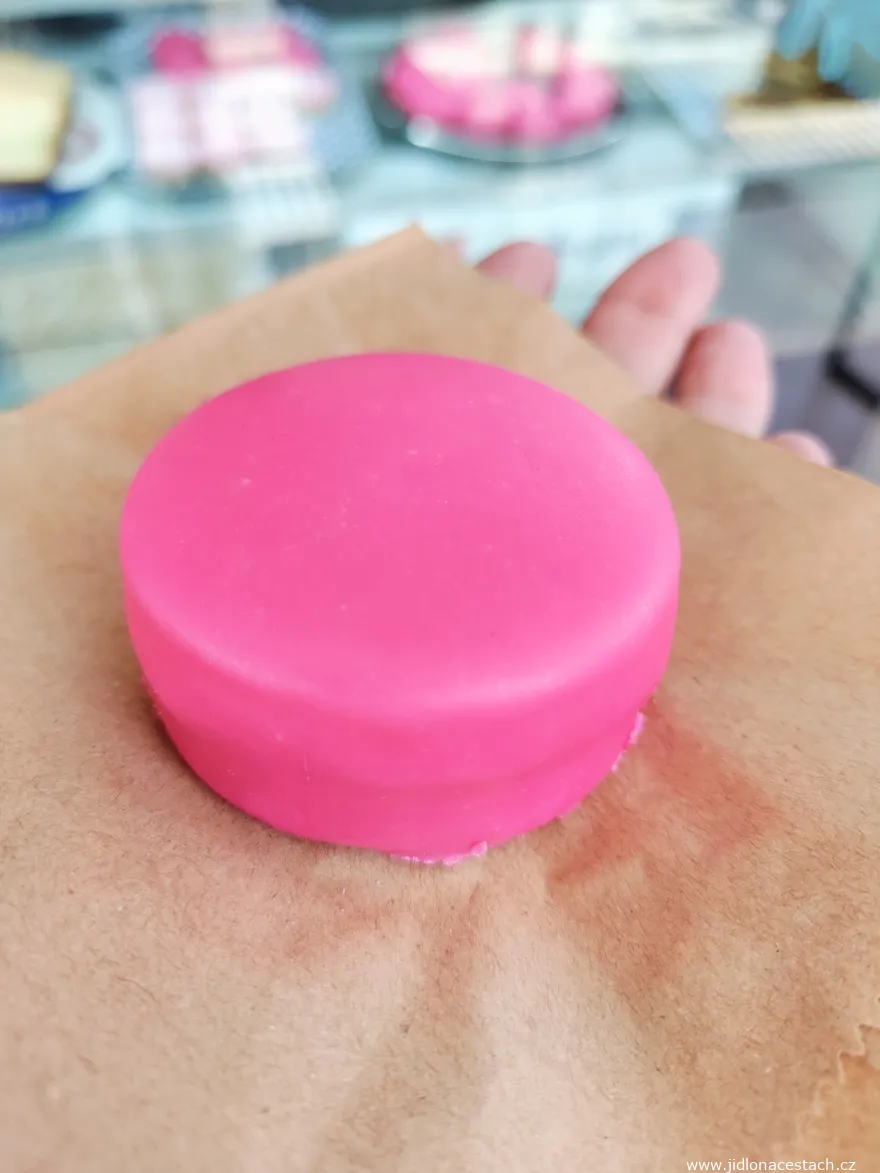
Napolitaine is a cookie of Mauritian cuisine: two round discs of crumbly butter shortcrust, a thin layer of jam between them, and a hard sugar icing in exactly that pink on top. No mousse, no cream, no decoration. Three layers held together by sugar, and a French name that means Neapolitan.
Where Napolitaine Is Baked and How It Got Its Name
Napolitaine is an island-wide affair: it has no home town and no regional variants, every bakery in Mauritius bakes it, and the supermarkets sell it prepackaged. The only place that shares it is neighboring Réunion, where local blogs list it as Réunionnais and some of them add in the same breath that it came over from Mauritius - when, and in which direction, nobody knows. Don't look for it in the Seychelles or in Madagascar, and in France you'll find it only in a handful of Mauritian diaspora pastry shops in Paris. French cuisine, which gave the island both the butter pastry and the name, has no idea this cookie exists. The name is simple and unresolved at the same time: napolitaine is French for Neapolitan, but why Mauritius pins it on a jam-filled cookie is something no Mauritian source explains. Nineteenth-century French pastry chefs slapped "à la napolitaine" on all sorts of sweet things, including a cake and an ice cream that nobody in Naples had invented, and the island most likely borrowed the fashion along with the word.
Butter, Jam, and Sugar: What Goes into a Napolitaine
Napolitaine has no inventor, no date, and no bakery claiming to have made it first; Mauritian sources talk about French and British colonial baking and about a recipe handed down in families. Nobody puts a date on the first napolitaine, so the history of this cookie fits into one sentence: it was baked until it was everywhere. The dough is one of those you can't cut corners on: the recipe in the daily Le Mauricien puts 175 grams of butter to 250 grams of flour, the sheet is rolled to three millimeters, and it is baked so that the discs never take on color - a napolitaine is meant to stay pale, because the icing does the coloring. The jam between the discs is usually guava or strawberry, depending on the family and the bakery, and there is just enough of it to hold the two halves together. The icing is powdered sugar mixed with water and a drop of red coloring; pink is the tradition, but pastry chefs are perfectly happy with blue, yellow, and orange too. The tradition of the color is more flexible here than the tradition of the butter. Back home in Czechia, that kind of hard sugar icing turns up on Christmas gingerbread - in Mauritius it holds all year round, and on a cookie rather than on a gingerbread figure.
Napolitaine is more of a snack than an after-dinner dessert like fried rasgulla or milky sagoo au lait: it goes with afternoon tea, into a school bag, and onto party tables, where ten of them sit on one plate, all exactly the same pink. It keeps for several days in a tin, which makes it the kind of thing you can happily buy in bulk. The color of the icing gives away nothing about what is inside - if you want guava and not strawberry, you have to ask at the counter, because from the outside the two look identical.
Napolitaine in Quatre Bornes
I bought my napolitaine at a smallish bakery in Quatre Bornes and ate it right outside, out of a paper bag, while more of the same pink ones sat in the display case behind me. The icing cracked and shattered at the first bite; the cookie underneath was crumbly and dry, with more butter coming through than sugar, and the jam in the middle worked as glue rather than as flavor - thin, sweet, with no tartness at all. The piece was bigger than you'd expect from a cookie and easily passed for a light snack. It cost 40 MUR (0.80 EUR).


