Rasgulla: Fried Milk Balls in Syrup
Fried dough soaked in sugar syrup used to strike me as the kind of thing you only need to taste once: you work out that you're eating sugar and fat, and you move on. Rasgulla changed my mind in Mauritius, in the hotel where I was staying, the last place you'd normally learn anything about a country. The lesson came twice over, because nobody in India would call what was on my plate a rasgulla.
Rasgulla (Bengali: রসগোল্লা, on the island also rasgoula) is, in Mauritius, a ball of milk-powder dough fried until golden and then soaked in cardamom syrup - a sweet of the Indo-Mauritian community that Mauritian cuisine adopted from India along with its name, just not the name that belongs to it in India.
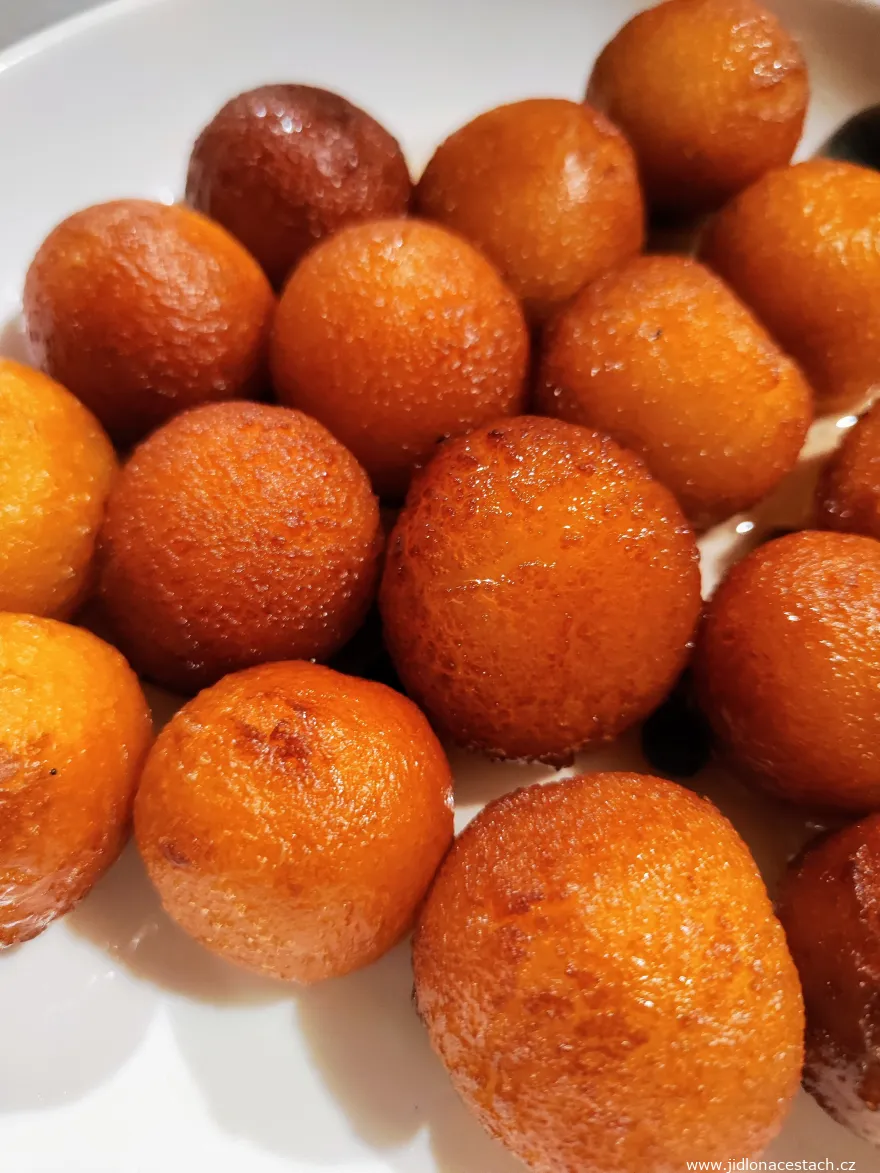
The Ball in Syrup That Swapped Names in Mauritius
The name is the most honest part of the whole business. Bengali ras means juice or syrup and golla means ball, so rasgulla is literally a "ball in syrup" and promises nothing more. In India the word means a white, spongy ball of fresh chhena curd that is simmered in the syrup; the Mauritian rasgulla is made from milk powder and deep-fried and only goes into the syrup once it's done - and that is exactly what India calls gulab jamun. Mauritian cooks know this and it doesn't trouble them: in the island's sweet shops gulab jamun is sold right next to rasgulla, as if they were two different things. The same happened among the descendants of Indians in Fiji, so this is a habit of the diaspora rather than a mistake. Rasgulla itself belongs to the whole Indian subcontinent: it is at home in Bengal and Odisha, common in the sweet shops of Pakistani cities and in Bangladesh, and it reached Mauritius the way tekwa and dholl puri did, with Indian laborers in the nineteenth century.
Milk Powder, Ghee and Half an Hour in Syrup
The main ingredient of the Mauritian dough is milk powder, and it is the milk powder that kept the ball from tasting like sugar and fat. The powder is kneaded with a little flour and semolina and with condensed milk, the balls are fried in ghee - first over a gentle heat so they cook through, then hotter for color - and finally they spend half an hour in warm, not boiling, syrup with cardamom and lemon. Without the milk powder it would be just fried dough in syrup, exactly the thing I used to walk past; with it you get a dense, milky ball that drinks up the syrup without falling apart in it.
In Mauritius, rasgulla is mainly a Diwali sweet. At the festival of lights, Indo-Mauritian families put together boxes of sweets and take them around to the neighbors; rasgulla sits in them next to laddoo, barfi, jalebi and that same gulab jamun. You eat it cold or lukewarm, after a meal or with visitors, and anyone who wants to try it outside the festival heads for the Indian sweet shops - knowing that what they get as rasgulla is what Kolkata would hand them as gulab jamun. I never did work out what exactly separates a Mauritian rasgulla from the gulab jamun on the next shelf; the man behind the counter will know better than I do.
The Hotel Dessert
I ate rasgulla in Mauritius at the hotel where I was staying - the one dish in this section I didn't have to hunt down at stalls or markets, because it arrived on the table with the rest of the desserts. The balls were a dark gold, glossy with syrup and firmer to the bite than I had expected: the fried crust put up a little resistance, inside the dough was dense and milky, more a curd ball than a doughnut, and the cardamom only came in at the end, once the syrup had run off. It was very sweet, but not so sweet that it buried the milk - and the milk was exactly what set it apart from everything of this kind that I used to push aside after the first bite. I can't give you a price: at the hotel the dessert wasn't charged for separately.


