Sành Quán: Bún Riêu Cua Crab Soup in Prague's Sapa
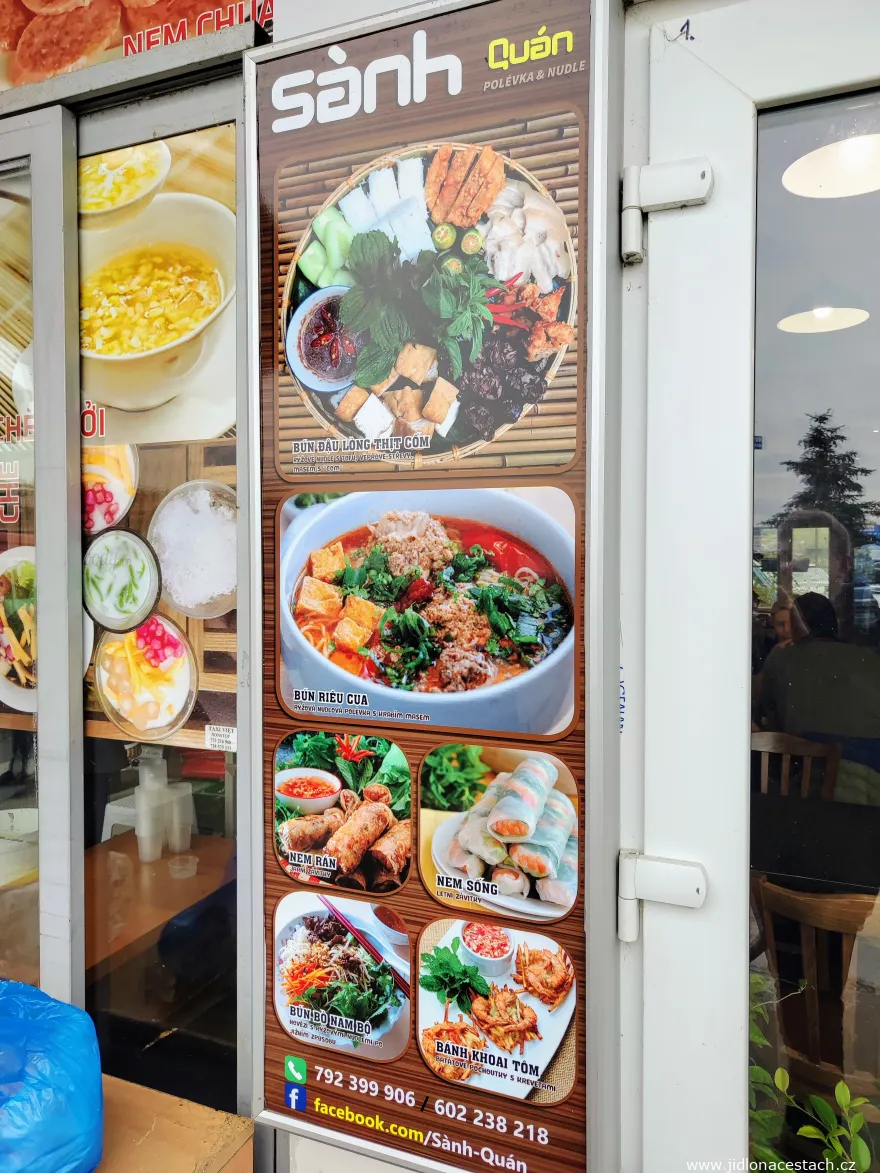
Restaurants are usually named after the owner, or at least after a grandmother. The Vietnamese can be more upfront: sành means connoisseur - the same word sits inside sành ăn, a gourmet - and quán is an eatery. A bistro for people who know their food, says the shop sign, and that leaves the guest with just one job: to confirm the verdict.
Sành Quán is a small Vietnamese bistro on the edge of Prague's Sapa market and the only place in Czechia I know of that makes bún riêu cua crab soup.
What Bún Riêu Cua Is and How the Crabs Get Into It
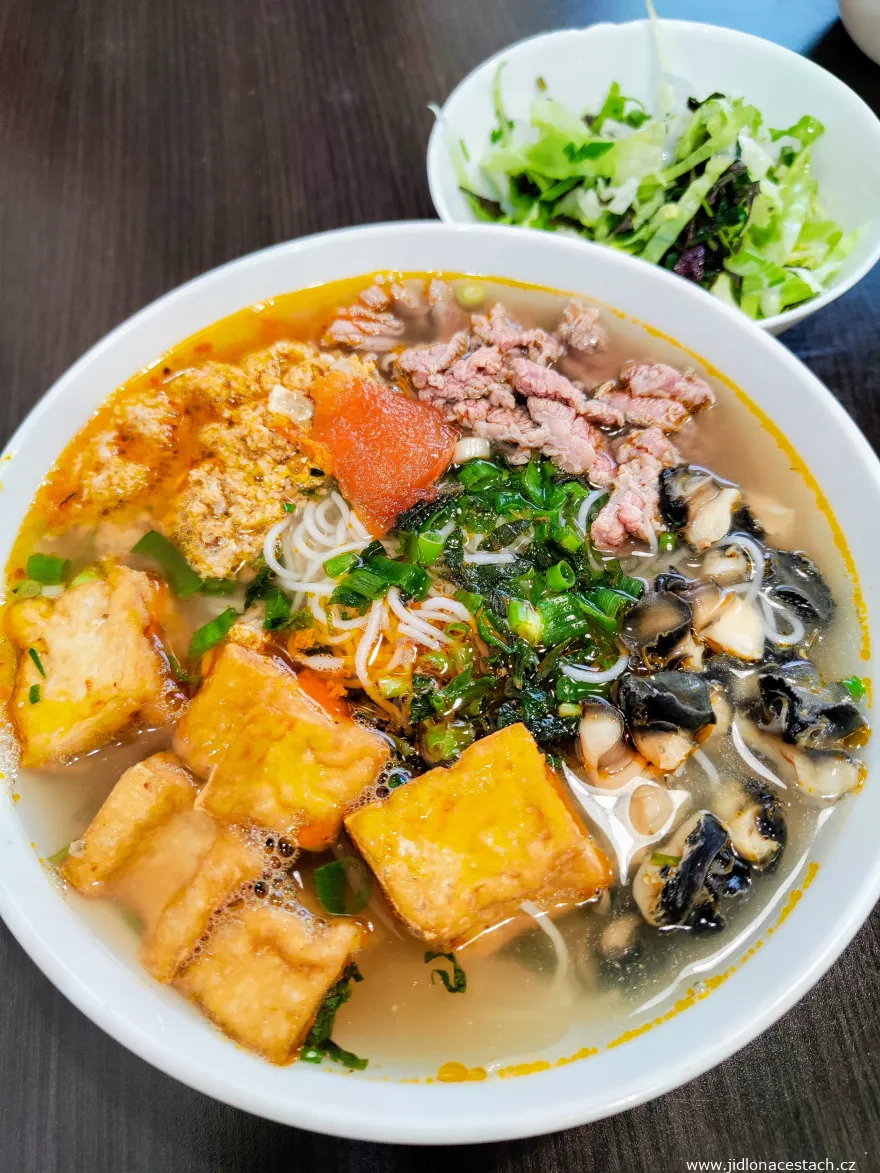
Bún riêu cua comes from the Red River Delta in northern Vietnam, and in Hanoi it counts as a market breakfast. The base is made from freshwater cua đồng crabs that live in the rice paddies: they are shelled, pounded, strained and simmered, and the crab protein sets and floats to the surface as a fluffy little cake - that is what riêu refers to. Tomatoes give the broth its color, and vinegar made from fermented rice gives it its sourness; dictionaries in fact define riêu simply as a tart broth made from crab or fish. The rest is a bowl of rice noodles and a plate of herbs that everyone tears up and adds to taste.
At Sành Quán I ordered the one they call maxi: on top of the crab base and fried tofu they add thin slices of beef and snails. It looks like a stunt for a Prague audience, but in Vietnam people build bún riêu however they like, and snails are part of the northern tradition. A plate of herbs came with the bowl, and on the table there were little jars of homemade chili that really does burn - add it a little at a time. With a bit of chili and a squeeze of fresh lemon the soup is pleasantly refreshing and has a proper edge to it; the maxi portion cost 190 CZK (7.60 EUR). The tomato acidity keeps the broth light, and the crab cakes are delicate and fluffy.
Bún Đậu: A Second Round for the Brave
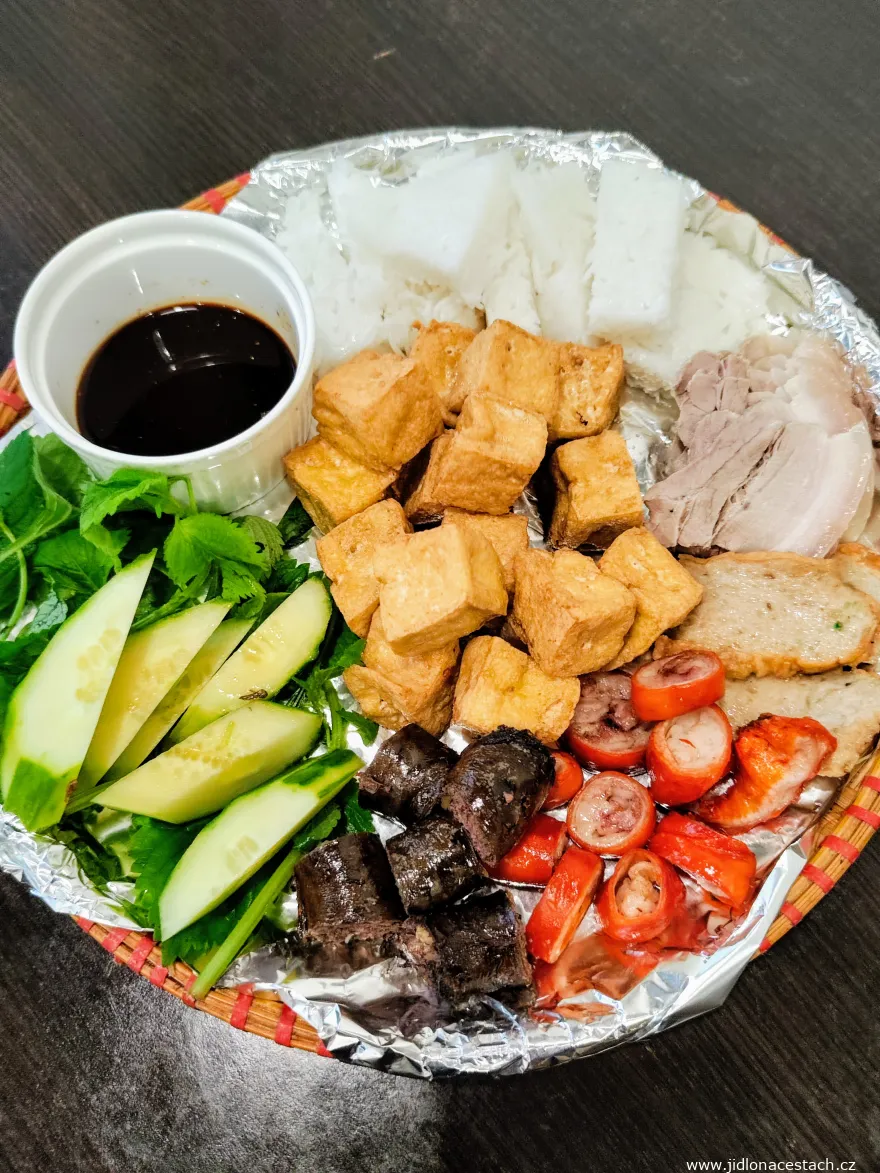
The second dish I tried there is the one the bistro advertises on its shop sign: bún đậu. The tray comes loaded with cubes of pressed rice noodles, fried tofu, slices of boiled pork belly, stuffed pork sausage dồi and chả cốm, fried patties of pork and young green rice. The patties are what give away the spread's Hanoi roots: cốm, rice harvested while it is still unripe, lends the meat a sweetish aroma. You eat it piece by piece, alternating with herbs and dipping as you go, and it is a portion that tests how serious you are about Vietnamese food - not many places in Prague dare to put stuffed sausage on a plate. It costs 250 CZK (10 EUR).
Where to Find Sành Quán: On the Edge of Sapa, by the Temple
Sapa sprang up in late 1999 and early 2000 on the grounds of a former meat-processing plant in Písnice; today its thirty-five hectares or so are nicknamed Little Hanoi, and for the Vietnamese community in Czechia it is something between a wholesale market and a city within a city. You'll find Sành Quán away from the main bustle, on the edge of the complex by the Buddhist temple. Sapa was once meant to have the largest Buddhist temple in the country; what got built was a smaller shrine - and even that is landmark enough to find the bistro by. Right next door is the Chè Sài Gòn stall with Vietnamese chè desserts - savory at one, a sweet finish at the other - and anyone who wants to get more out of the trip will find more places to eat in Sapa.
A Bistro for Connoisseurs, a Table for an Amateur
I'll admit I'm no sành ăn yet - Vietnamese food still surprises me more often than not. Maybe that is exactly why Sành Quán is one of my favorite places in Sapa: they don't coddle you here, and nobody has translated the menu into European caution. The maxi bowl of soup for 190 CZK (7.60 EUR), the bún đậu tray for 250 CZK (10 EUR). The bistro picked itself a properly confident name. But with a bowl of bún riêu cua in front of me, even I passed for a connoisseur for one visit.
Sành Quán


