Hippo Café: Vietnamese Phin Coffee in Prague's Sapa
I fell for coffee at home the day a grinder joined the Bialetti moka pot I'd brought back from Italy. Pre-ground coffee was out, instant became a dirty word, and standing over that gurgling pot I felt like a model of coffee patience. It lasted until the day someone set a glass down in front of me, on a floor above a Vietnamese market, with a little metal pot on top, the coffee dripping through it at its own lazy pace.
Hippo Café is a family-run café with its own roastery in Prague's Sapa market, where Vietnamese coffee is made the old way: through a phin filter that takes several minutes for every single cup.
A Roastery Above the Rooftops of Sapa
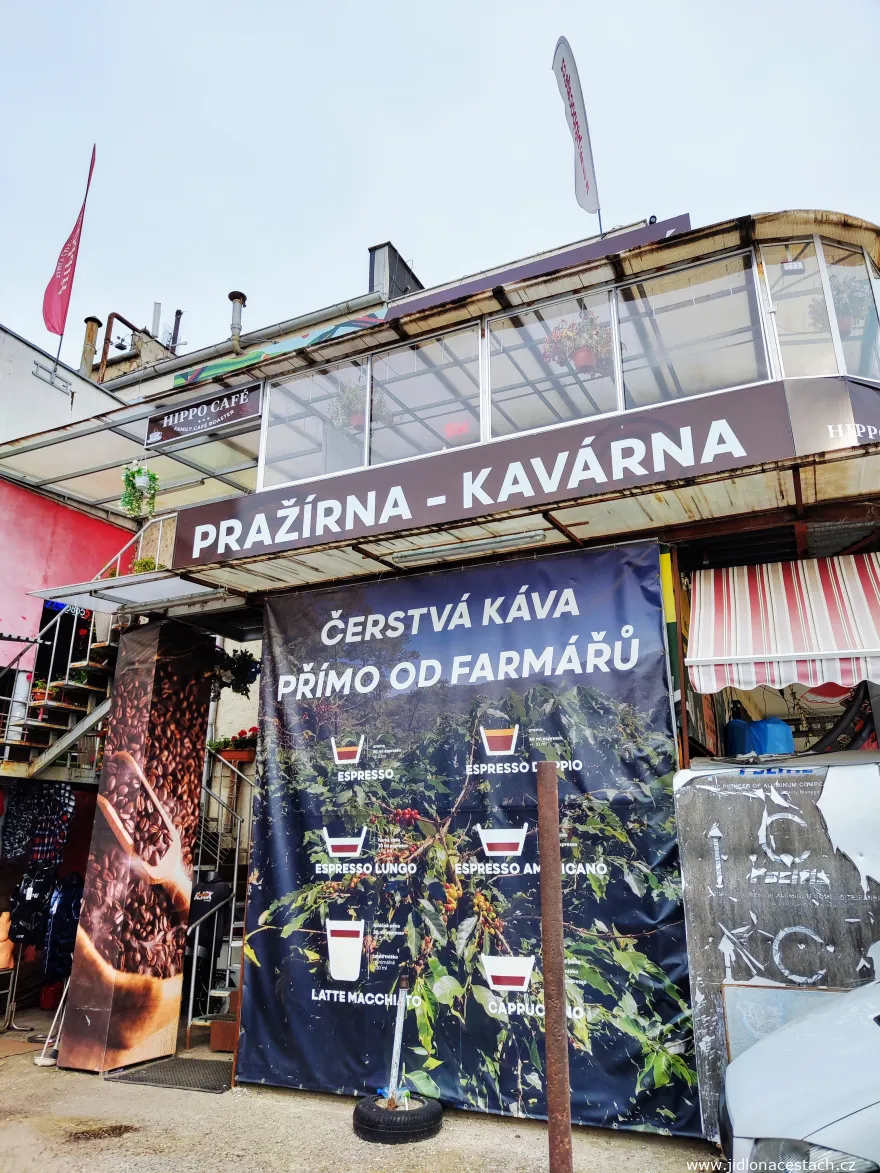
Hippo Café sits one floor above one of the market's alleys, and the front of the building says so outright: roastery and café, fresh coffee straight from the farmers. The sign isn't overselling it - the family business really does roast its own coffee, and even in Vietnam that is more the mark of a modern place than of a classic street café. Upstairs there's a glassed-in veranda and a terrace looking out over the whole of Sapa; the tangle of roofs and shop signs is finally something you can take in all at once. The staff speak fluent Czech and are happy to explain what's happening in your glass - in a place where you wait for your coffee, there's time for talking too. And once you've finished, the best restaurants in Sapa are only a few steps away.
How the Phin Works and Why the Coffee Takes Its Time
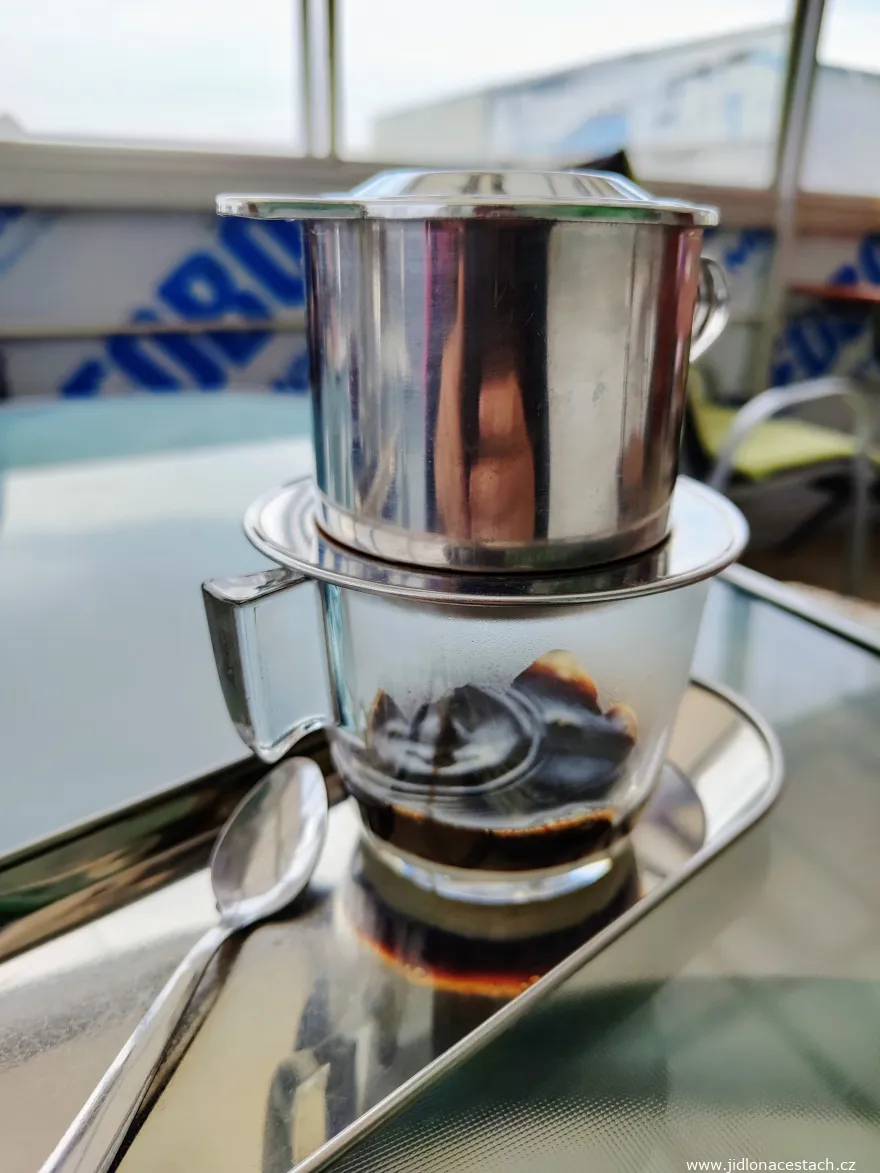
The phin is a four-piece metal puzzle: a chamber for the ground coffee, a perforated base, a press filter and a lid. It goes straight onto the glass - the Vietnamese have a folk definition for it, "a pot that sits on a cup" - and from there on gravity does the work. The coffee is first moistened with a splash of hot water so it can bloom, then the filter is topped up to the rim and left alone; a standard serving takes five to eight minutes to drip through. The word phin itself is a corruption of the French filtre: the French brought both coffee and a way of straining it to Vietnam in the 19th century, and the locals remade the two in their own image. You can nudge the pace a little with the grind or with how hard you press the filter down, but only within the limits the coffee sets for itself. In Vietnam, after all, you wait for that dripping coffee on a low stool on the sidewalk, looking out at the street - and those minutes are part of the pleasure.
There's one more thing in the glass under the filter: a layer of sweetened condensed milk. That's not about a sweet tooth but about the tropics before refrigeration - in colonial times fresh milk wouldn't last until evening, while a can survived anything. The stopgap stuck so well that sweet milk in coffee is now a Vietnamese classic. You stir the thick sweetness at the bottom into the bitter coffee only right before you drink. And that coffee is almost always robusta - the bean the coffee world looked down on for years accounts for more than nine tenths of Vietnam's plantations and has made the country the world's second largest coffee producer. Anyone who knows the Spanish café bombón will recognize the same trick here; and if you want to go one step further, Hippo Café also serves egg coffee, cà phê trứng, where a whipped yolk stands in for the milk.
A Cup on the Terrace Above Sapa
I drank my phin out on the terrace, the version with sweetened condensed milk. The taste was worth the wait: bitter, earthy robusta that the sweet milk, once stirred up from the bottom, pulls almost into dessert territory - a thicker, sweeter coffee than anything that ever came out of my Italian moka pot. The cup came to 65 CZK (2.60 EUR). The café put a hippo in its name - and by the last drop I had to admit that an animal in no hurry to be anywhere suits it perfectly.
Hippo Café


