Haleem: A Thick Soup of Wheat, Legumes, and Meat
The menu at the Snack du Coin bistro in Pamplemousses has three items on it: haleem, chicken briani, and roti. That's hardly a choice. But the cook knows what he's good at. You eat the first item with a spoon, and it still isn't a soup to start lunch with.
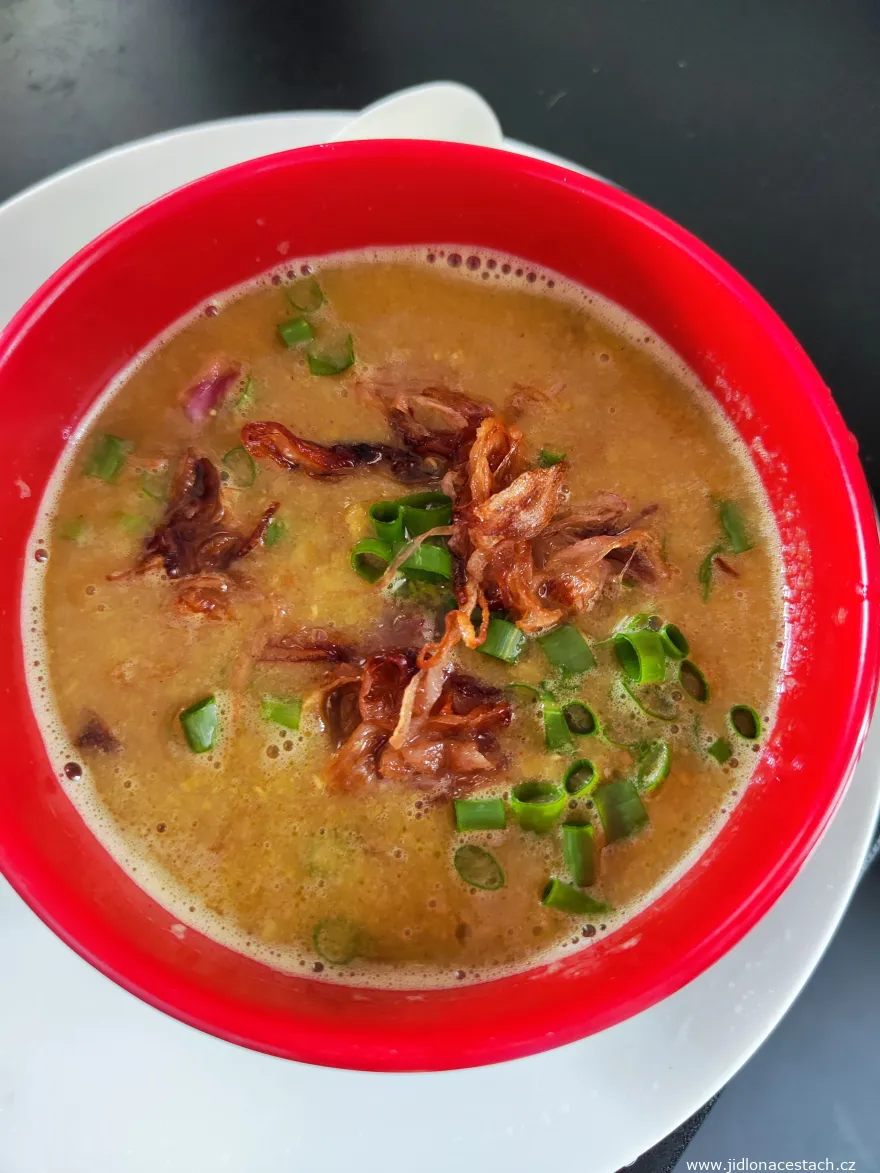
Haleem (Urdu: حلیم), also spelled halim on the island, is a thick soup of cracked wheat, legumes, and meat, simmered so long that everything melts into one smooth mash - a dish Mauritian cuisine took from Indian Muslims, who had taken it from the Arabs.
A Dish Named After Patience
The word halím means patient, gentle, forbearing in Arabic. Al-Halim is one of the ninety-nine names of God and at the same time an ordinary man's name, so the man who hands you the bowl may well be called that himself. The kitchen explanation is simpler: the ingredients cook until they're soft enough that you don't have to chew. In Hyderabad that means up to twelve hours over a low flame, plus a wooden mallet that pounds the meat and the grain smooth. Haleem and halim are two spellings of the same word in the Latin alphabet; Mauritian newspapers use both.
It's a dish shared across the Muslim world from the Persian Gulf to Bengal, and the farther you get from Arabia, the more lentils and spices it picks up. Arab harís, added to the UNESCO intangible heritage list in 2023, is just wheat and meat, with no legumes and almost no spice. In Iranian cuisine, halim shows up at breakfast. India, Pakistan, and Bangladesh added legumes, garam masala, ghee, and fried onions; in Mumbai they cook khichda, in which the grains stay whole. Mauritian haleem belongs to the South Asian branch: savory, spiced, full of dal, and eaten with bread rather than with a spoonful of cinnamon.
From Hadhramaut via Hyderabad to Mauritius
Arab immigrants from Hadhramaut in Yemen, who served at the court of the Nizams, brought it to Hyderabad at the end of the 19th century, and the city took to it so thoroughly that in 2010 Hyderabadi haleem was granted a protected geographical indication, the first meat dish in India ever to get one. A dish the Arabs brought in is now stamped as Indian. Nobody has pinned down when it reached Mauritius: after 1834 ships came from India full of indentured laborers, Muslims among the Hindus, but haleem never made it onto any ship's manifest. Today it's a dish of Mauritian Muslims, and the easiest place to find it is the Plaine Verte neighborhood in Port Louis.
What Goes in the Pot and How You Eat Haleem
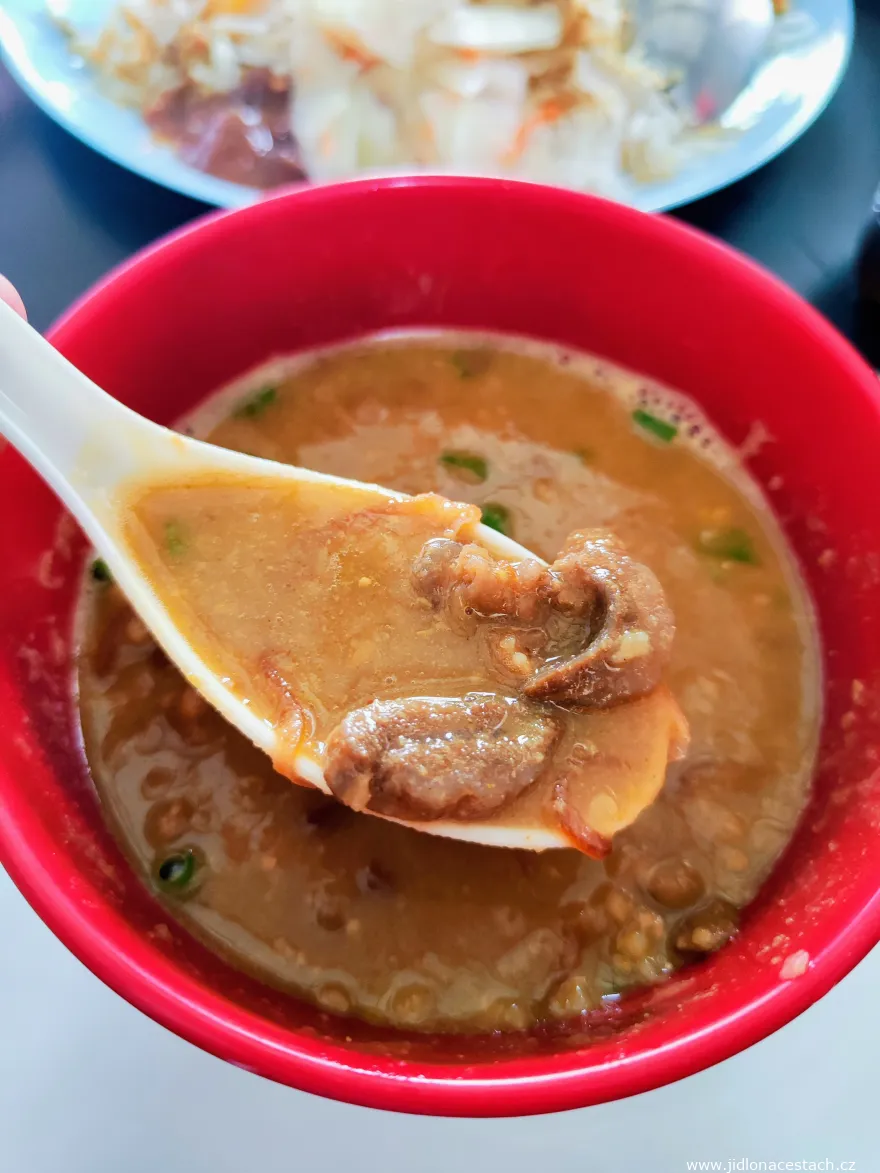
The base is cracked wheat and dholl, the yellow split peas that also fill the dholl puri flatbread in Mauritius; then lentils and meat - beef, lamb, chicken, and on the island venison too. Nobody here deliberately goes for lean cuts. Fat is part of the recipe, not a mistake: over hours of cooking it melts into the mash and gives it a flavor the grain alone never could. Cinnamon, cloves, turmeric, and ginger waft up from the pot, but the giveaway is the texture. The meat gets pounded with a mallet the way we mash potatoes back home in Czechia, only for several hours longer, until the fibers disappear into the grain.
In Hyderabad and Dhaka, haleem is a Ramadan dish: after sunset, when the fast is broken, lines form at the cauldrons, and Hyderabad's haleem sellers take in billions of rupees in a single season. In Mauritius it sells outside Ramadan as well, at stalls and small bistros in Muslim neighborhoods, in a bowl with roti, fried onions, cilantro, and spring onions; vinegar or garlic sauce sits on the table and and how much chili goes on top is up to your own nerve. You order it as a main course, not as a soup before briani - a bowl with bread will hold you for a whole afternoon.
A Bowl in Pamplemousses
I got my bowl at Snack du Coin in Pamplemousses, at the counter of a bistro with three items on the menu. The mash was smooth and brownish, fried onions crunched on top, and the spring onions were the only fresh note in an otherwise dense, warming bowl. More filling than the word soup had led me to expect. The bowl cost 60 MUR (1.20 EUR). The patience haleem is named after stayed entirely on the cook's side. I didn't linger over the bowl and moved straight on to one more course.


