Teokon Farci: Steamed Stuffed Tofu, Mauritian Style
A vegetarian who orders tofu at a Chinese bistro in Mauritius, on the grounds that it's the only safe thing on the menu, gets it wrong twice over. First, because the topping on the tofu is made of fish and dried shrimp. Second, because the broth it's swimming in is chicken.
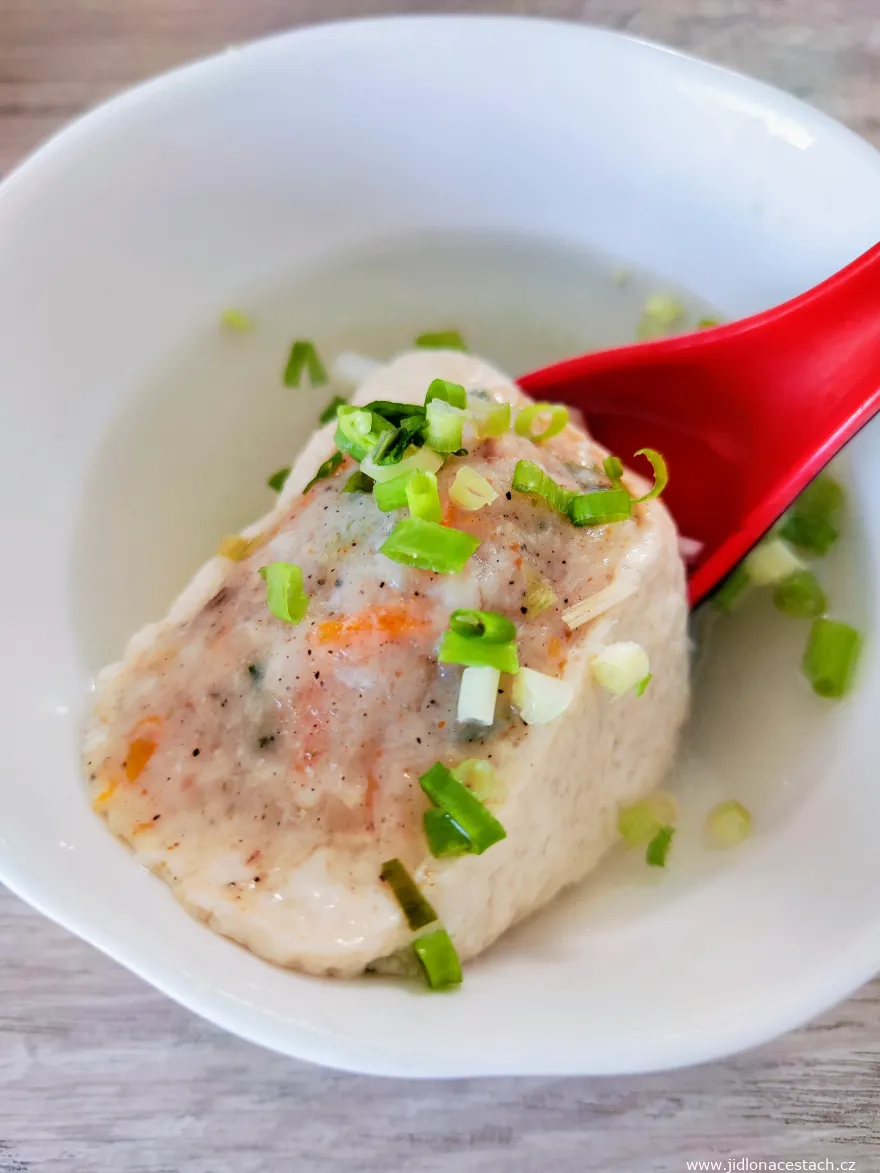
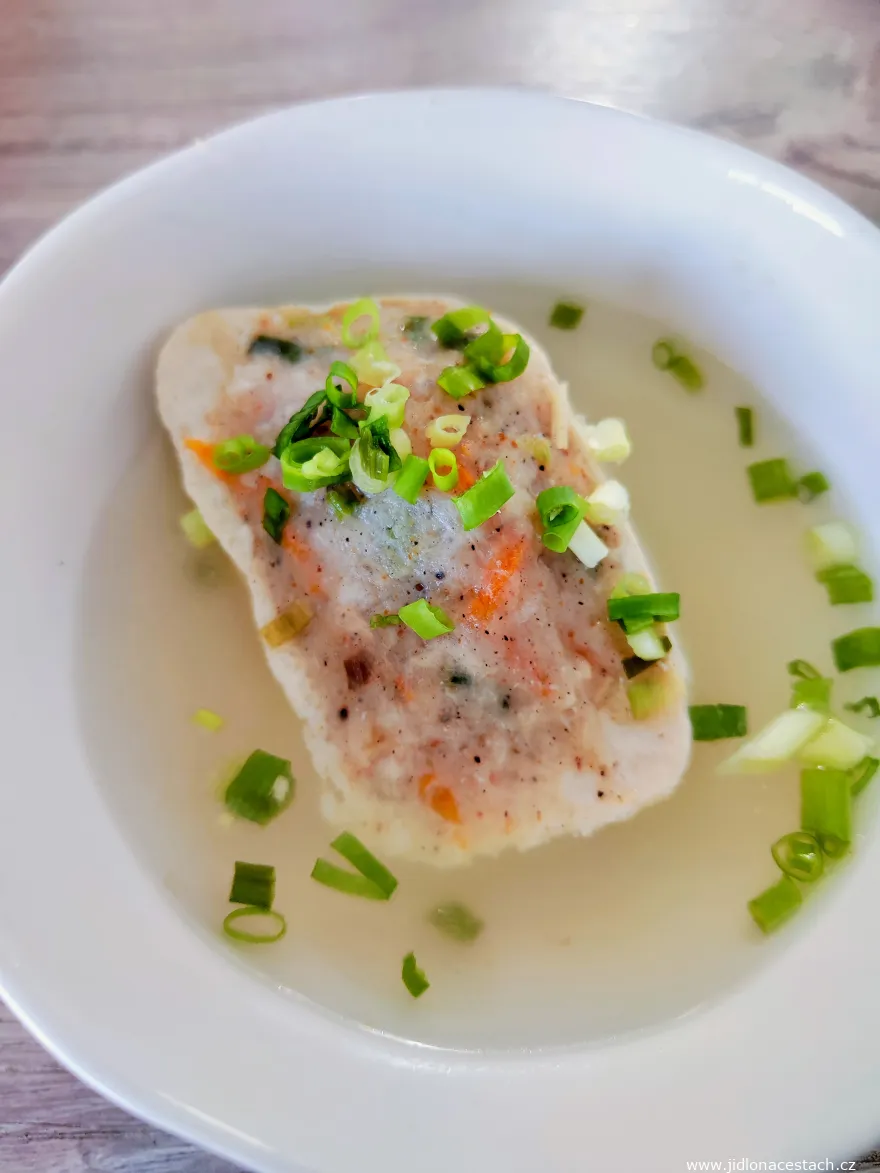
Teokon farci is a piece of tofu spread with a smooth paste of ground fish, shrimp and vegetables, steamed and served in a bowl of clear broth with scallions - an appetizer from the Chinese bistros and dumpling stalls that Mauritian cuisine inherited from Hakka immigrants. On the menu it looks like the lightest thing there. It is, just not in the way the vegetarian had in mind.
Why You Shouldn't Order Just Teokon at a Stall
In Mauritian Creole the word teokon means nothing more than tofu. Order it on its own and you get the raw ingredient Mauritians toss into rougaille or curry at home; it's the French farci, stuffed, that turns it into a dish. No Creole dictionary I've found says where "teokon" comes from, but it sounds strikingly close to the Chinese dòugān, firm pressed tofu, and that is exactly the language the Hakka immigrants spoke. The dish itself is the Mauritian offshoot of the Hakka yong tau foo, stuffed tofu, which is eaten today from Guangdong in southern China through Hong Kong all the way to Malaysia and Singapore. In Malaysia the name has outgrown the dish: order "yong tau foo" there and you get a bowl of stuffed peppers, eggplant and mushrooms that may not contain any tofu at all.
The Legend of Tofu Instead of Dough
The Hakka have a legend about the origin of stuffed tofu - two of them, in fact, and they don't agree. The better-known one says that immigrants from northern China wanted to wrap jiaozi, filled dumplings, for New Year, but wheat didn't grow in the south and there was nothing to make the dough from. So they wrapped the filling in what there was plenty of: tofu. Nobody can prove any of that, but it does explain why the tofu in this dish behaves like a wrapper rather than the main ingredient. It reached Mauritius with the Hakka community, which today makes up almost the entire Chinese minority on the island, and it adapted along the way: in China the tofu is stuffed with pork and fried; on the island it's spread with fish and shrimp and steamed. I found no origin legend that Mauritius could call its own. The island simply borrowed the dish and forgot to give it back.
What Holds the Filling on the Tofu, and Why You Eat It Before the Meal
The main ingredient isn't the tofu, but the paste on top of it. White fish is ground with shrimp until it's almost smooth, then egg white and a little starch go in, along with salt, white pepper, garlic and ginger, and what comes out is the kind of mixture we'd shape into fish patties back home in Czechia. Here, instead of being fried, it's spread onto the tofu and steamed, so the topping firms up, stays springy and clings to the tofu. The starch and the egg white are the glue; without them the topping slides off in the steamer and you're left with tofu on the plate and fish mush beside it. The broth poured over the whole thing at the end is the same clear chicken base they ladled over dumplings and boiled noodles at the bistro - one pot, three dishes.
Teokon farci is eaten wherever boulettes are sold: at stalls, in Chinese bistros, by the piece and fast. At a stall it's worth ordering it alongside the other pieces on the counter, because one teokon is a small portion and won't fill anybody up on its own. And if you don't like tofu, try it anyway: the flavor here comes from the fish; the tofu is just there to hold it together.
A Bowl of Broth at Nam Wah Snack
I ate my teokon farci in Flic en Flac, at the Nam Wah Snack bistro (see Where to Eat in Flic en Flac), where it arrived in a small bowl with a red plastic spoon, an appetizer to keep me going while the kitchen made the rest. The tofu was soft and almost tasteless, the topping on top of it springy and salty, with bits of carrot and pepper, and the clear broth with a heap of scallions lightened the whole thing so much that I finished the bowl before the main course arrived. The portion cost 38 MUR (0.80 EUR). It was a dish I'd happily eat at home, and that's not something I often say about tofu. Until that bowl, I'd thought of tofu as a dish. Now I know that in Hakka cooking it's a wrapper.


