Fruit Confit: Pineapple with Chili and Pickled Mango
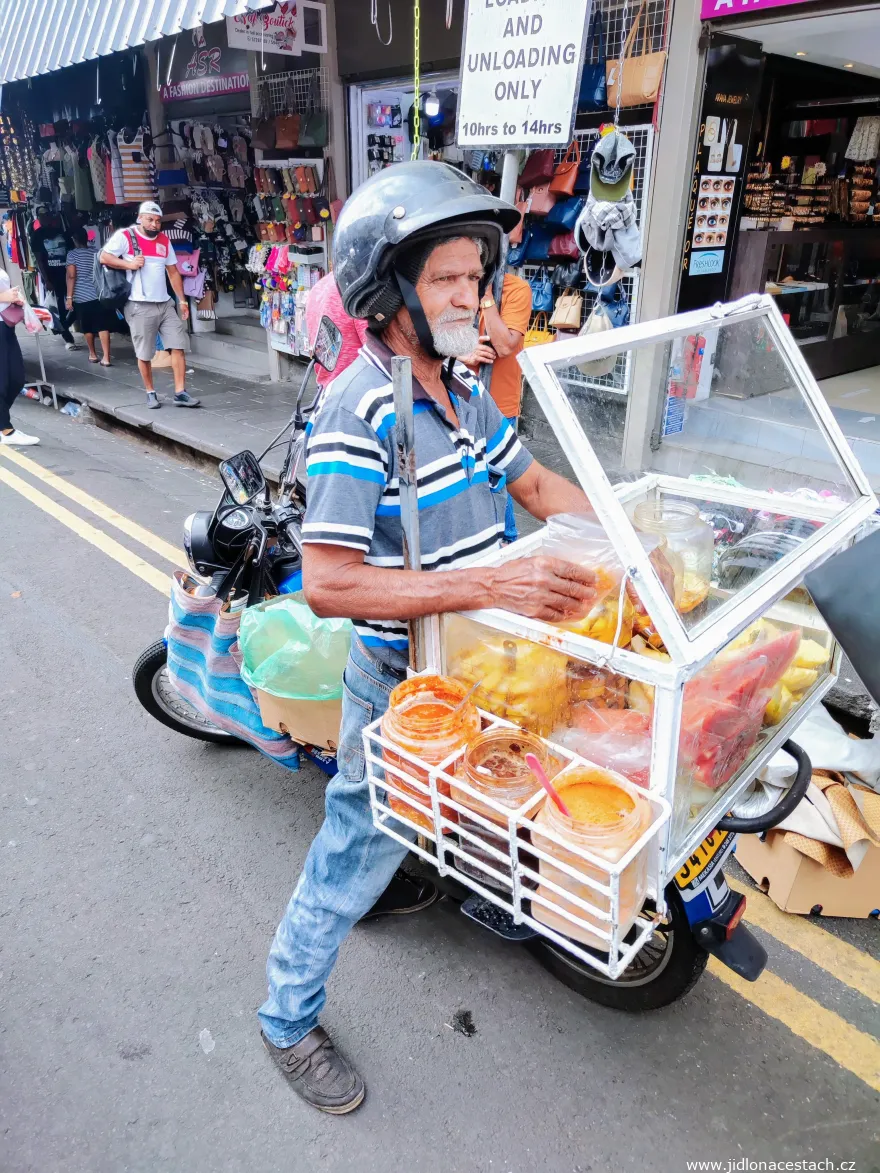
The shop pulled up on a scooter. Bolted on behind the saddle is a glass case stacked with pieces of fruit, with a jar of sauces in a holder on the side - and as far as the owner is concerned, that is the whole business. All he has to do is stop at the curb and wait for someone to get a craving.
Fruit confit is a street snack of Mauritian cuisine: freshly peeled pineapple dusted with chili, alongside green mango, cucumber, or other fruit pickled in a vinegar brine with salt, sugar, and chili. It's sold in a bag, eaten with your fingers, and costs next to nothing.
What the Word Confit Promises and What It Means in Mauritius
Most of us know the word confit from French menus: a duck leg slowly poached in its own fat, or Provençal fruit steeped in sugar. Mauritius took the same word and turned its meaning on its head - confit here means fruit pickled in vinegar and salt. It is no cheat, though: the verb confire originally meant simply to preserve, and of all the ways to preserve something the island picked the most refreshing one. In Creole the snack is called konfi, and the name shifts with whatever is in the bag: zananas confit, mang confi, cocome confit - pineapple, mango, cucumber.
Mauritius does not own the snack outright, though. Practically the same fruit confit au piment, down to the last slice of green mango, is sold on the sister island of Réunion. And the family is bigger still: the closest cousin lives on the island itself and goes by the name achard - vegetables pickled with turmeric and mustard seed, served as a side dish at lunch, while confit is a snack in a bag. Both names lead back to the same place: achar is Hindi for pickling, and the technique arrived in the 19th century with Indian indentured laborers hired for the sugarcane plantations. Nobody has ever pinned down who first shook chili over fresh pineapple - all that is certain is that the idea belongs to no single country. Stalls in Thailand and the Philippines sell green mango with chili salt, and Mexico came up with mango, chili, and lime entirely on its own, without a single shared ancestor.
Green Mango, a Sharp Brine, and as Much Chili as You Dare
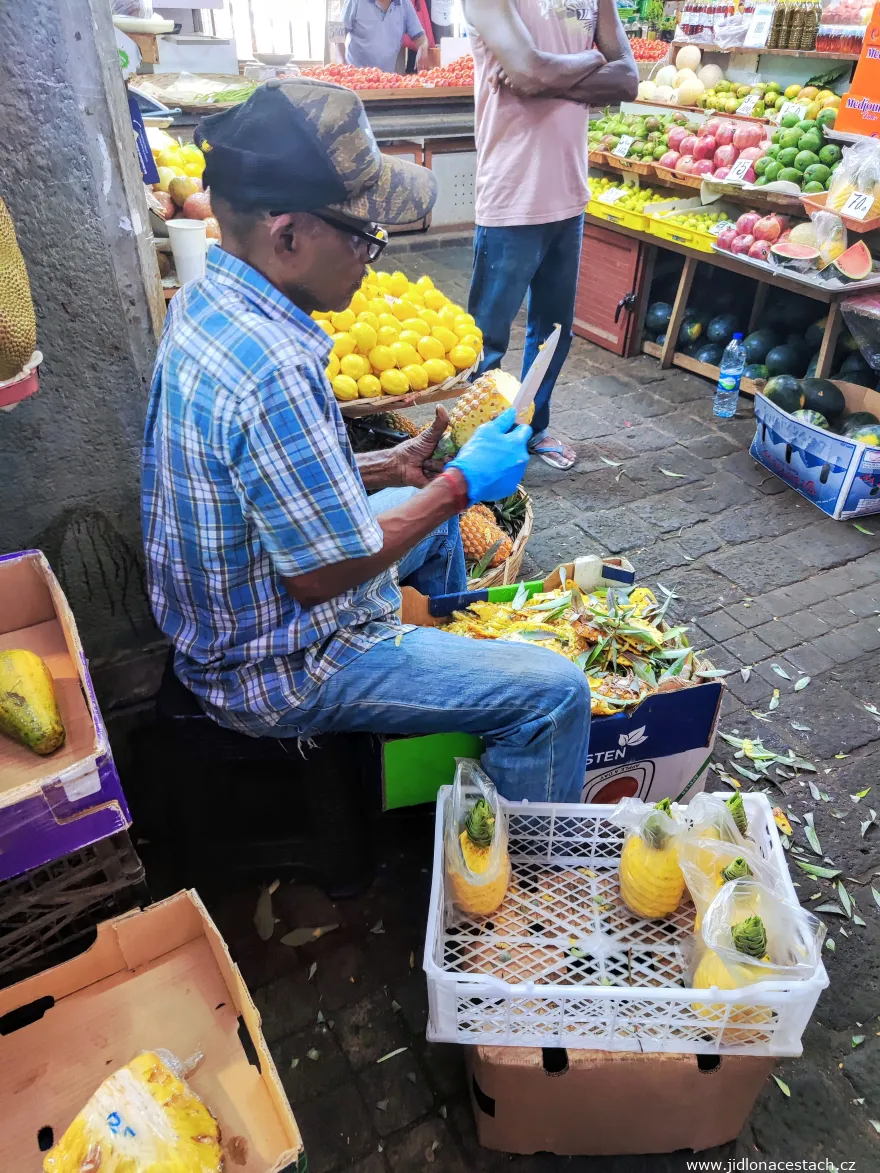
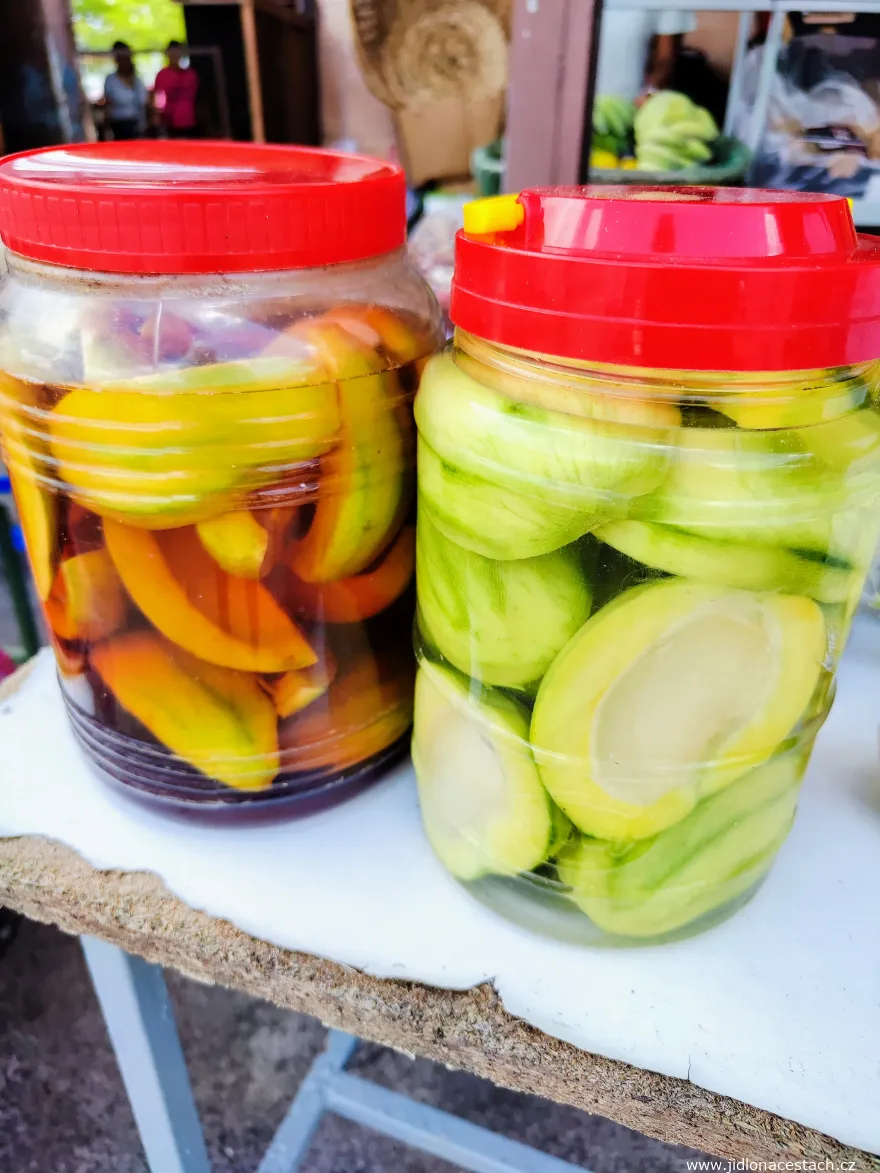
The mango goes into the jars green and hard, before it has a chance to sweeten. The brine is simple - water, vinegar, sugar, salt, and chili - and plenty of vendors stir in tamarind as well, which darkens it and turns it a notch sourer. The same brine works for cucumber and other fruit. Pineapple you will most often find fresh: peeled, cut so you can hold it in your hand, with the chili shaken on last - though recipes know a pickled version too. The big preserving jars on the counters look like something from my grandmother's pantry back home, except it is mango floating in them instead of dill.
A bag of confit is a snack for the road: you buy it while walking through the market or on your way back from the beach and eat it slice by slice, straight out of your hand. How much chili goes on is up for negotiation - the vendor shakes out as much as you ask for, and if you are not feeling brave, start with a pinch. You can always add more; you can never take it back. Locals do not find that excessive at all; this is, after all, an island where even the fritters are named after chili. At the beaches, in Flic en Flac for instance, a bag runs a few rupees more than at the market - delivery all the way to your towel costs extra everywhere in the world.
Where I Bought My Confit
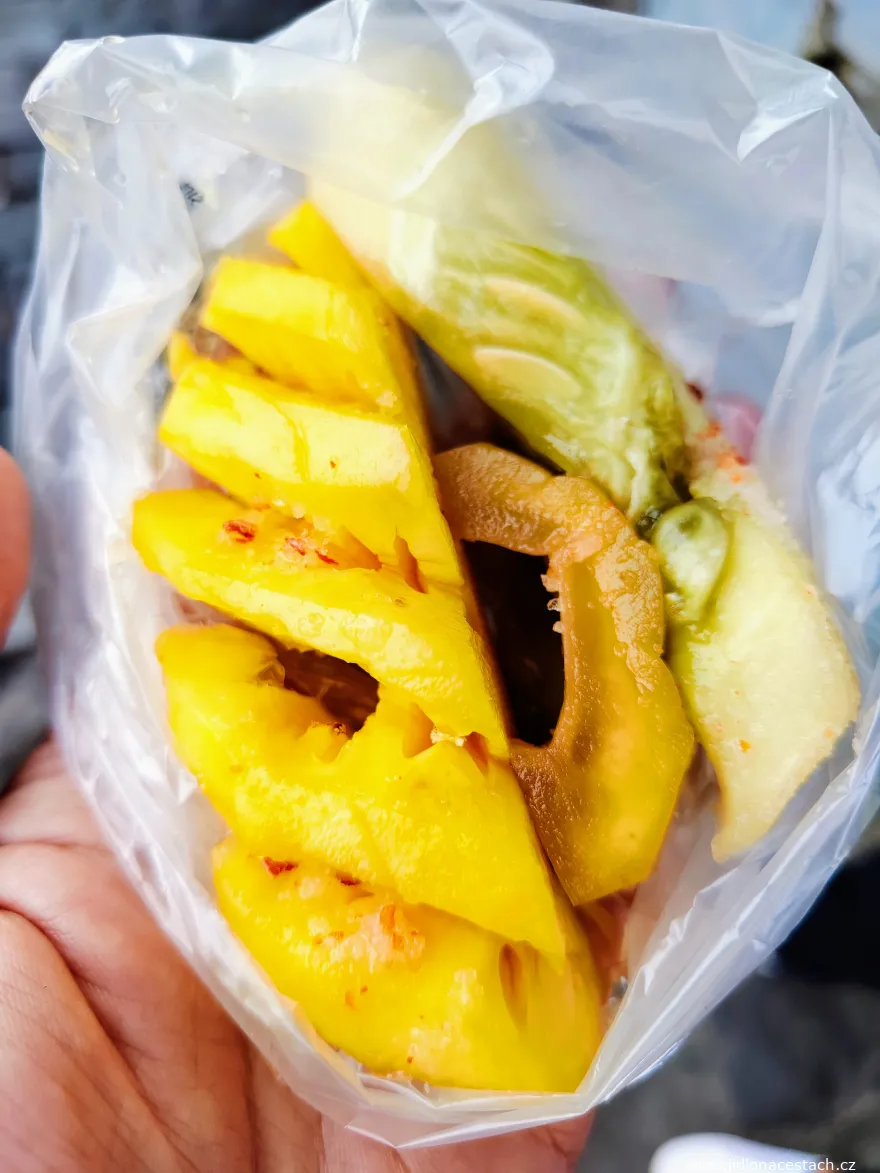
I had my own bag mixed at the Central Market in Port Louis: pineapple, pickled mango, and pickled cucumber together for 10 MUR (0.20 EUR) - I never paid less for anything edible in Mauritius. The pineapple was as sweet as only the tropics manage, and the chili spoke up a second later; the mango crunched, and the brine kept all its sourness, just rounded off with sugar and salt. The first time I asked for a token dusting of chili, but after a few slices I went back and made it clear I wanted a proper dose - and the vendor clearly approved. Ten rupees, twenty euro cents: the only food in Mauritius I went back for before I had even finished it.


