Bol Renversé: The Mauritian Upside-Down Bowl
The waiter sets a plate down on the table and there's nothing on it to eat. Just a ceramic bowl turned upside down, the maker's Chinese stamp on the base, and bare plate all around it. Before you can ask whether something's missing, he takes the bowl by the rim, lifts it carefully, and out from under it comes a dome: rice, vegetables and meat beneath that, a fried egg on top, all of it coated in a glossy dark sauce that slowly spreads across the plate. It takes a couple of seconds and it's probably the only trick Mauritian cuisine performs right at your table.
Bol renversé (Mauritian Creole: déviré) is a bowl packed in reverse order - egg, stir-fried meat and vegetables in a soy and oyster sauce, rice - and flipped onto a plate so that in a restaurant it gets uncovered right in front of you.
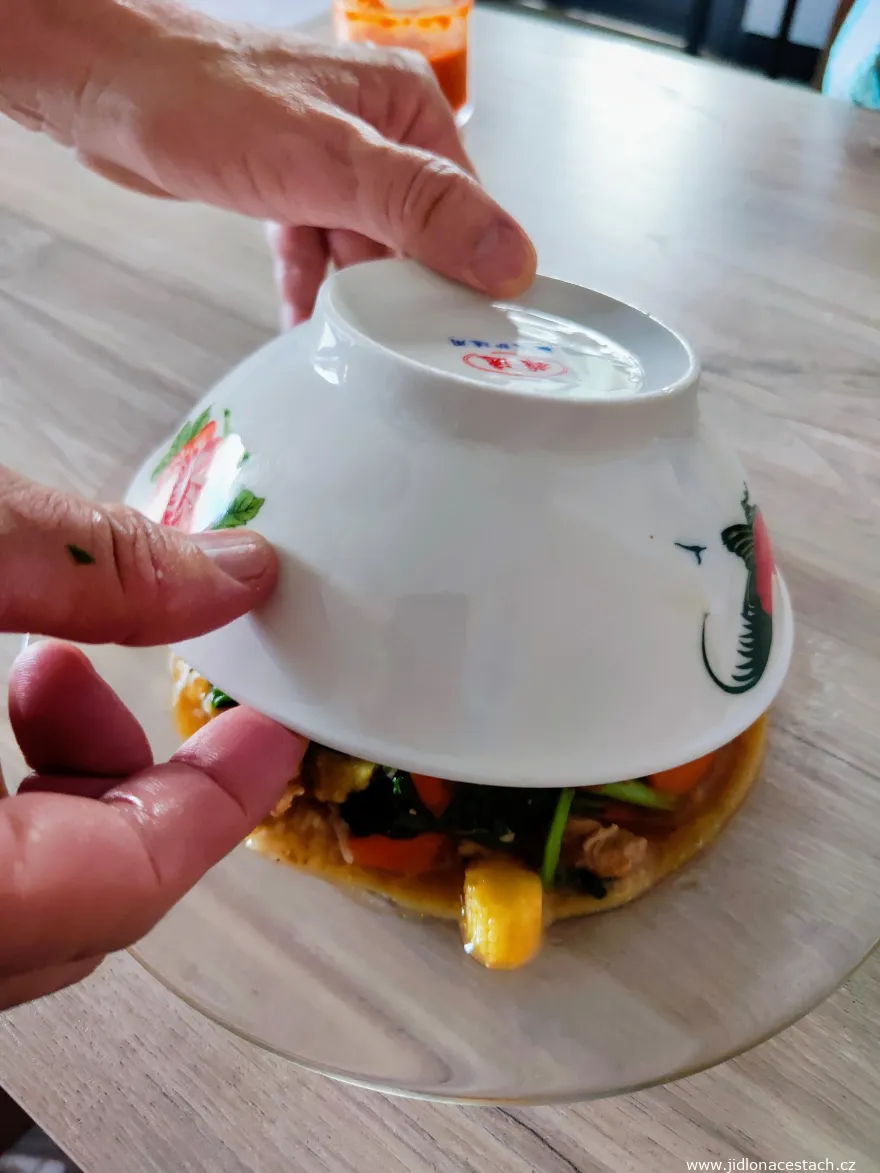
What Bol Renversé Means and Whose It Is
In French it's simply "the upside-down bowl", and in Mauritian Creole déviré, turned over. The word renversé means something quite different in France: gâteau renversé is an upside-down cake with the fruit at the bottom of the tin, in other words a dessert. Order "something upside down" in Mauritius hoping for sweet and you'll get chicken with rice, and nobody is going to explain where you went wrong. The dish came out of the island's Chinese community and today it's served all over Mauritius, from the Chinatown of Port Louis to the beach bistros. It's cooked under the same name on neighboring Réunion and in Madagascar, carried there by the same Chinese diaspora, so it's a Mascarene dish with its center of gravity in Mauritius rather than an exclusively Mauritian invention. Its closest relatives sit on the same menu: riz frit, fried rice, in which the meat, vegetables and rice come mixed straight out of the wok, and mine frit, the same thing with noodles. Bol renversé keeps the layers apart until the moment it lands on the plate, and the rice in it isn't fried, only boiled. On an island where almost everything goes into hot oil, that's a welcome exception.
How a Chinese Bowl Ended Up in Mauritius
The first Chinese arrivals didn't reach Mauritius by choice: in the 1740s the French administration brought them over from Sumatra as abducted laborers. Voluntary migration from Canton began forty years later, and the people who came to Port Louis were mainly Hakka from the inland south of China, who to this day make up most of the long-settled Chinese community. It accounts for around three percent of the island's population, but its share of the island's menus is a good deal higher. Bol renversé is the Mauritian take on Cantonese chop suey, the stir-fried mix of meat and vegetables that somebody here packed into a bowl under the rice and turned over - when and who, no source says. Writing in the daily Le Mauricien, the Mauritian columnist Percy Yip Tong uses it to show how the island's Chinese community became "creolized": a dish with Cantonese roots that you won't find anywhere in China under this name and that Mauritians of every background now treat as their own.
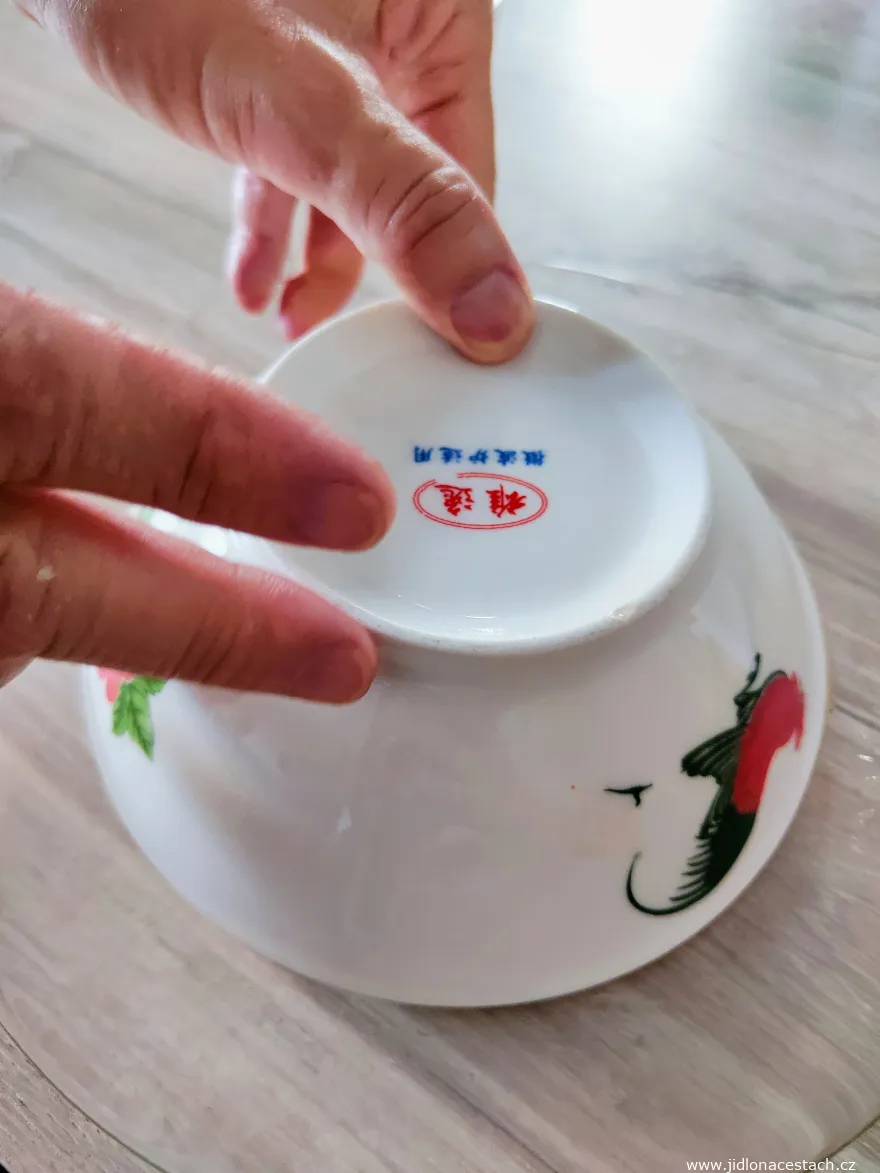
What's Under the Bowl and How You Eat It
The sauce matters more here than the meat. Soy and oyster, a little garlic and onion, thickened with starch so that it coats the vegetables and meat and doesn't run off the plate when the bowl comes up. The vegetables are usually Chinese cabbage or pak choi, carrot, sometimes dried black mushrooms; the meat is your pick of chicken, beef, pork, shrimp or fish, and bistros keep a tofu version as well. The fried egg goes into the bowl first, ends up on top once it's on the plate, and the yolk soaks into the rice before you get your spoon anywhere near it. The technique is exactly the one you use to turn a bundt cake out of its tin: stack it in reverse, press it down, flip it in one decisive move and trust that it holds. You eat it with a spoon or a fork, the layers mix after the first scoop and what you end up with is what the wok would have given you anyway, only with rice that never saw hot oil. Leave the bowl to the waiter. It's hot, and anyone who lifts it themselves finds that out before they see what's underneath. The noodle version is called mine renversé.
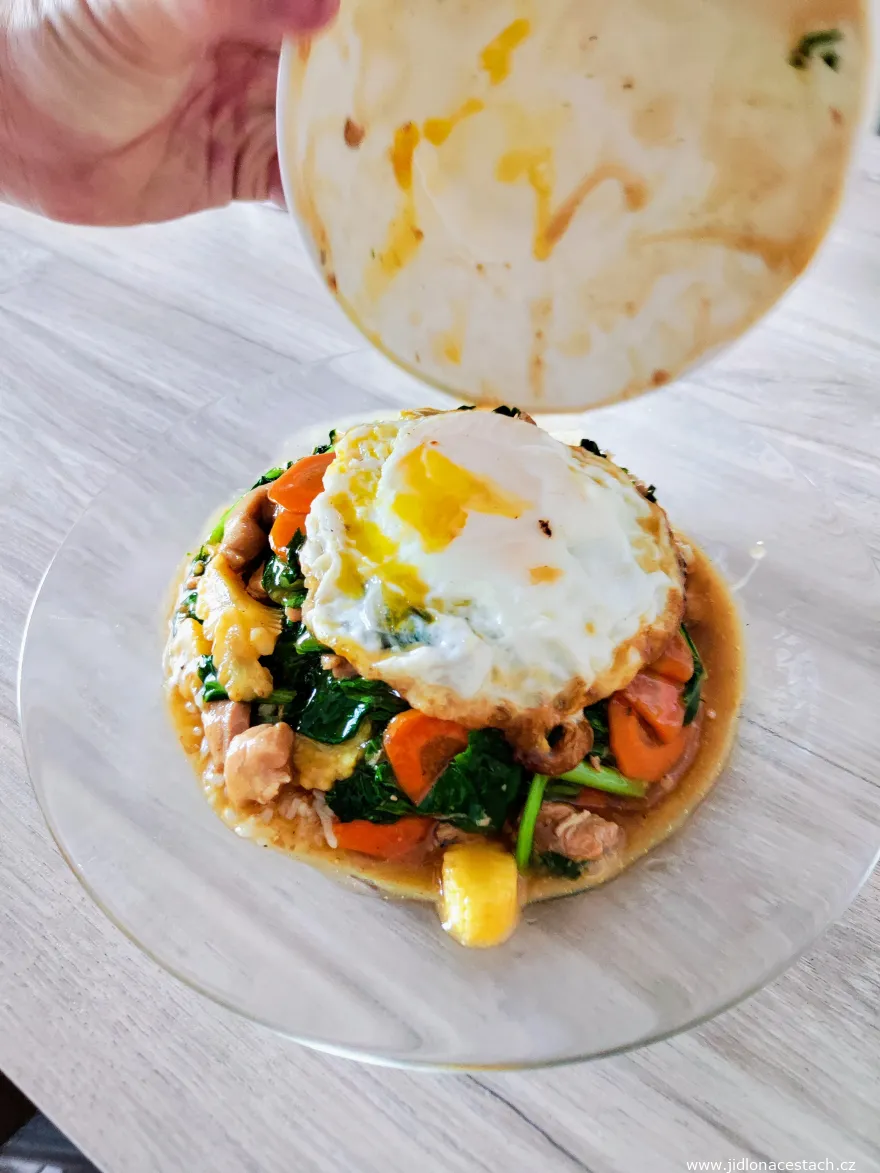
The Chicken Version at Bistro Nam Wah Snack
I ate bol renversé in Flic en Flac on the west coast, at Bistro Nam Wah Snack (see Where to Eat in Flic en Flac), where the waiter turned the bowl over the moment he set it down, quick and deft. I went for the chicken. The sauce was salty and rich, with the sweetness of oyster sauce behind it, the vegetables still had a crunch and the rice underneath stayed loose wherever the sauce hadn't reached; the yolk ran into everything and turned three layers into a single plate. In a cuisine that otherwise leans on rice, noodles and the deep fryer, this was a dish with more meat than carbs and not one fried bite in it - and that's exactly why it ranks among the best things I ate on the island. The portion cost 170 MUR (3.60 EUR).


