Gato Arouille: Mauritian Fried Taro Balls
The cook puts gloves on for this one. Raw taro stings and itches while you peel it and grate it, and anyone who handles it bare-handed will have tingling fingers for hours afterwards. And yet in Mauritius it turns into a little fried ball sold all over the island.
Gato arouille (in French: gâteau arouille) is a fried ball of grated raw taro with ginger, salt, a pinch of sugar and soy sauce, a piece of Mauritian cuisine sold hot out of the fryer basket and eaten with your hands. A crisp shell, a soft inside, ginger. No gloves needed on the way to your mouth.
Why a Ball of Taro Is Called a Cake
The name confuses more than the recipe does. Gâteau is French for cake, but in Mauritius "gato" is anything that has been through hot oil, sweet or savory - besides the taro one, that includes gâteaux piment made of crushed split peas and chili, which the taro ball often gets mistaken for at the stall, because the two look alike. Arouille is the Creole word for taro; on neighboring Réunion the same tuber is songe, in the Caribbean dachine or malanga, in India arbi. One plant, half a dozen names, and Mauritius picked the one you won't hear anywhere else.
Gato arouille is eaten all over the island. Its closest cousins live across the water: Réunion's croquettes de songe gris are made from boiled and mashed taro, rolled in breadcrumbs and often served with cod, and the Antillean accras de malanga are the same idea with a different tuber and different spices. What sets the Mauritian ball apart from both is its surface: the taro goes into the oil raw and grated, not boiled.
How Much a Tuber Weighs and Who Brought It to the Island
Taro is one of the oldest crops we know: it has been grown for some nine thousand years, and before the Americas were discovered it was the most widespread tuber in the tropics, from New Guinea to West Africa. No source says when it reached Mauritius or who carried it there; the French, Indian laborers and Chinese traders all grew whatever would grow, and a tuber like this needed no special invitation. One thing we can check, though: a taro tuber doesn't weigh five kilos. A common one runs to a few hundred grams, a big one to over a kilo, and the five-kilo figures belong to giant relatives from other genera.
Raw onto the Grater, Hot into Your Hand
Grated raw taro is stringy and sticky all by itself, so it needs neither egg nor flour - a little breadcrumb or starch is enough to hold the ball together, and the oil does the rest. Ginger is the only spice with a say here, and together with the soy sauce and a pinch of sugar it turns a bland tuber into something sweet-salty and warming. Back home we know the same trick from the potato pancakes we fry: raw grated tuber, hot oil, a crisp edge and a soft middle, only ginger steps in for the marjoram and garlic, and instead of a pancake you get a ball that fits in your palm. And that sting of the raw tuber? The oil takes it away completely. What irritated the cook's hands leaves no trace on the plate.
In Mauritius this falls under gajak: small savory snacks eaten any time between meals, at the bar, on the street, with a beer or a rum. Gato arouille comes out hot, by the piece, with a spoonful of green or red chili paste on the side, and local recipes agree that "there is no set hour for it". Let one cool and the crisp shell goes soft and greasy - which is why you eat it with your hands right at the stall, and why they sell only as many as they can fry.
A Ball in My Bare Hand in Flic en Flac
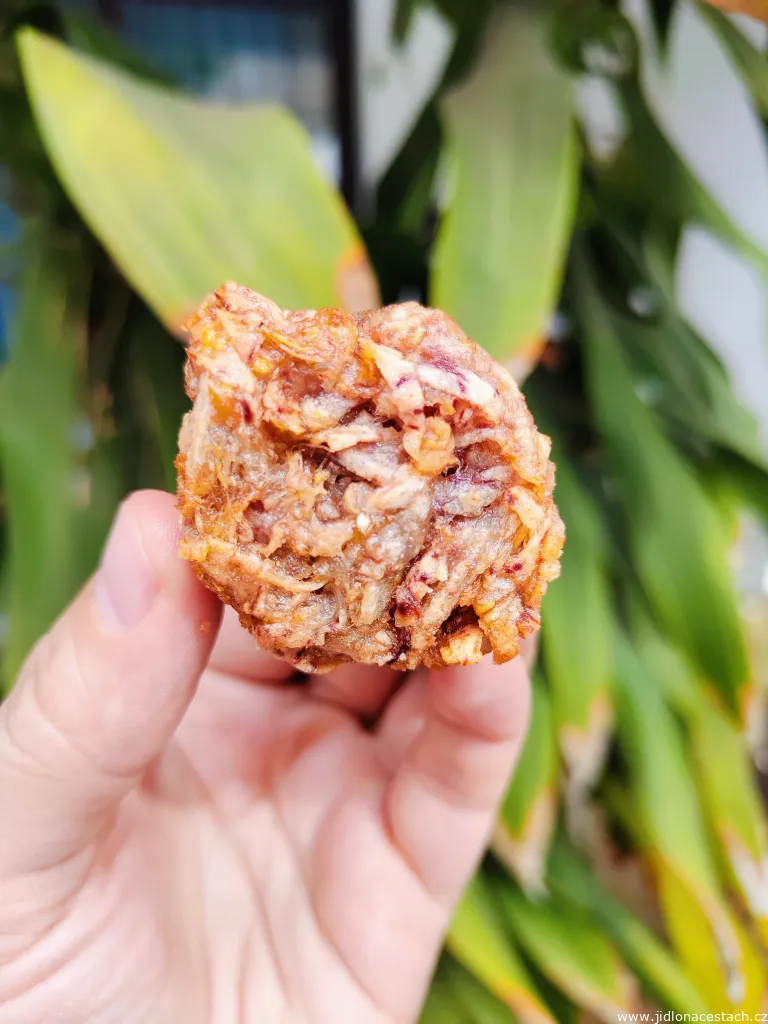
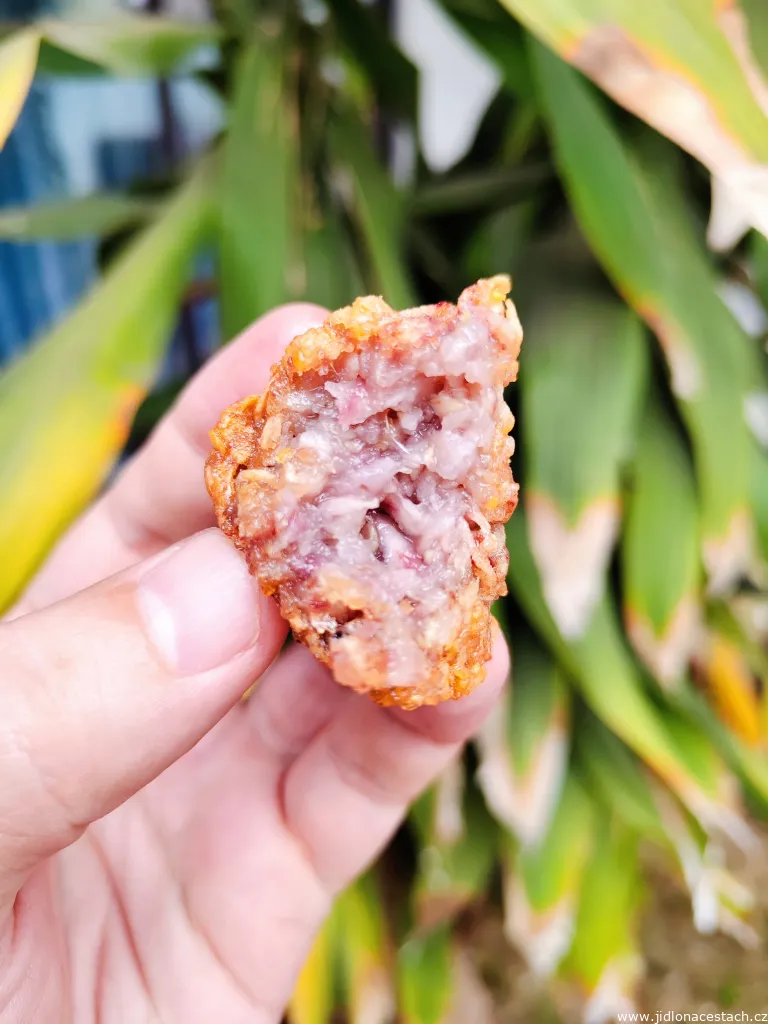
I ate gato arouille in Flic en Flac, at the Chinese bistro Nam Wah Snack (see Where to Eat in Flic en Flac), where it sits in a basket next to the other fried bits and gets picked out of the display case one piece at a time. The outer layer crunched; inside, the mixture was soft and stringy, and the ginger came through in every bite; the ball had soaked up some of the oil it was fried in, so it's not exactly diet food. One cost 25 MUR (0.50 EUR). More often than not, they were sold out by two in the afternoon. A cake it is not. But here the word gâteau belongs to whatever the oil improves, and this ball has earned it.


