Fresh Coconut: Water and Meat from a Young Nut
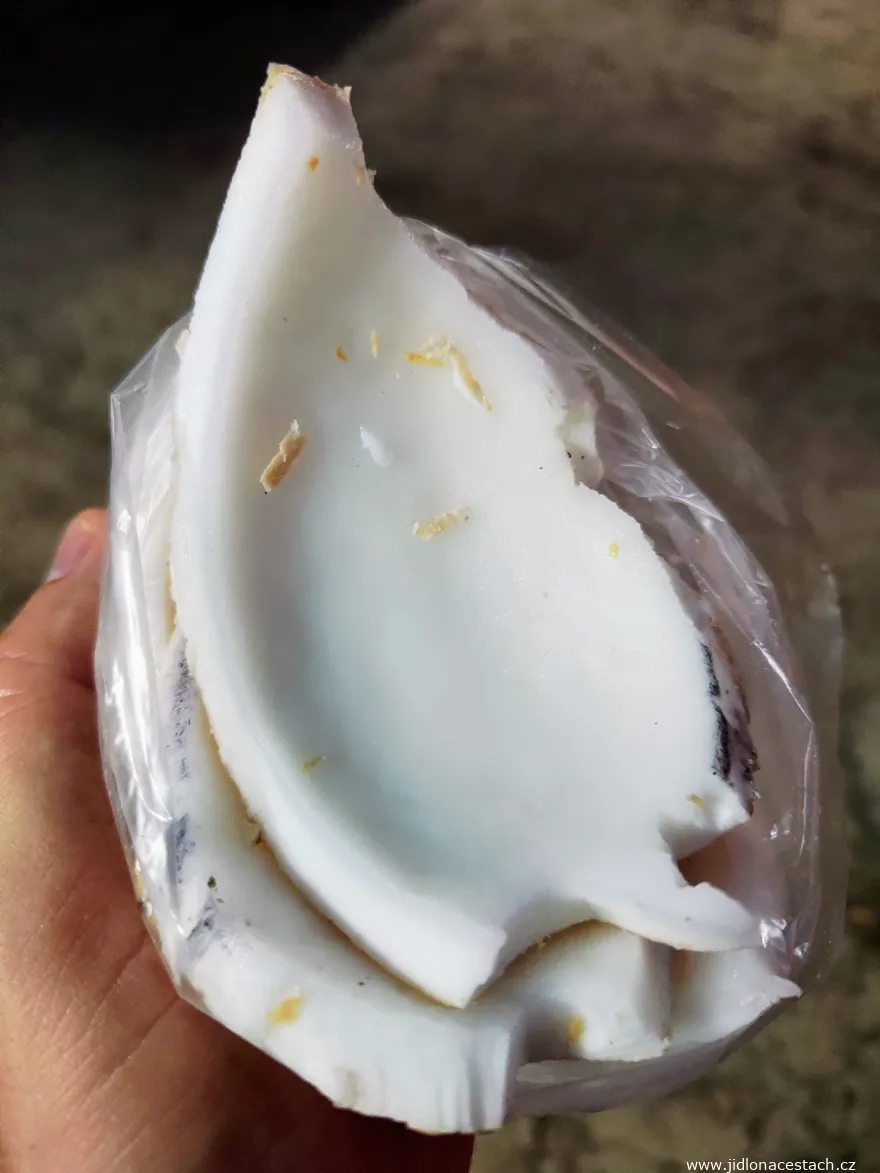
In Mauritius nobody throws an empty coconut away. Once you have drunk it, you carry it back to the stall where the vendor opened it for you a few minutes earlier, and without a word he takes it, sets it on a block and splits it with a few strokes of his machete. What you took for packaging, he carves into white meat, and out of a shard of the shell he makes you a spoon. One purchase, two acts.
Fresh coconut (in French coco tendre) is the young green fruit of the coconut palm, cut down halfway through ripening, when there is mostly clear water inside and only a thin layer of soft flesh - on the beaches and at the markets it is a fixture of Mauritian cuisine, sold as a drink that turns into food once you have finished it.
The Bogeyman That Gave the Coconut Its Name
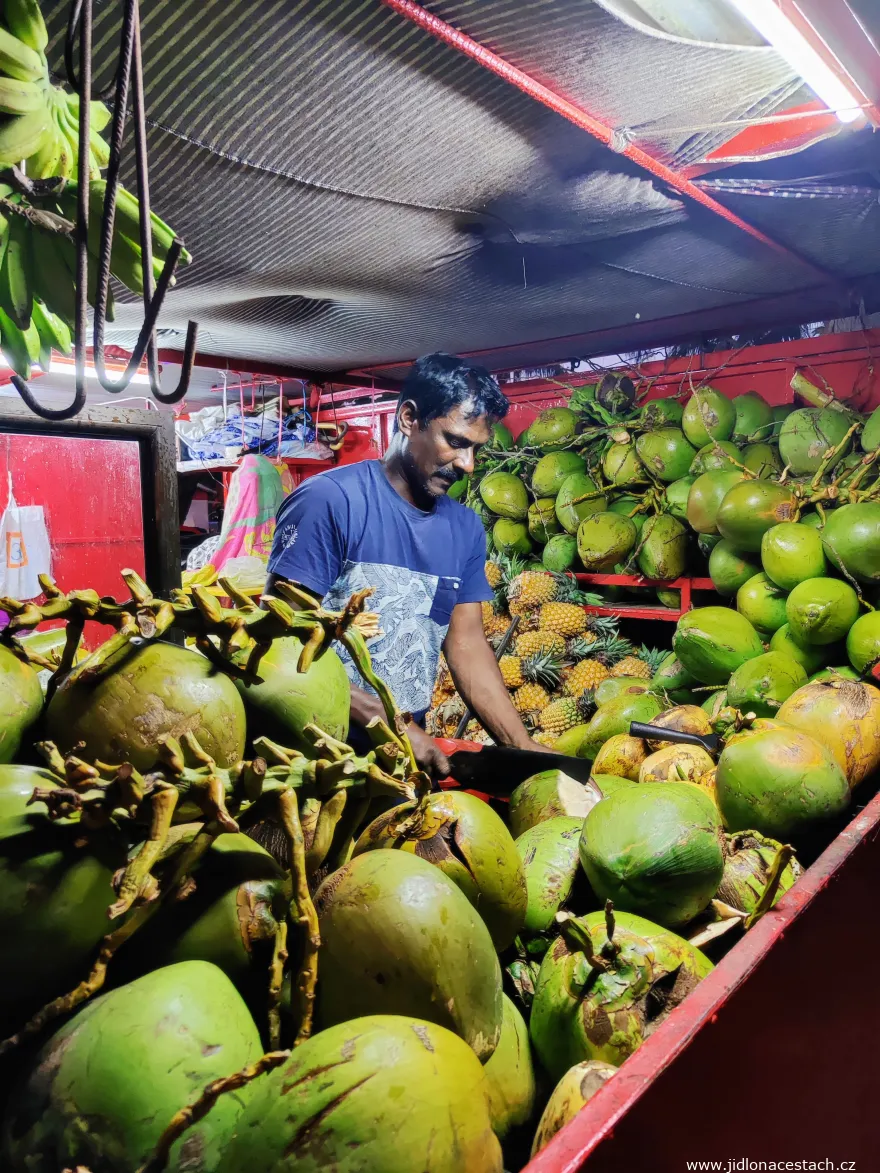
The three dimples on top of the shell look like a face, and the fruit got its name from people who were afraid of that face. Portuguese sailors took to naming it after coca, the bogeyman Portuguese parents used to scare their children with; the chronicler João de Barros wrote it down in 1563, and his coco gave English its coconut and Czech its kokos. Hindus see the eyes of the god Shiva in those same three dimples and break coconuts at the temple as an offering that, as the popular explanation goes, took the place of a blood sacrifice; Mauritian Hindus also decorate cavadee, the frames carried in procession, with them. The same face, read two different ways. Drinking the water from a cut-open nut, though, belongs to the whole tropics: India, Sri Lanka with its orange thambili, the Philippines with buko, the beaches of Brazil. The only really Mauritian part is the second act, the machete and the spoon cut from the shell - and even that it shares with the Seychelles; on Réunion the young coconut goes by the same name, coco tendre.
Where Mauritius Gets Its Coconuts
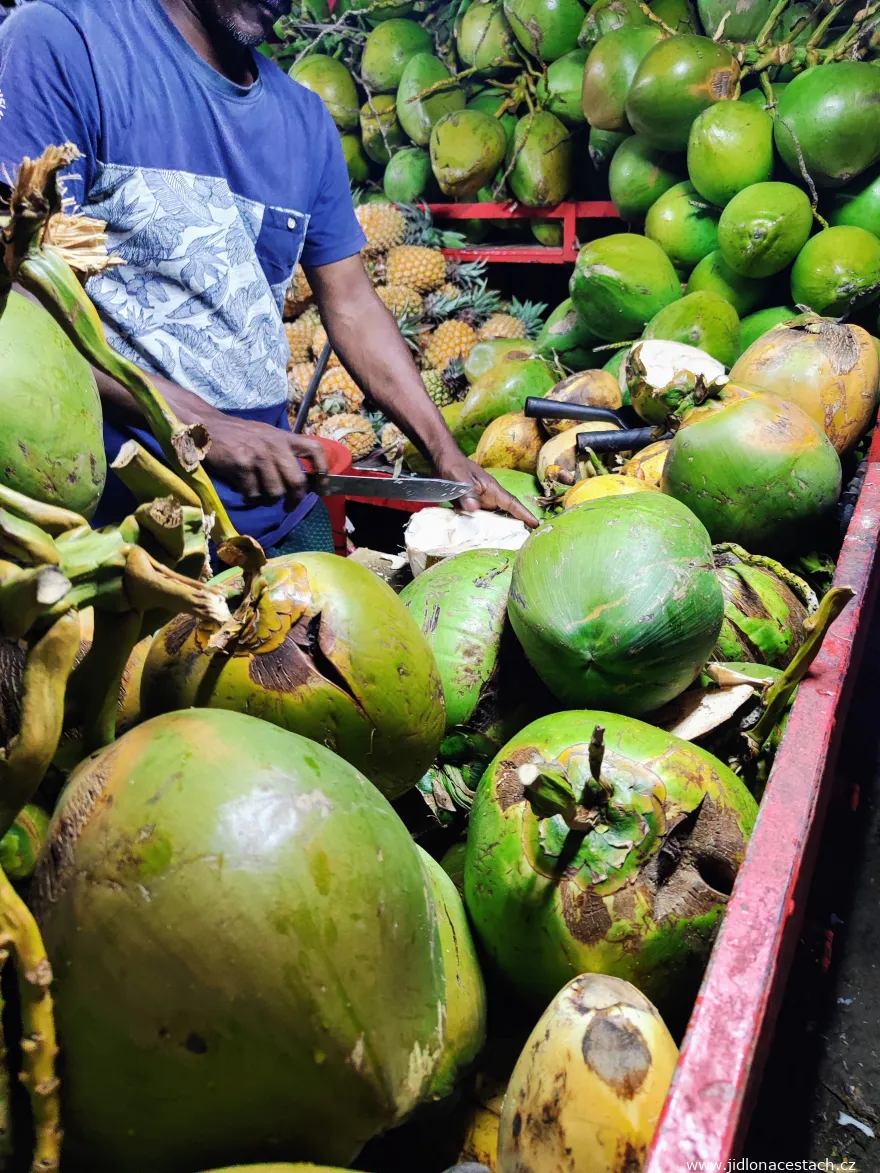
The postcard island with a palm over every beach imports its coconuts from Madagascar. In October 2007 the first two containers arrived carrying 38,000 nuts, and the importer was counting on three hundred thousand by the end of the year - the island's own palms cannot keep up with what the stalls need, and Madagascar is closer than Sri Lanka, where the shipments used to come from. The coconut palm is not native here anyway: French sources credit the first Dutch settlers, who brought it along with sugar cane, and nobody gives a more precise date. The nickname tree of life, which guidebooks pass off as Mauritian folklore, did not originate here either - in the Philippines they say puno ng buhay, and the country's own coconut authority uses it too; in Indonesia it is pohon kehidupan, and everywhere it means the same thing: a tree where every part gets used. Mauritius has simply borrowed a line the whole tropical belt uses.
Water, Milk and the Age of the Nut
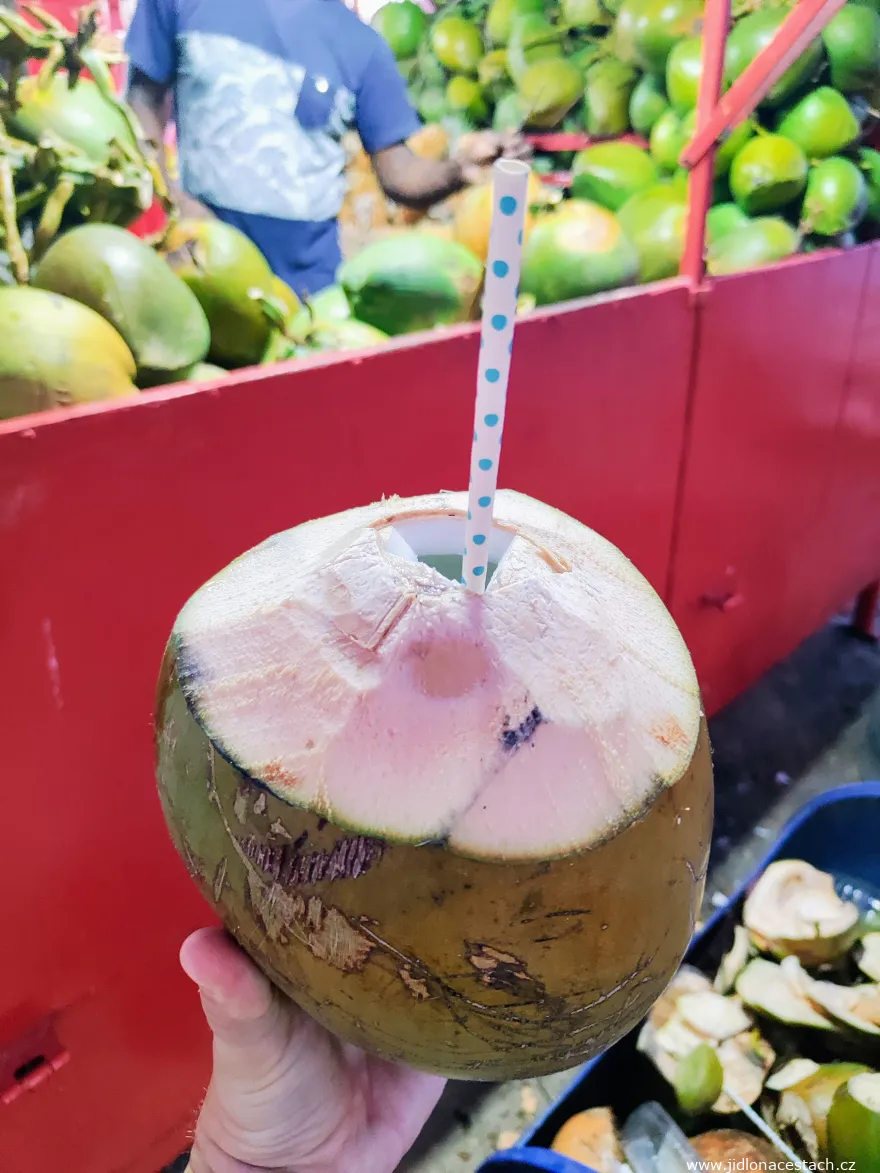
It comes down to age. A fresh coconut for drinking is picked at six or seven months, when it holds around half a liter of water and flesh as thin and yielding as jelly. A ripe coconut is to a young one roughly what dried peas are to fresh peas out of the pod: the same name, a different food. And the white liquid most people picture when they hear the word coconut does not flow inside the nut at all - coconut milk is made from the ripe flesh, which is grated, scalded and pressed, and in Mauritius it goes into curries or into the dessert sagoo au lait. What runs out of a young coconut is water: clear and rich in potassium. The green nut and the yellow nut on the same stall are usually just two varieties of the same fruit.
You drink it on the beach, from a nut the vendor has just cut down, through a straw or straight from the hole, and then comes the trip back for the meat. The price is set by the beach, not the nut: on the south coast and at the markets locals pay a few dozen rupees, in the tourist bays up north a hundred, and that gap is the steepest markup you will pay on the island for the exact same thing. The health reputation of coconut water rests on one true fact - it is an isotonic drink with electrolytes - and a lot of legend on top: the antibacterial miracles and the weight loss come from blogs, and the story about it being dripped into wounded soldiers' veins instead of plasma during the Pacific war is one that fact-checkers explicitly reject. After an afternoon in the sun it works without any of the legends.
Two Acts on the Beach in Flic en Flac
I bought my coconut at a stall right on the beach in Flic en Flac, by a pile of green nuts with bunches of bananas hanging above them and pineapples waiting in the corner; the vendor in a blue T-shirt opened the nut with two strokes and stuck a polka-dot paper straw into it. The liquid was clear as water and tasted good - more like water with something extra than like coconut. Then I went back. I carried off the meat he carved out of the split nut in a plastic bag: soft, juicy and closest in flavor to young walnuts - it has nothing in common with desiccated coconut. A delicacy no bag of grated coconut would ever hint at. You pay for both acts once, at the first stroke of the machete: 100 MUR (2 EUR).


