What to Eat in Mauritius: Typical Mauritian Food and Specialties | Page 2 of 5

Tekwa: A Sweet Mauritian Pocket of Yellow Split Peas
Tekwa is a Mauritian fried pocket of thin dough filled with a sweet mixture of ground yellow split peas, sugar and fennel, often with coconut too. The name was brought over in the 19th century by Indian laborers from Bihar; the filling is the island's own invention. It's sold warm in a bag at the markets and eaten out of your hand, most often as a snack with afternoon tea.

Gâteaux Piment: A Mauritian Fried Ball of Yellow Split Peas
A fried ball of ground yellow split peas, chili and curry leaves is the most widespread street snack in Mauritius. The French name calls it a cake, neighboring Réunion names it after a candy - and neither name tells the truth. Indian laborers brought it to the island in the 19th century, people eat it at any hour of the day, and it tastes best hot, squashed into a baguette with butter.
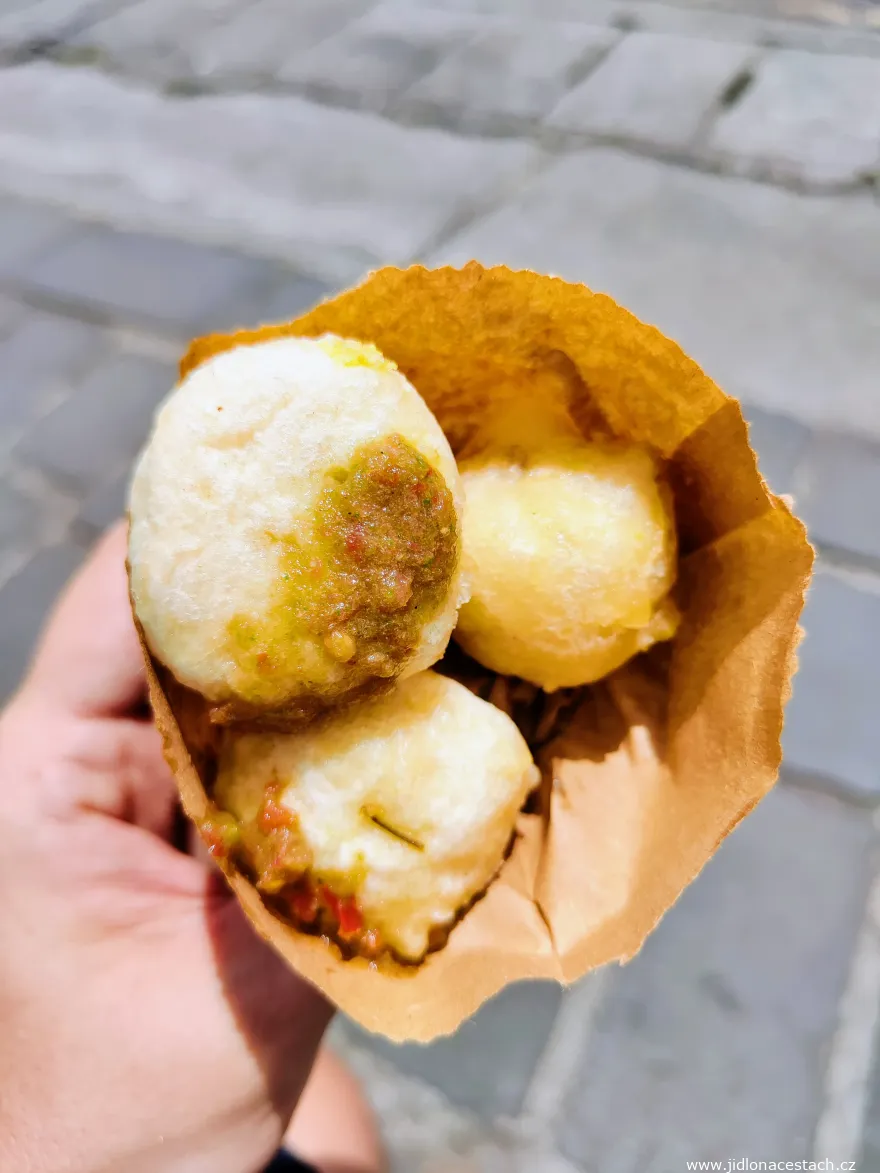
Chana Puri: A Mauritian Ball with a Yellow Split Pea Filling
A small fried ball of leavened dough filled with spiced yellow split peas is one of the most popular street snacks in Mauritius. The name is borrowed from India, where it stands for something else entirely - a flatbread with a chickpea curry beside it. On the island, chana puri is sold by the piece in a paper bag, eaten hot and, best of all, smeared with chili paste.

Curepipe Market: Street Food in the Middle of Mauritius
Curepipe Market is a daily covered market in the second largest town in Mauritius, which sits in the middle of the island at over 550 meters. Inside it sells fruit and vegetables from the interior; out front, stalls sell farata, dholl puri and other Mauritian street food. Hardly any tourists make it up here, so the prices are the ones locals pay, and the bus station next to the market is named after Jan Palach.

Quatre Bornes Market: A Clothes Market and Street Food in Mauritius
Quatre Bornes Market is the town market on the central plateau of Mauritius: a food hall on Wednesdays and Saturdays, the island's best-known clothes market on Thursdays and Sundays, and all week long a food court of small bistros and stalls selling dholl puri, gâteaux piment or tekwa. Locals come in from all over the island, tourists are rare and the food is cheap.

Haleem: A Thick Soup of Wheat, Legumes, and Meat
Haleem is a thick soup of cracked wheat, legumes, and meat, simmered until it all melts into one smooth mash. The name means patient in Arabic, and the dish traveled from Yemen through Hyderabad to the Muslims of Mauritius. How haleem is eaten, what goes on top, and what a bowl cost at a bistro with three items on the menu in Pamplemousses.

Briani: Mauritian Biryani with Chicken and Potato
Briani is the Mauritian take on biryani: basmati rice scented with spices and saffron, layered with yogurt-marinated chicken and potato, steamed in a sealed pot. Indian laborers brought it to the island after 1834, the Muslim community took it furthest, and today it's sold in every bistro with chutney and pickled achard.

L'Aventure du Sucre: A Sugar and Rum Museum in Pamplemousses
L'Aventure du Sucre is a sugar museum in the former Beau Plan sugar mill in Pamplemousses in northern Mauritius. The mills and the steam engine stand in the original hall, the exhibition tells the story of cane on the island from 1639 onward, and the tour ends with a tasting of twelve unrefined sugars and New Grove molasses rums.

Mauritian Beer: The Phoenix Lager and Two Craft Breweries
Mauritius has one beer that has been brewed here since 1963 and is most likely named after a suburb, plus a handful of younger ones including two craft breweries: the Phoenix lager, the stronger Blue Marlin and Spéciale, the wheat beer Manawa, a thirsty fox and a flying dodo. Where Phoenix came from, why the Réunion beer is named after a Mauritian bird, and what a bottle and its deposit cost on the island.

Boulettes: Mauritian Steamed Dumplings
Boulettes are small dumplings of fish, meat, shrimp or grated chayote, steamed and sold by the piece from pots outside bistros all over Mauritius. The name is French, the origin Hakka, and the most typical version, niouk yen, is one no one in China would ever have thought up. They're eaten with noodles, swimming in clear broth, or dry with chili paste and scallions.